






Thatch Cottage Painting
A thatch cottage painting captures the quiet permanence of rural life through watercolours and oils spanning the Victorian era to the mid-twentieth century.
Thatch Cottage Painting
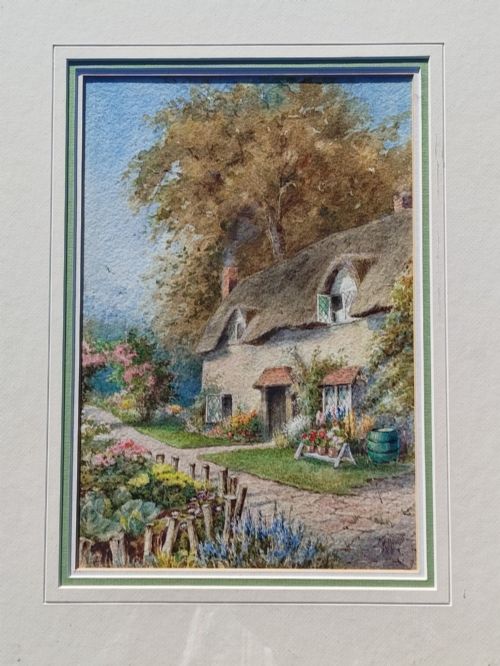
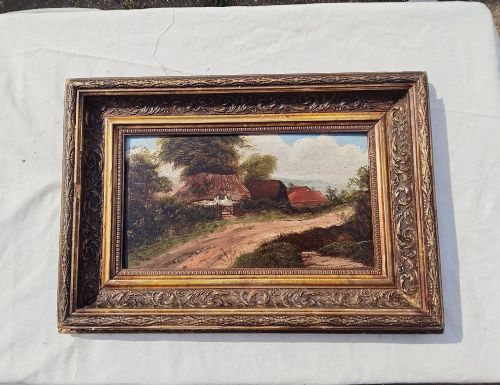
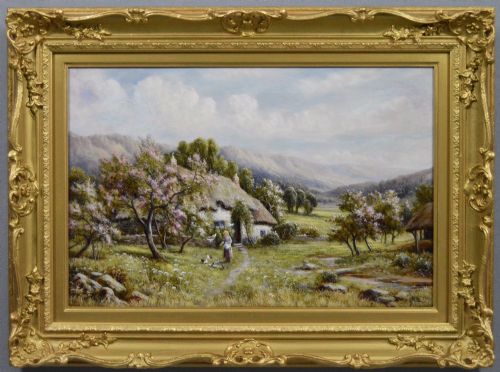
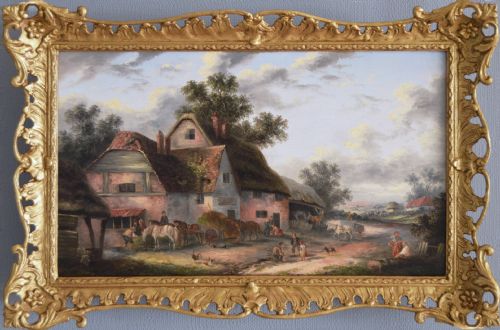
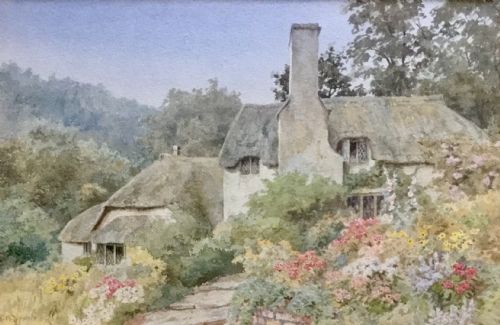
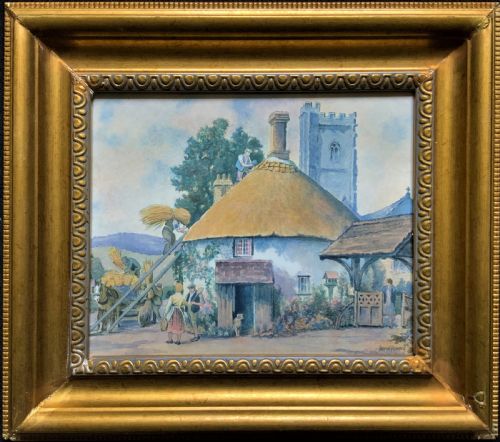
A thatch cottage painting portrays rural domestic architecture and village scenes, capturing the enduring appeal of the English countryside. The pieces available here focus heavily on pastoral subjects rendered in watercolours and oils.
The selections span from the Victorian period through the Edwardian years and into the nineteen-fifties, reflecting changing tastes in landscape and genre painting. Most works depict specific English and Scottish regions, notably Devon, Somerset, and Hampshire.
Buyers encounter framed watercolours on paper alongside oils on canvas and card. These works range from intimate studies of cottage gardens to broader village street scenes created by professional artists and regional schools.
How They Were Made
Artists worked primarily in watercolour on paper or oil on canvas and card, utilising traditional pigments to render natural light and earthy tones. Watercolours were layered to create translucent washes of sky and foliage, whilst oils allowed for richer texture and heavier impasto.
Many of these works are housed in period frames of gilt wood, which complement the domestic pastoral subjects. The mounting and framing protect the delicate paper surfaces of the watercolours from moisture and handling.
Thatch Cottage Painting Retail Price Guide 2026
Typical asking prices for thatch cottage painting among the pieces listed under this phrase on Sellingantiques today, from the lower quarter to the upper quarter. They describe what is for sale here now, not the wider market.
Listings feature works in watercolour, oil on canvas, and oil on card, spanning the Victorian period through to the mid-twentieth century.
What Varies in Quality
Quality rests in the sureness of the draughtsmanship and the artist's handling of light and atmospheric perspective. Superior works capture convincing architectural proportions and natural movement in figures and animals.
The handling of the medium distinguishes accomplished academic pieces from simpler folk art or primitive works. Finer examples display subtle tonal control in rendering complex textures like weathered thatch and stone walls.
Robert John Hammond·John McDougal·Harry Sylvester Stannard·Robert Hollands Walker·Thomas James Lloyd·Joseph Kirkpatrick·Arthur Claude Strachan·Walter Henry Sweet·Thomas Nicholson Tyndale·David Heward·Joseph Hughes Clayton·Alfred Leyman·Georgina Lara·Thomas Rowlandson·Joseph Paul
The Thatch Cottage Painting Glossary
- Watercolour
- A painting method in which the paints are made of pigments suspended in a water-based solution. It is typically applied to paper to achieve translucent effects.
- Oil on Canvas
- A traditional painting technique utilising pigments bound with a drying oil, stretched across a woven fabric support. This medium permits deep colour saturation and reworking.
- Pastoral Realism
- An artistic style focusing on the realistic depiction of rural life, agricultural labour, and country landscapes. It gained significant popularity during the Victorian and Edwardian periods.
- Gilt Wood
- Wood that has been treated with a thin layer of gold leaf or gold paint. Frames finished in this manner were frequently used to elevate and protect fine art works.
- Primitive Folk Art
- Artwork created by individuals without formal academic training, often characterised by a flat perspective and direct expression. These pieces offer an unvarnished record of historical vernacular culture.
Thatch Cottage Painting: Frequently Asked Questions
What periods do these paintings date from?
The works span from the Georgian period through the nineteenth and twentieth centuries, with a strong concentration from the Victorian, Edwardian, and interwar years.
Dates generally range from the mid-nineteenth century up to the nineteen-fifties, reflecting traditional pastoral themes.
How should I display a watercolour painting?
Watercolours are sensitive to prolonged direct sunlight, which can cause pigments to fade over time. Hang them on interior walls away from bright windows and damp areas.
Ensure the framing maintains a clear separation between the glass and the paper surface to prevent condensation damage.
What is the difference between oil and watercolour?
Watercolour employs water-soluble pigments on paper, creating a lighter and often more transparent finish. It is traditionally displayed beneath protective glass.
Oil painting uses slow-drying oil binders on canvas or card, allowing for heavier texture, opaque layering, and greater depth of colour.
Where were these rural scenes usually painted?
Artists travelled across rural Britain to capture picturesque villages, particular regions frequently appearing including Devon, Somerset, Hampshire, and various Scottish landscapes.
Many works record specific local landmarks, village greens, and coastal inns as they appeared during the Victorian and Edwardian eras.