






Textured Oil Paint Artwork
Textured oil paint artwork brings tangible depth and tactile energy to a wall through thick impasto and built-up pigment.
Textured Oil Paint Artwork
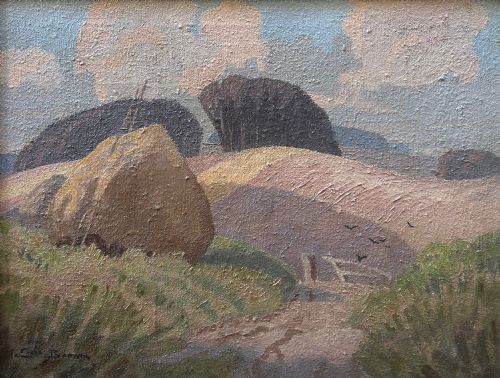
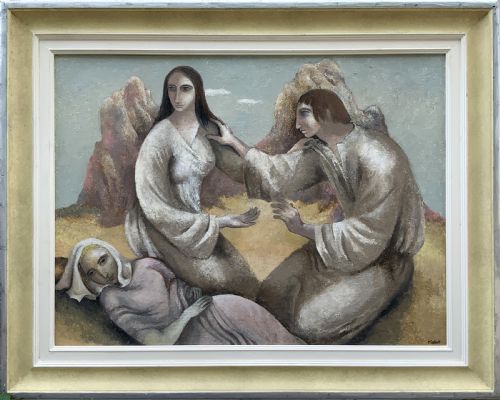
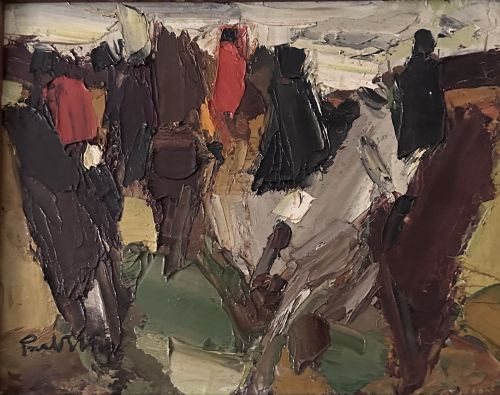
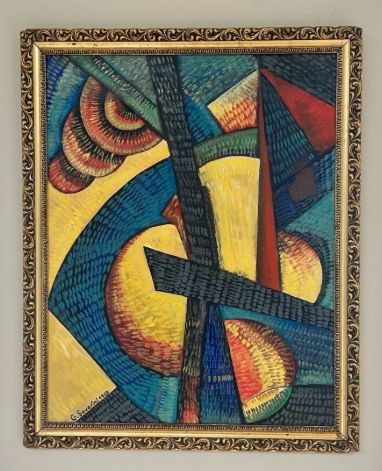
Textured oil paint artwork encompasses mid-century paintings where pigment stands proud of the support, creating heavy surface relief and tactile weight. You will frequently meet coastal landscapes, cityscapes, abstract compositions, and figurative scenes produced across the decades from the 1920s to the 1960s.
The aesthetic bridges several movements, drawing on Mid-Century Modernism, Expressionism, Post-Impressionism, and Modern British styles. These pieces range from intimate still lifes and animal studies to large-scale marine views and industrial constructivist factory scenes.
Works originate from British, French, American, and continental European hands, reflecting diverse regional approaches to surface manipulation. Many arrive in period wood or gesso frames that complement the heavy application of paint.
What varies in quality
Quality rests in the deliberate control of the pigment and the structural integrity of the heavy surface. Superior pieces demonstrate confident handling where thick impasto defines form and light rather than obscuring the composition.
The relationship between the support and the heavy oil paint dictates longevity and stability. Better examples maintain firm adherence across thick passages without premature cracking or separation from the canvas or board.
Textured Oil Paint Artwork Retail Price Guide 2026
Typical asking prices for textured oil paint artwork among the pieces listed under this phrase on Sellingantiques today, from the lower quarter to the upper quarter. They describe what is for sale here now, not the wider market.
The inventory records diverse subjects including marine seascapes, coastal views, architectural cityscapes, and abstract compositions.
Eric Brown·Christine Nesbit·Erich Mercker·Elisabeth Bardon·Helen Layfield Bradley·Ernst Louizor·William Ernst Burwell
The Textured Oil Paint Artwork Glossary
- Impasto
- Paint applied thickly to a canvas or board, standing out from the surface so that the brush or palette knife strokes are visibly retained. This technique adds literal three-dimensional depth and catches light across the painted plane.
- Gesso
- A traditional primer mixture consisting of a binder mixed with chalk, gypsum, or pigment, applied to prepare wood or canvas surfaces. It provides a stable, absorbent foundation for oil paint layers.
- Mid-Century Modern
- A stylistic descriptor covering design and fine art movements from roughly the 1930s through the 1960s. It often prioritises abstraction, bold forms, and experimental surface textures.
- Post-Impressionism
- An art movement extending beyond Impressionism that focuses on symbolic motifs, heavier outlines, and expressive manipulation of colour and texture. Artists in this tradition often built up thick paint surfaces to convey emotional weight.
Textured Oil Paint Artwork: Frequently Asked Questions
How should I hang textured oil paint artwork?
These heavy-surface paintings require sturdy picture hooks and reliable wall fixings to support the combined weight of the wood frame and thick pigment.
Position the piece away from direct, harsh side-lighting that might cast unwanted shadows across the impasto, opting instead for even ambient illumination.
Are these paintings on canvas or board?
The works utilise both traditional stretched canvas and rigid wood boards as structural supports for the heavy oil pigments.
Heavier impasto compositions often appear on board or reinforced panels to prevent sagging under the physical weight of thick paint layers.
How do I clean thick impasto paintings?
Dust accumulation on textured surfaces requires careful management with a very soft, dry brush to sweep gently between raised paint ridges.
Avoid using liquids, damp cloths, or chemical cleaners on the oil surface, as moisture can penetrate unvarnished peaks or brittle aged paint.
How can I date mid-century textured artworks?
Dating relies on stylistic clues, framing materials, signature formats, and period conventions seen across abstract, expressionist, and modernist pieces from the 1920s to the 1960s.
Examine the reverse of the canvas, board, or wood frame for period inscriptions, stamps, and labels that frequently record creation dates.