







Textured Oil Artwork
Textured oil artwork brings physical depth and pigment to walls through mid-century styles.
Textured Oil Artwork
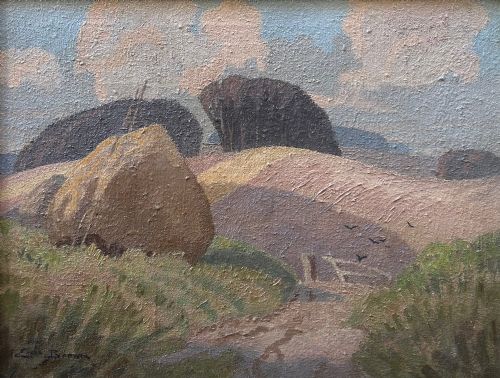
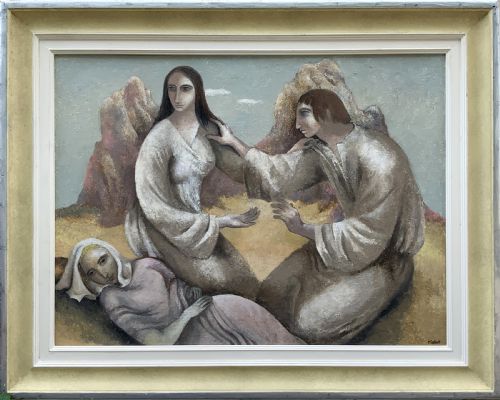
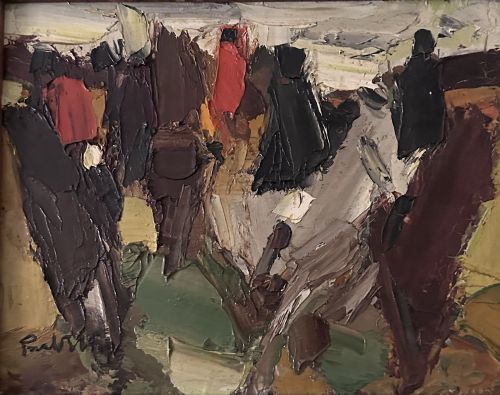
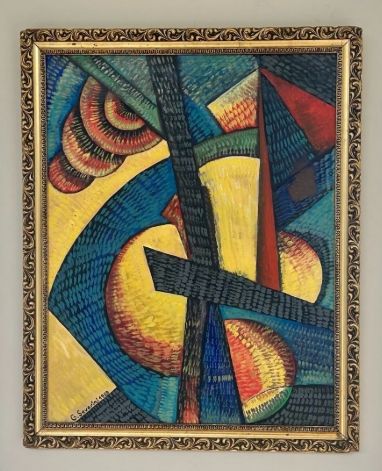
Textured oil artwork encompasses mid-century paintings characterised by thick pigment and tangible surface relief. When you examine textured oil artwork on this page, you encounter subjects ranging from abstract cityscapes and marine scenes to figurative studies and rural landscapes.
The pieces span the decades from the 1920s through the 1960s, reflecting mid-century modern, expressionist, and impressionist movements. Canvas and board provide the primary supports for these dynamic compositions, frequently housed within wood frames.
Materials and technique
Artists apply oil paint directly to wood, canvas, board, or hardboard, building up heavy layers of pigment known as impasto. This thick application creates a raised surface that catches the light and reveals the physical gesture of the brush or palette knife.
Gesso provides a preparatory ground on panels, whilst wood frames enclose the finished paintings. Some works incorporate print elements embellished with painted texture over board.
Textured Oil Artwork Retail Price Guide 2026
Typical asking prices for textured oil artwork among the pieces listed under this phrase on Sellingantiques today, from the lower quarter to the upper quarter. They describe what is for sale here now, not the wider market.
Listings feature oil paint applied to canvas, board, hardboard, and wood, spanning the 1920s to the 1960s.
Distinguishing quality
Quality rests in the handling of the pigment and the structural integrity of the support. Stronger pieces demonstrate confident impasto work where the thickness of the oil paint defines form and shadow with purpose.
The relationship between the canvas or board and the surrounding wood frame also contributes to the coherence of the piece. Works executed by established painters show a distinct mastery of texture compared to simpler decorative items.
Christine Nesbit·Erich Mercker·Elisabeth Bardon·Helen Layfield Bradley·Gino Severini·Leon Kossoff·Jeffrey Pratt·Ernst Louizor·William Ernst Burwell
The Textured Oil Artwork Glossary
- Impasto
- Paint applied thickly to a canvas or board, standing out in relief from the plane. This technique gives textured oil artwork its characteristic tactile quality.
- Hardboard
- An engineered wood product utilised as a sturdy painting support in mid-century works. It offers a rigid alternative to stretched canvas.
- Gesso
- A primer mixture consisting of a binder mixed with chalk, gypsum, or pigment. Artists apply this to boards and canvases before painting.
- Expressionism
- An artistic style where the artist distorts reality for an emotional effect, often utilising aggressive brushwork. This appears frequently in mid-century abstract and figurative pieces.
- Post-Impressionism
- A movement extending impressionism whilst rejecting its limitations, focusing on symbolic motifs and thick application. Works in this vein rely heavily on visible brushstrokes.
Textured Oil Artwork: Frequently Asked Questions
What is impasto in oil painting?
Impasto refers to paint laid on an area of the surface in very thick layers, usually thick enough that the brush or painting-knife strokes are visible. When dry, impasto retains texture and holds paint distinct from the flat plane.
This technique is central to textured oil artwork, allowing the creator to build physical dimension and shadow directly into the surface of the painting.
How do I care for textured oil artwork?
Keep the paintings away from direct sunlight and rapid humidity changes to protect the wood supports and oil pigment. Dust the raised surfaces very gently with a soft, dry brush.
Avoid using damp cloths or cleaning solutions on impasto surfaces, as moisture can damage the brittle aged paint layers and exposed board.
Are these paintings original works?
The selections include original mid-century oil paintings executed on canvas, board, and hardboard by various artists. Each piece represents a distinct hand-painted composition from the twentieth century.
Some listings note pieces created after specific artists or incorporating print bases with hand-applied paint embellishments.
What periods do these artworks represent?
The pieces span the decades from the 1920s through the 1960s, with a strong concentration of mid-century modern and 1950s production. This era encompasses shifts towards abstract expressionism and impressionism.
Dates are attributed based on signatures, period styles, and documentation associated with the individual works.