

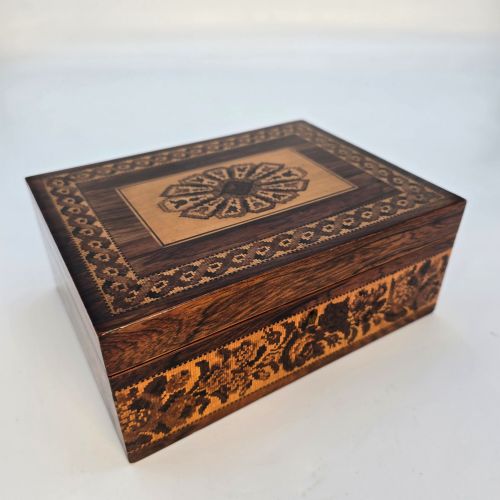


Tessellated Wood Mosaic
Tessellated wood mosaic pieces are intricate works formed from countless tiny timber tiles, bringing remarkable geometric precision and warmth to any room.
Tessellated Wood Mosaic
When you search for tessellated wood mosaic, you enter a world of minute craftsmanship where varied timbers form detailed pictorial scenes or geometric patterns. These items span the nineteenth century and the Victorian era, showing the distinct influence of Tunbridge Ware alongside North African traditions.
The objects available on this page include jewellery boxes, tea caddies, stationery boxes, and wall plaques. You will also encounter decorative baskets, dishes, ladies glove boxes, cribbage boxes, and dining tables.
Tunbridge Ware dominates the selection, showcasing specialised techniques developed in Kent. Alongside these English pieces, North African mosaic top dining tables represent alternative interpretations of geometric woodwork.
How they were made
Artisans constructed these pieces using mixed hardwood veneers alongside specific native and exotic timbers such as walnut, rosewood, boxwood, holly, and sycamore. Burr walnut frequently provided a richly figured background for the intricate geometric motifs.
Workers assembled tiny cross-sections of wood rods into comprehensive mosaics, which were then applied as veneers to carcases of boxes, tables, and plaques. This method required extreme patience and precise cutting to ensure the minuscule wooden squares and triangles fitted together seamlessly.
Tessellated Wood Mosaic Retail Price Guide 2026
Typical asking prices for tessellated wood mosaic among the pieces listed under this phrase on Sellingantiques today, from the lower quarter to the upper quarter. They describe what is for sale here now, not the wider market.
One exceptional dish immortalises a fragile butterfly entirely in tiny wooden pixels, outlasting the insect by over a century.
What varies in quality
The distinction between standard items and exceptional pieces rests primarily on the complexity and fineness of the mosaic work. Finer examples display a staggering density of microscopic tesserae, creating convincing three-dimensional perspective or realistic depictions of butterflies and landscapes.
The choice of contrasting woods also dictates the visual impact, with superior items utilising naturally coloured timbers to achieve shading without artificial stains. Furthermore, the condition of the underlying wooden carcase and the crispness of the geometric borders separate ordinary boxes from collector-grade pieces.
Edmund Nye·Henry Hollamby
The Tessellated Wood Mosaic Glossary
- Tesserae
- The individual small blocks or tiles of wood used to create the mosaic pattern. In these pieces, they are often cut from various naturally coloured timbers.
- Marquetry
- The art and craft of applying pieces of veneer to a structure to form decorative patterns and designs. This technique underpins the surface decoration of many boxes and plaques.
- Veneer
- A thin slice of wood applied to a core structure to provide a decorative exterior surface. Mixed hardwood veneers are typical in these constructions.
Tessellated Wood Mosaic: Frequently Asked Questions
What is tessellated wood mosaic?
Tessellated wood mosaic involves arranging thousands of tiny, naturally coloured wood blocks into intricate geometric patterns or pictorial scenes. These miniature tiles form the decorative surfaces of nineteenth-century boxes, plaques, and tables.
Master craftsmen utilised timbers like boxwood, holly, and walnut to create astonishing detail without relying on paint. The resulting pieces showcase a high point of Victorian decorative woodwork.
How were Tunbridge Ware boxes used?
Victorian households utilised these decorated boxes for specific social and domestic rituals. Tea caddies stored valuable tea leaves, while stationery boxes kept writing paper orderly on a desk.
Items like cribbage boxes and glove boxes served both practical storage functions and as decorative conversation pieces in the parlour. Their intricate mosaic exteriors made them popular gifts and souvenirs.
How do I care for wooden mosaic pieces?
Protect these delicate items by keeping them away from direct sunlight and fluctuating humidity, which can cause the tiny wood tiles to lift. Gentle dusting with a dry, soft cloth is sufficient for routine maintenance.
Avoid using liquid polishes or modern cleaning sprays, as moisture can seep between the microscopic tesserae and weaken the adhesive. Maintaining a stable indoor climate ensures the woodwork remains intact.
How can I tell different periods apart?
Nineteenth-century pieces often display distinct shifts in stylistic ambition, moving from simple geometric bands to complex pictorial representations of castles, butterflies, and flora. Victorian examples frequently incorporate specific labelling or characteristic border motifs associated with known workshops.
Examining the underlying timber construction and the type of veneer backing provides further clues to dating. North African mosaic work utilises distinct regional geometric layouts that differ visibly from English Tunbridge Ware.