
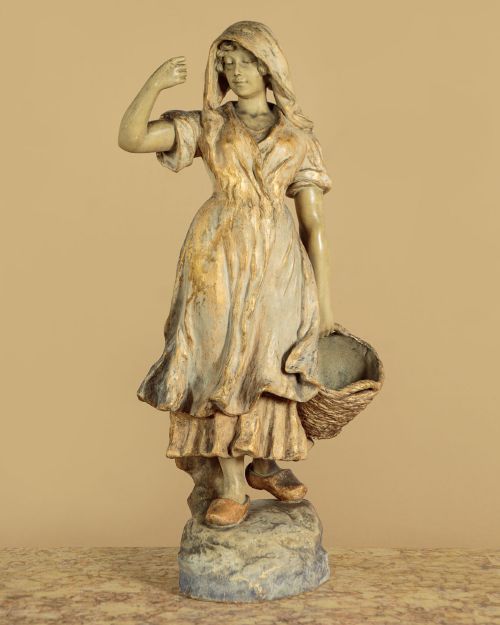
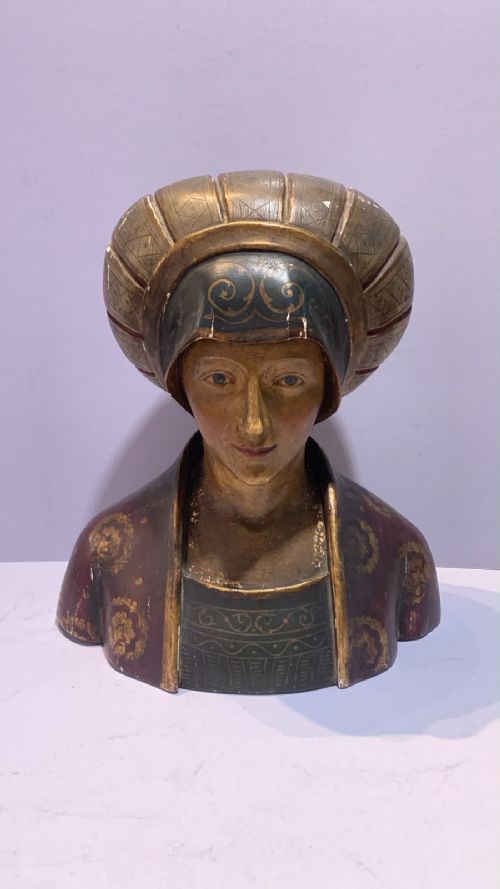
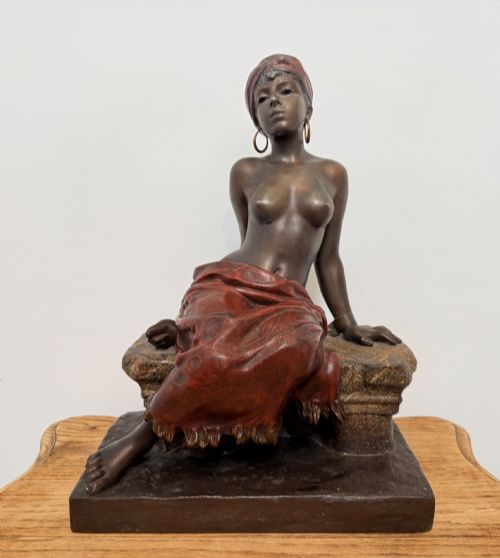

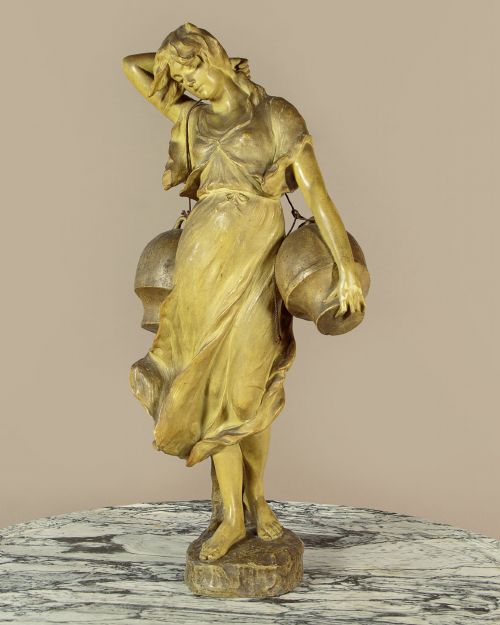



Terracotta Female Sculpture
These terracotta female sculpture pieces bring tactile warmth to interiors through modelled clay forms shaped across the nineteenth and twentieth centuries.
Terracotta Female Sculpture
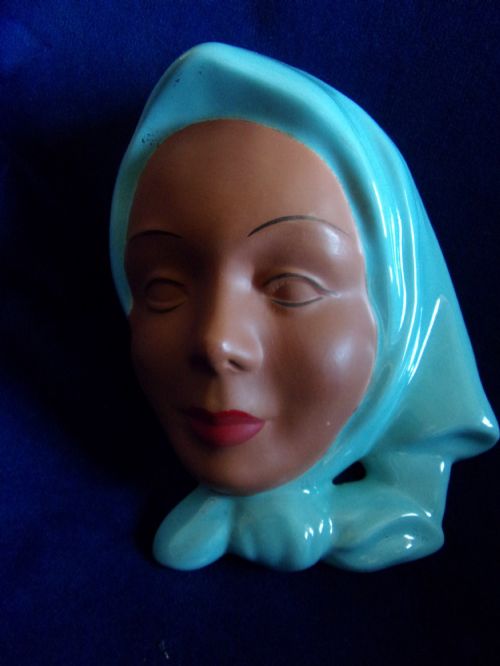
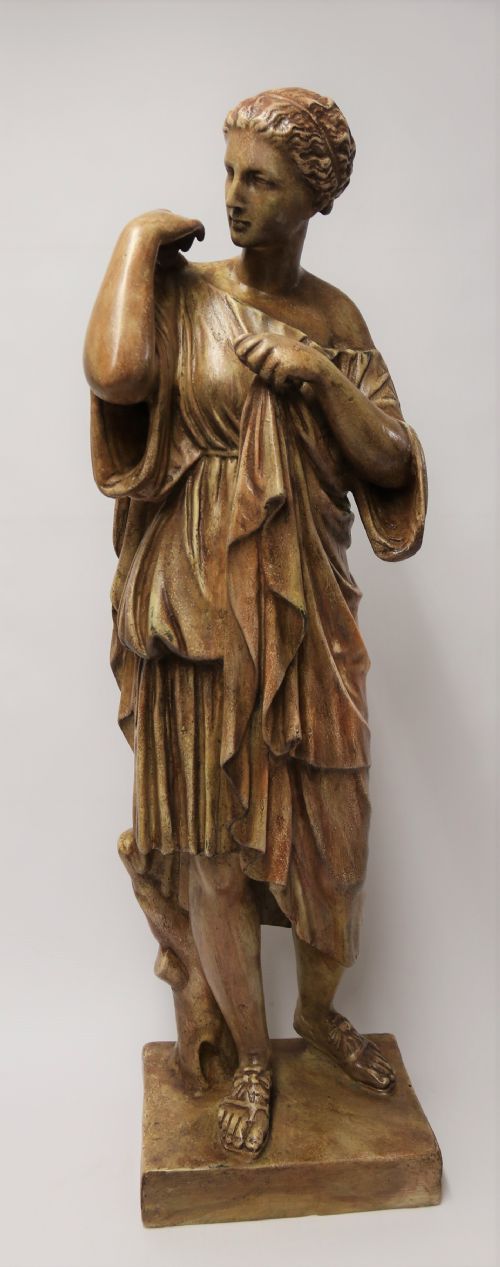
A terracotta female sculpture takes many shapes, ranging from full-length figures of water carriers and dancers to classical busts and wall masques. You will frequently encounter nineteenth century and early twentieth century European works, spanning Neoclassical, Art Nouveau, and Art Deco styles.
Makers produced these pieces to serve as decorative centrepieces in domestic spaces, drawing on historical motifs from ancient models, mythological subjects, and contemporary portrayals of maidens.
The selection includes specific regional expressions such as Austrian terracotta figures alongside French and Italian interpretations of the female form.
Materials and Technique
Makers shaped these sculptures primarily from terracotta and earthenware, frequently finishing surfaces with polychrome paint, glazes, or bronzed patination to resemble metal or stone.
Some works incorporate mixed elements like wooden bases or ceramic bodies, while related pieces utilise porcelain and plaster to achieve distinct surface textures.
The listings span from nineteenth century Neoclassical interpretations to 1930s Art Deco wall masques in terracotta, earthenware, and porcelain.
Quality and Execution
The distinction between tiers rests upon the crispness of the modelling in the clay and the sensitivity of the hand-finishing applied to the surface details.
Pieces from established manufactories and named sculptors demonstrate superior anatomical precision and more complex glazing or painting techniques compared to simpler commercial production.
Goldscheider·E Villanis·Royal Dux·Gilbert Privat·Bernard Bloch·Ernst Whaliss·Georges Morin·Bohumil Rezl·A Gory
The Terracotta Female Sculpture Glossary
- Terracotta
- A porous, fired clay body ranging in colour from pale buff to deep reddish-brown. It forms the primary structural material for these sculpted figures.
- Art Nouveau
- A decorative style prevalent in the late nineteenth and early twentieth centuries characterised by flowing, organic lines and floral motifs. Figures from this period often depict maidens with long, cascading hair.
- Bust
- A sculpted representation of a person from the chest or shoulders up. These pieces focus attention on facial expression and portraiture details.
- Polychrome
- Painted in several colours. Many terracotta sculptures feature applied pigments to highlight garments, hair, and flesh tones.
- Art Deco
- A design movement of the 1920s and 1930s defined by streamlined geometric forms and stylised depictions of dancers and modern figures.
Terracotta Female Sculpture: Frequently Asked Questions
How do I date a terracotta female sculpture?
Dating relies on stylistic markers such as Neoclassical drapery, Art Nouveau whiplash curves, or Art Deco geometric simplification. Signatures, factory stamps, and registration numbers also help establish the period of production.
Material finishes like polychrome paint or bronzed patination further align pieces with the manufacturing techniques of specific decades.
Were these sculptures meant for indoor display?
Makers designed these terracotta and earthenware figures primarily for interior domestic decoration on mantels, tables, or pedestals. Their fired clay bodies lack the weather resistance required for permanent outdoor garden placement.
Some wall masques were produced specifically for hanging on interior walls as decorative art pieces.
How should I clean my sculpture?
Dust terracotta and painted surfaces gently with a soft, dry brush to prevent accumulation. Avoid using water or liquid cleaners, as porous fired clay and delicate polychrome paint absorb moisture easily.
Handling should be done with clean hands to prevent skin oils from transferring onto unglazed clay areas.
What is the difference between terracotta and porcelain figures?
Terracotta uses a porous, coarse-grained fired clay that often receives painted or patinated finishes. Porcelain employs a refined, vitreous ceramic paste fired at higher temperatures to create a smooth, non-porous white body with glossy glazes.
Both materials were utilised by period makers to render graceful female forms with distinct tactile qualities.