



Telescopic Floor Light
A telescopic floor light offers adjustable height to direct illumination precisely where needed, combining period metalwork with functional design.
Telescopic Floor Light
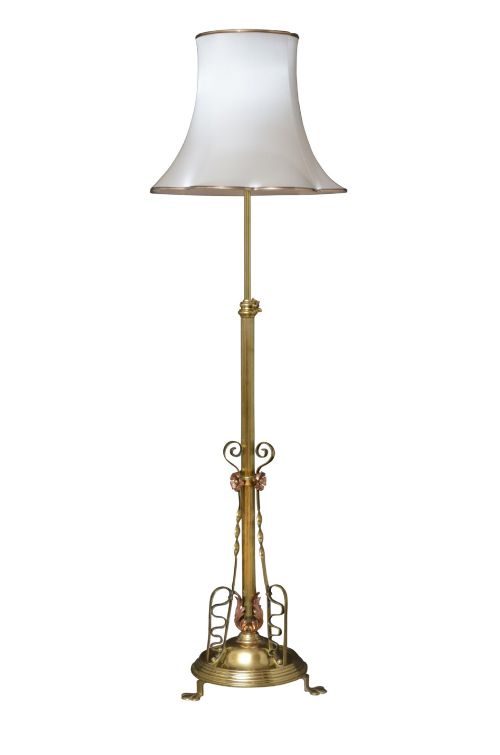
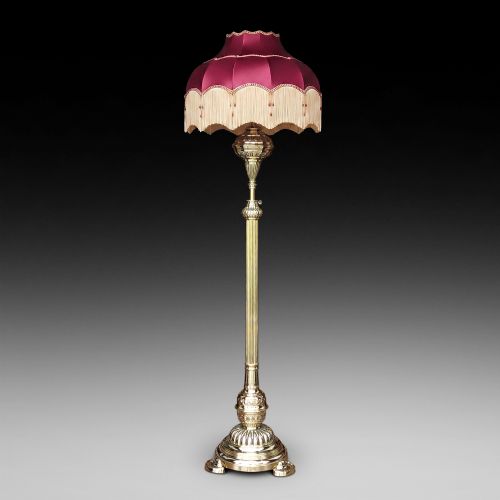
A telescopic floor light provides adjustable height illumination, appearing primarily as standard lamps and floor lamps derived from earlier oil lamp forms. These pieces span Victorian, Edwardian, and mid-twentieth century periods, often utilising extending columns for practical domestic use.
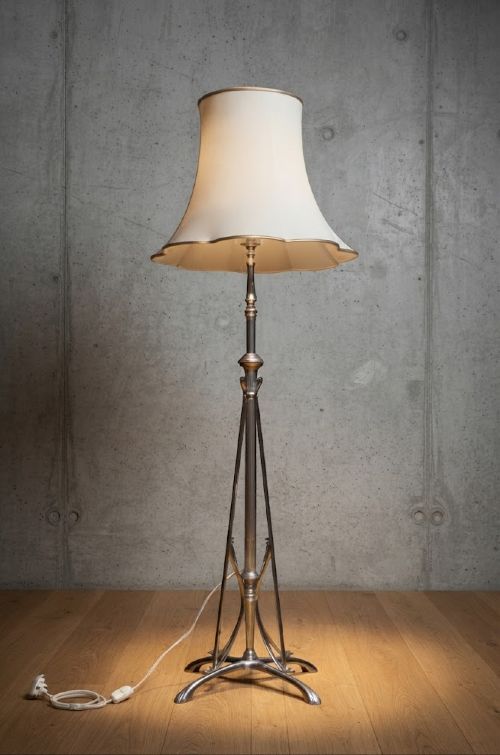
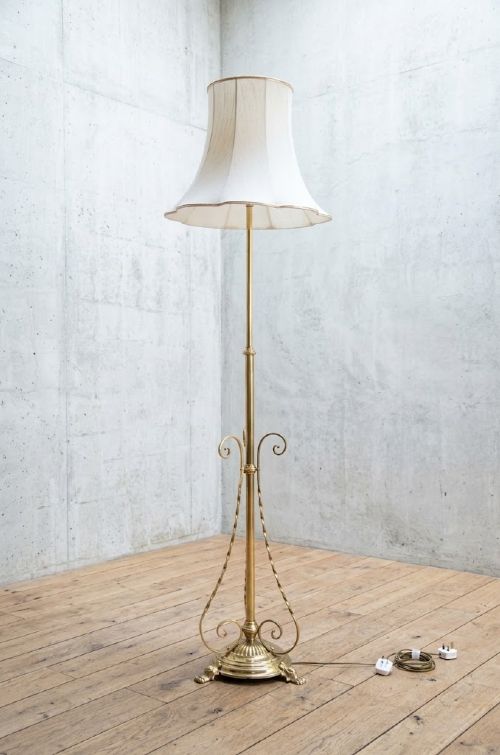
Victorian and Edwardian examples dominate the selection, frequently constructed from brass with adjustable mechanisms originally designed for burning oil before conversion to electricity. Arts and Crafts and Art Nouveau variants also appear, showing distinctive decorative metalwork alongside standard telescopic columns.
How they were made
Makers utilised solid brass, copper, and wrought iron for structural standards, often pairing these metals with marble, onyx, or ormolu bases for added stability and visual contrast. Components were cast, forged, or spun, with threaded or friction-held mechanisms allowing the inner column to rise and fall smoothly.
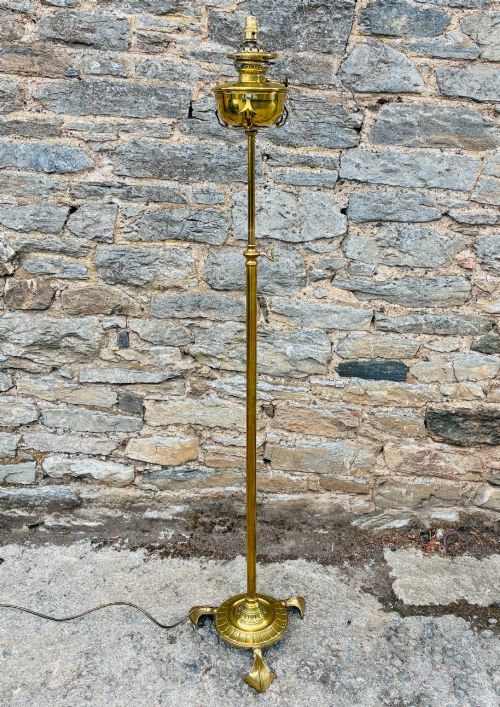
Many specimens started life as oil lamps fitted with burners from makers such as Hinks or Messenger, later adapted to hold electrical fittings while retaining their original telescopic height adjustment and heavy weighted bases.
Telescopic Floor Light Retail Price Guide 2026
Typical asking prices for telescopic floor light among the pieces listed under this phrase on Sellingantiques today, from the lower quarter to the upper quarter. They describe what is for sale here now, not the wider market.
Some Victorian brass columns extend high enough to illuminate entire high-ceilinged parlours while still operating on a single thumbscrew.
What varies in quality
Quality rests in the weight of the metal and the precision of the extending mechanism, where heavier gauge brass and solid construction ensure stability when fully elevated. Inferior examples rely on thin tubing that flexes, whereas superior specimens maintain a rigid vertical stance.
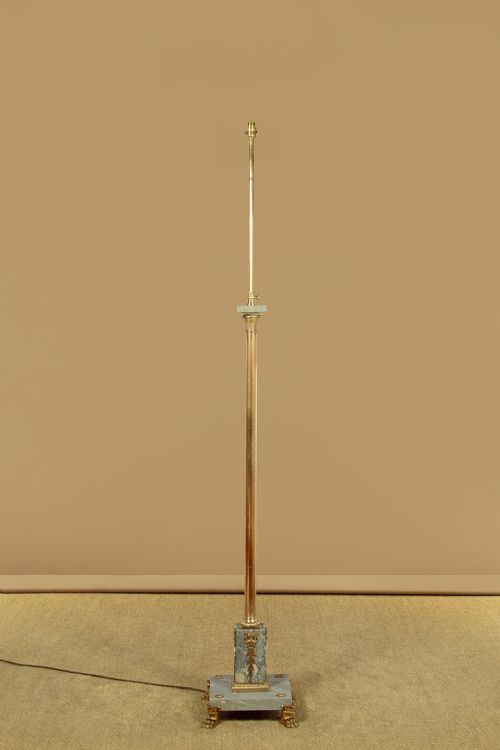
Decoration also separates standard production from finer pieces, evident in crisp casting detail on Corinthian columns, integrated copper accents, or decorative bases incorporating marble and onyx rather than plain iron.
Hinks of B'ham·Messenger
The Telescopic Floor Light Glossary
- Standard lamp
- A tall floor-standing lamp designed to illuminate a room from standing height. These pieces often incorporate height-adjustable columns.
- Telescopic
- An extending mechanism formed of nested tubes that slide one inside another. This allows the overall height of the standard to be raised or lowered.
- Corinthian column
- A classical architectural column design featuring an ornate capital decorated with acanthus leaves. This motif frequently decorates the upper shaft of Victorian brass standard lamps.
- Rise and fall
- An alternative term for an adjustable height mechanism. It describes standard lamps that alter their vertical position via a sliding shaft.
- Ormolu
- Gilt bronze mounted onto decorative objects and furniture. In these pieces, ormolu appears alongside onyx and marble bases.
Telescopic Floor Light: Frequently Asked Questions
What is a telescopic floor light?
A telescopic floor light is a tall standard lamp equipped with an extending shaft that adjusts the height of the light source. Most examples derive from nineteenth century oil lamps adapted for modern electrical use.
These pieces combine functional mechanics with period materials like brass, copper, and wrought iron, making them suitable for placement beside armchairs or reading desks.
How do you adjust the height?
The extending mechanism typically relies on an inner sliding tube held in place by a thumbscrew, friction collar, or internal ratchet system. Loosening the fitting allows the upper section to rise or lower before securing it at the desired position.
Care should be taken when adjusting older brass standards to support the weight of the fixture and prevent sudden drops.
Were these originally oil lamps?
Many Victorian and Edwardian standard lamps began as oil-burning floor lamps featuring fonts and burners. These were subsequently converted to electricity as domestic power supplies became common.
Evidence of this conversion often remains visible in the stepped brass collars and weighted bases originally designed to steady tall oil reservoirs.
How do I date a brass standard lamp?
Dating relies on stylistic details such as the heavy stepped bases of early Victorian designs or the botanical motifs found on Arts and Crafts and Art Nouveau pieces. Corinthian column capitals and specific metal combinations also point toward particular decades between the Victorian era and nineteen-twenty.
Manufacturer stamps on burners or switches provide additional clues for establishing the production period.