

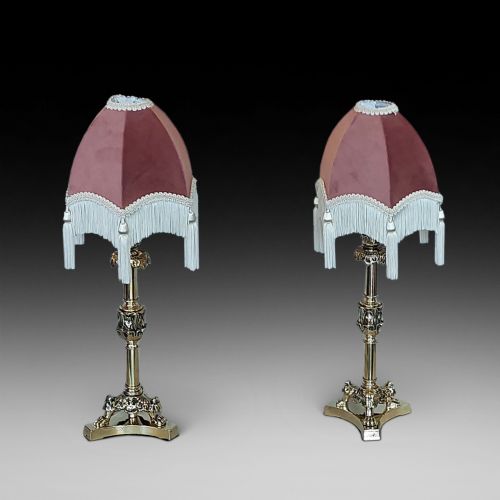


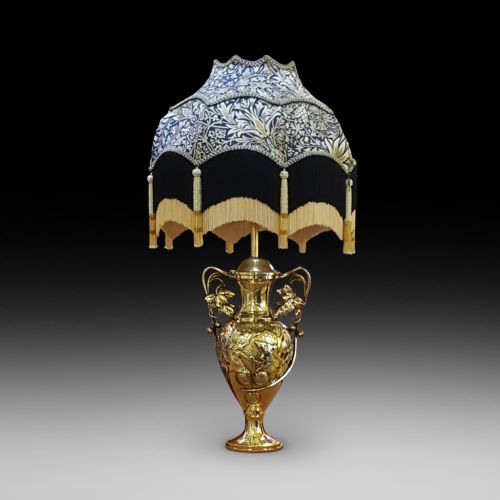
Tassel Lampshade Light
These tassel lampshade light pieces bring warm, diffused illumination and rich texture to a room, drawing the eye with their period character.
Tassel Lampshade Light
When you search for a tassel lampshade light, you encounter a selection of period lighting designed to soften a room's atmosphere. The pieces on this page span the 1800s, Victorian era, Edwardian period, 1900, and 1920, bringing distinct historical character to domestic spaces.
Makers and manufacturers of these period lights utilised varied forms, including painted standard lamps and vase lamps, to suit the eclectic tastes of their times.
How they were made
The construction of these lamps relies heavily on worked metals such as brass, beaten copper, and gilt metal, which form the structural standards and bases. Workshops employed pressing, casting, and beating techniques to shape the metal components into florid or classical silhouettes.
Soft elements involve fabrics like silk fringe, glass beads, and thread, which construct the shades and decorative hangings associated with the tassel style. These materials are combined with electrical conversions in older pieces, adapting nineteenth-century candlesticks and candlestands for modern use.
Tassel Lampshade Light Retail Price Guide 2026
Typical asking prices for tassel lampshade light among the pieces listed under this phrase on Sellingantiques today, from the lower quarter to the upper quarter. They describe what is for sale here now, not the wider market.
The listings on this page span several decades, featuring brass, copper, and fabric materials across Victorian, Edwardian, and Art Nouveau styles.
What varies in quality
Quality in these lamps rests on the weight and handling of the metalwork, distinguishing heavy, crisp brass castings and hand-beaten copper from lighter, pressed alternatives. The finesse in decorative details, such as Chinoiserie painting or Art Nouveau organic curves, dictates the refinement of the piece.
The integrity of the conversion from earlier candlesticks to electric lamps also defines the standard of craftsmanship, alongside the preservation of original fabric elements like fringe and glass beads.
The Tassel Lampshade Light Glossary
- Standard lamp
- A tall floor lamp designed to stand independently on the floor and illuminate a room from a raised height. These pieces often feature weighted bases for stability.
- Candlestick
- A holder designed for a wax candle, which in later periods was frequently converted into an electric table lamp. These items form the basis of several early lighting options.
- Art Nouveau
- A style of design characterised by flowing, organic lines and motifs inspired by natural forms. This aesthetic is frequently seen on brass and copper lamp standards from the turn of the twentieth century.
- Chinoiserie
- European decorative art reflecting Chinese artistic influences, often featuring hand-painted motifs on lamp standards. This style brings a decorative narrative to Victorian lighting.
- Fringe
- An ornamental border consisting of hanging threads or tassels, used to soften the edge of lampshades. It diffuses the light cast by the bulb.
Tassel Lampshade Light: Frequently Asked Questions
What is a tassel lampshade light?
A tassel lampshade light is a period lighting fixture, typically a table or floor lamp, that incorporates fabric shades adorned with fringes and tassels.
These pieces draw on historical styles like Art Nouveau, Victorian, and Arts and Crafts to create a warm, decorative focal point in an interior.
How do I date a brass lamp?
Dating a brass lamp involves examining the manufacturing techniques, such as whether the metal is heavy cast brass or later pressed sheet metal. Stylistic clues like Victorian Neoclassical motifs or Edwardian proportions also help place the piece in its era.
Additionally, evidence of conversion from an earlier candlestick can indicate a nineteenth-century origin.
Where should I place a floor lamp?
Floor lamps suit corners of reception rooms, beside reading chairs, or flanking larger pieces of furniture where they provide ambient vertical illumination. Their height helps balance the proportions of a room with high ceilings.
They function well in spaces lacking overhead lighting.
Are these lamps safe to use?
Period lamps generally require rewiring or inspection by a qualified professional to ensure the electrical components meet modern safety standards. Many older pieces are successfully adapted from candles or older wiring systems.
Checking the cord and lamp holder preserves the antique standard while ensuring daily utility.