
Target Cluster Engagement Ring
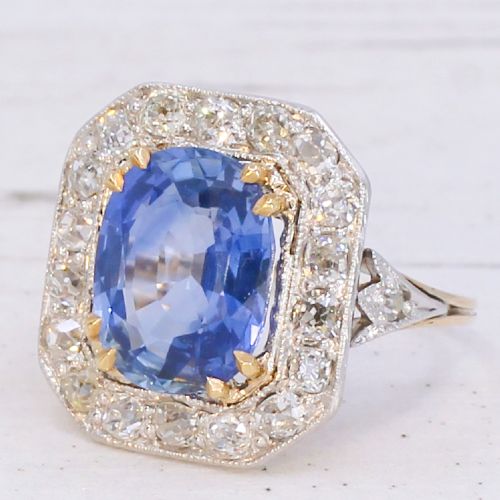
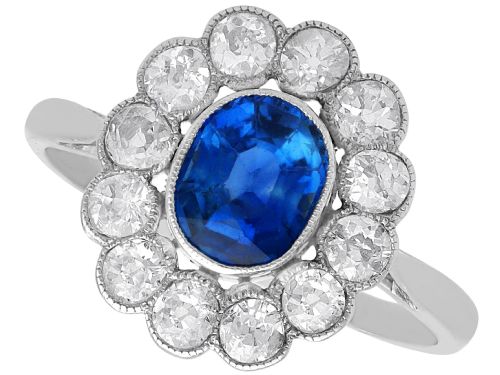
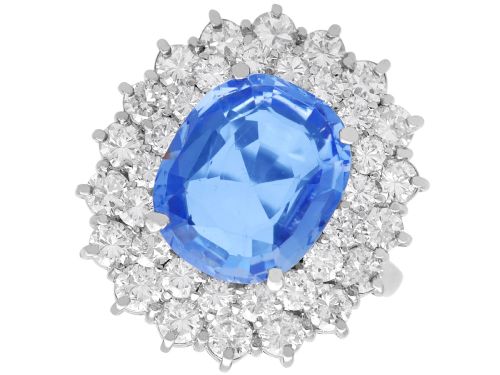
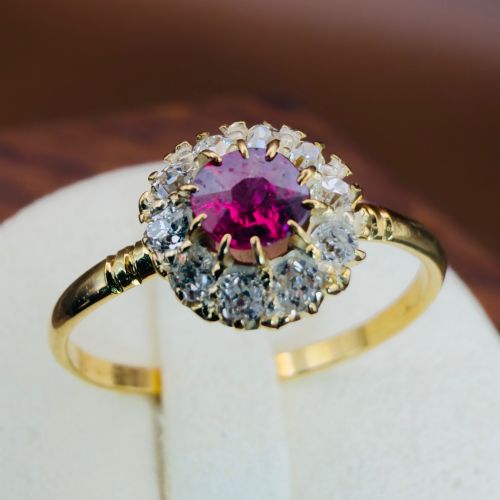
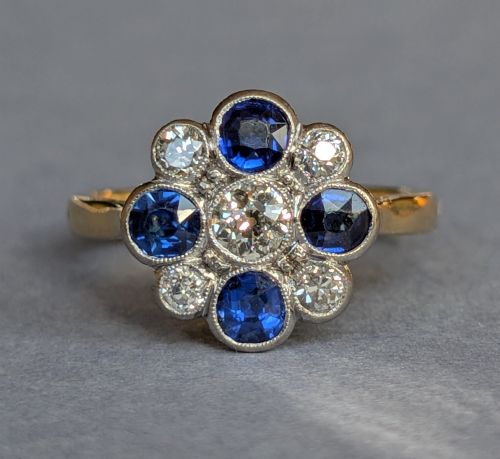
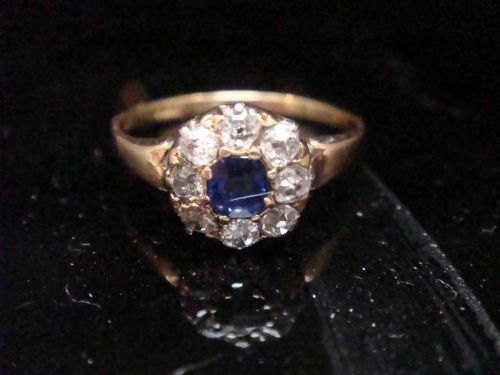
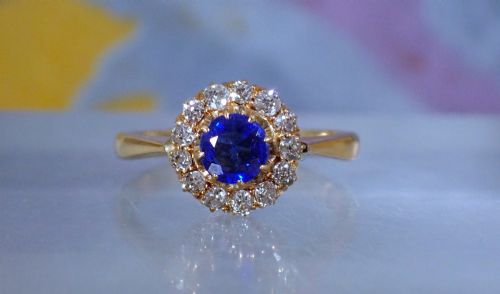
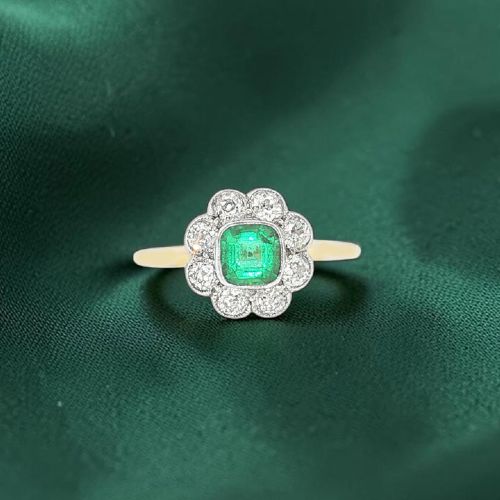
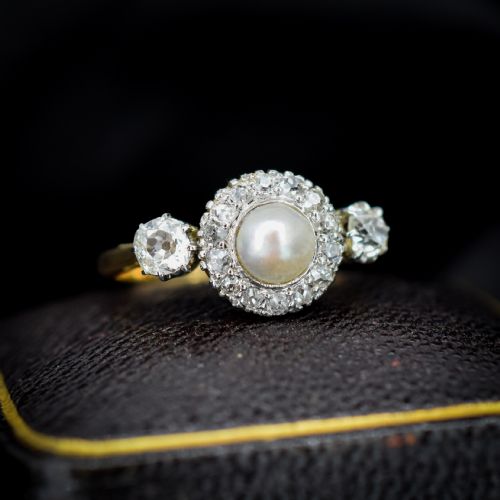
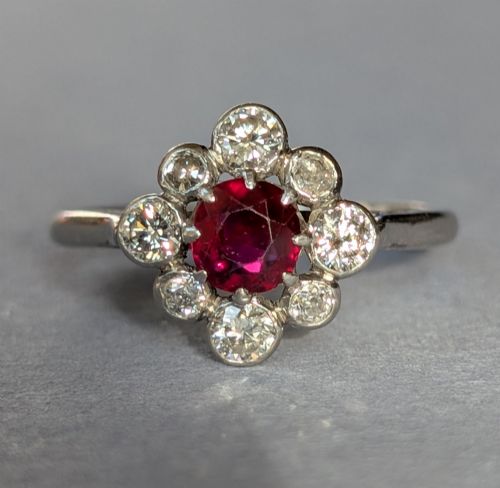
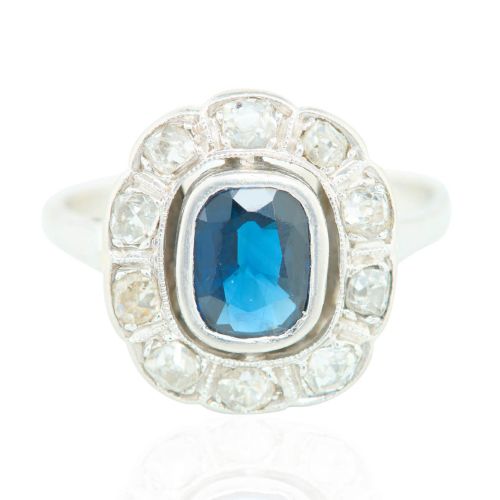
A target cluster engagement ring centres a vivid gemstone within concentric rows of diamonds, offering striking geometric presence on the hand.
Target Cluster Engagement Ring
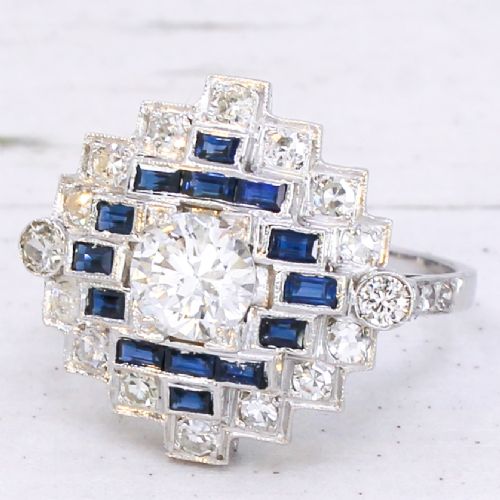
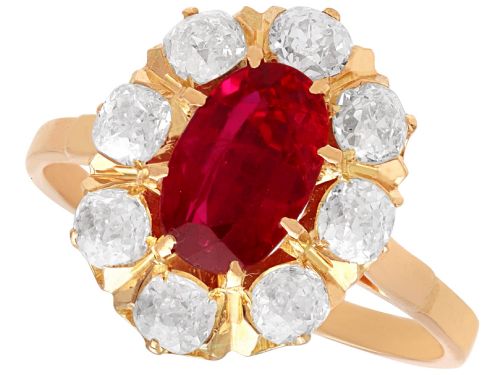
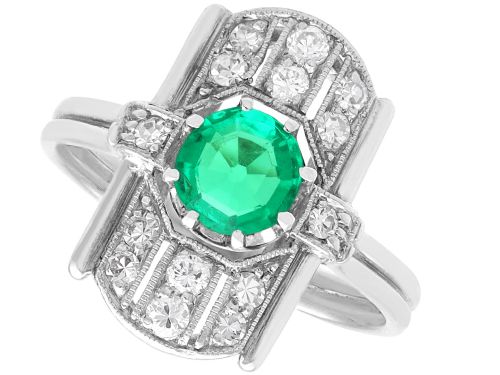
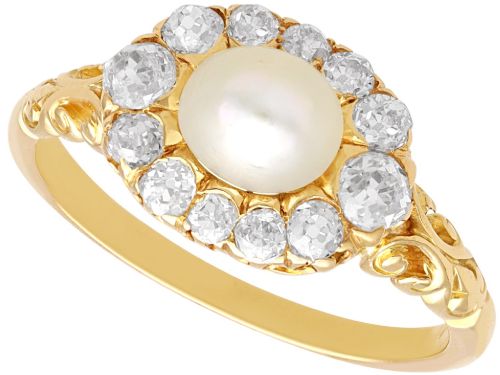
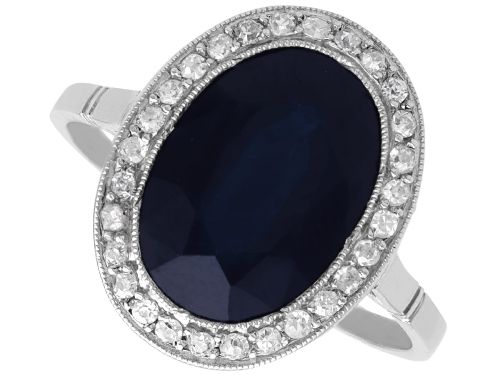
Most examples encountered on this page date from the early twentieth century, spanning the Victorian period through to the 1960s. These range from delicate floral and daisy clusters in yellow gold to geometric platinum mountings set with calibre cut stones.
The form adapts across decades, shifting from organic nineteenth-century pearl and ruby arrangements to the sharp, symmetrical lines favoured during the 1920s and 1930s. Buyers select these rings for their distinct architectural profile and the substantial finger coverage they provide relative to their carat weight.
Materials and construction
Platinum and 18ct gold, including white and yellow variants, form the structural foundation of these rings. Platinum gained significant favour during the Edwardian and Art Deco periods for its strength, allowing jewellers to fabricate delicate, lace-like settings and secure tiny pavé stones without heavy metal borders.
Gemstones are frequently shaped with traditional cuts, such as old cut diamonds and calibre cut sapphires or rubies tailored to fit precise geometric channels. Settings rely on hand-beaten claws, millegrain edges, and flush bezels that require meticulous metalwork to hold multiple concentric stones securely in place.
Listings feature pieces spanning from the Victorian era through the 1960s, executed in platinum, yellow gold, and white gold.
Assessing quality and execution
The harmony of proportions between the central stone and the surrounding halo dictates visual success. Superior examples display perfectly matched outer stones that follow the exact contour of the centre gem without awkward gaps in the metalwork.
The refinement of the hand-finishing, particularly in the crispness of millegrain beading and the seamless alignment of calibre cut gems, separates standard production from exceptional jewellers' work.
The Target Cluster Engagement Ring Glossary
- Target ring
- A ring design featuring a central gemstone enclosed by one or more concentric rings of contrasting stones, creating a concentric pattern.
- Calibre cut
- Gemstones specifically shaped, often square or rectangular, to fit tightly together in a geometric channel without visible metal gaps.
- Millegrain
- A decorative technique involving a row of tiny raised metal beads along the edges of a setting, common in Edwardian and Art Deco jewellery.
- Old cut
- Diamond cutting styles pre-dating modern brilliant cuts, characterised by high crowns, small tables, and deep pavilions that catch candlelight effectively.
- Cluster ring
- A ring arrangement where a group of smaller gemstones are clustered closely around a larger focal stone to maximise overall brilliance and presence.
Target Cluster Engagement Ring: Frequently Asked Questions
What is a target cluster ring?
A target cluster ring is a historic jewellery design where a central gemstone is encircled by one or more geometric rows of smaller stones. This concentric layout produces a distinct visual impact that mimics a target.
Such configurations became especially popular during the early twentieth century, particularly within Art Deco design, where symmetry and geometric contrast were paramount.
How do I wear an antique cluster ring daily?
Daily wear requires consideration of the setting height and the presence of softer stones like pearls or emeralds. Regular checks by a jeweller ensure the delicate claws holding the concentric stones remain secure.
Removing the ring during heavy manual tasks prevents unnecessary wear on the intricate millegrain work and protects the precious metal structure from impact.
How do I date an Edwardian cluster ring?
Edwardian rings are typically distinguished by lightweight platinum settings, intricate pierced work, and the use of millegrain detailing. They often favour softer colour palettes involving pearls, sapphires, and old cut diamonds.
In contrast, later Art Deco pieces introduce bolder geometric symmetry and calibre cut stones, while Victorian precursors tend to use heavier yellow gold and floral cluster motifs.
Are these rings suitable as modern engagement rings?
These pieces function well as engagement rings due to their substantial finger coverage and distinct individuality. Many buyers prefer them for their historical character and superior craftsmanship compared to contemporary mass-produced alternatives.
Matching a wedding band requires care because the outer halo of a target cluster often sits flush against the finger, sometimes necessitating a curved or custom-contoured companion band.