




Tapestry Storage Ottoman
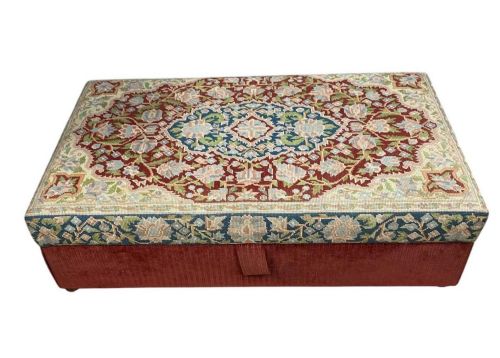
These tapestry storage ottoman pieces combine practical hidden storage with decorative needlework tops, offering a traditional seating and resting place for the home.
Tapestry Storage Ottoman
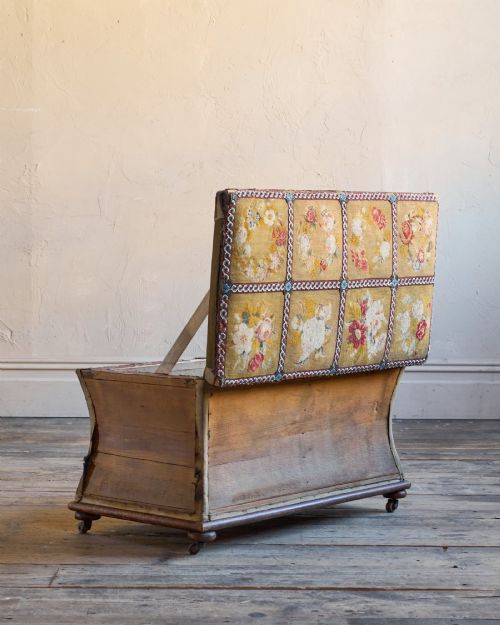
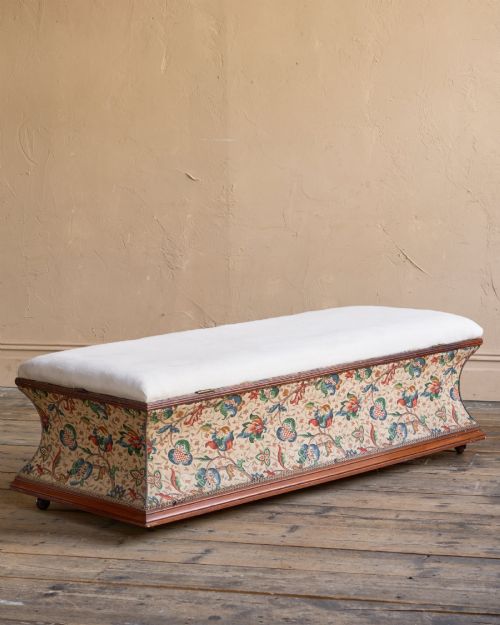
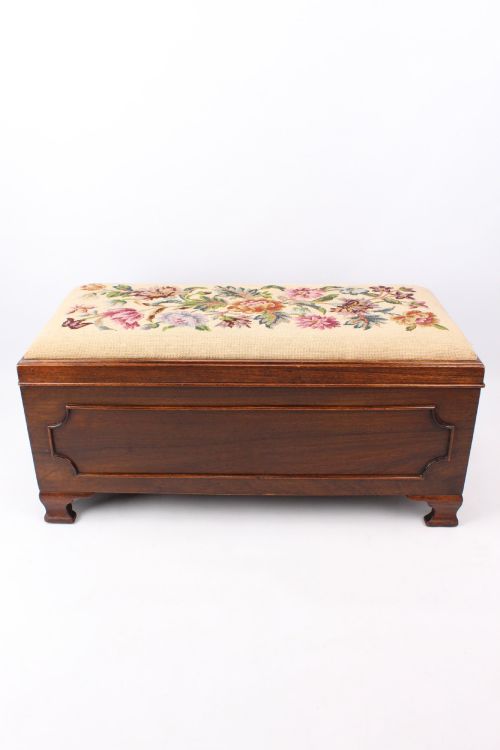
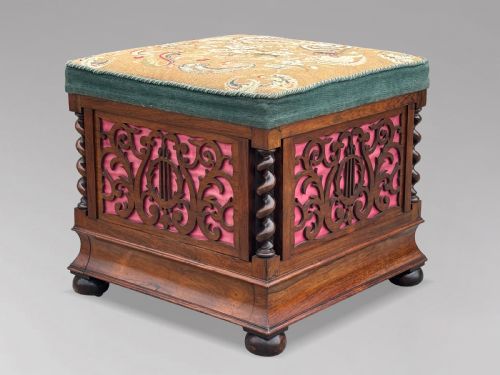
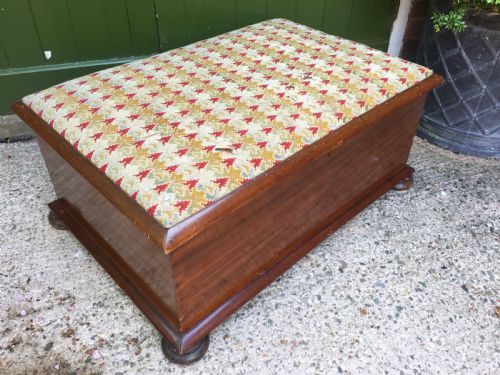
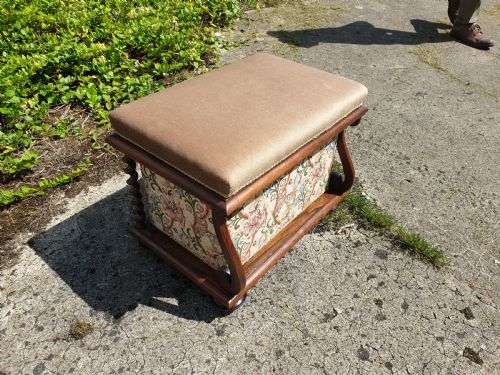
A tapestry storage ottoman is a dual-purpose piece of furniture that provides an internal compartment alongside a cushioned or needlework-covered top for sitting or resting feet. The examples seen on this page span the nineteenth century, including Victorian, Regency, and William IV periods, alongside pieces dated around eighteen-ninety and nineteen-twenty.
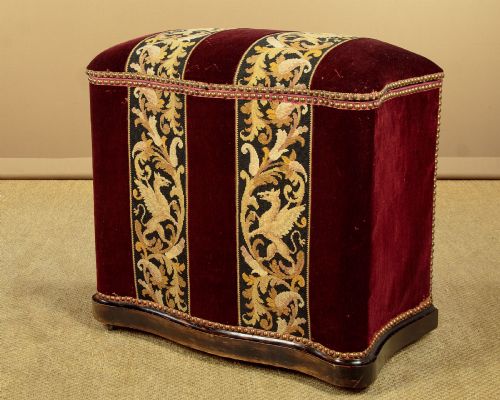
The forms found in these listings extend across various functional types, such as storage chests, log boxes, piano stools, and window stools. A buyer is most likely to encounter Victorian and nineteenth-century rosewood or mahogany frames topped with needlepoint, gros-point, or fabric upholstery.
These items serve both decorative and utility roles within traditional English interiors. Their internal spaces function for linens, logs, or general storage while the upholstered lid maintains the appearance of a formal stool or daybed.
How they were made
The construction of these pieces relies on solid timber frames fashioned from mahogany, rosewood, pine, and other woods. Artisans shaped these structures into waisted, rectangular, or box-seat forms designed to support hinged lids.
Upholstery and needlework form the upper surfaces, utilising wool and fabric to create intricate needlepoint and gros-point designs. Details such as brass components add functional and decorative accents to the wooden and upholstered bodies.
Tapestry Storage Ottoman Retail Price Guide 2026
Typical asking prices for tapestry storage ottoman among the pieces listed under this phrase on Sellingantiques today, from the lower quarter to the upper quarter. They describe what is for sale here now, not the wider market.
The listings on this site feature items primarily from the nineteenth century, encompassing Victorian, Regency, and William IV styles.
What varies in quality
The choice of primary timber creates a clear distinction across the range, with dense hardwoods like rosewood and mahogany marking a higher standard than secondary woods like pine. The intricacy and preservation of the needlework, such as gros-point tops, further differentiate standard examples from finer ones.
Structural complexity also dictates the tier of a piece, separating simple box storage chests from waisted frames, daybeds, and fitted work boxes. The precision of the joinery and the original integration of the storage mechanism define the craftsmanship at the upper end.
Hallett & Sons
The Tapestry Storage Ottoman Glossary
- Tapestry
- A form of heavy textile used for wall hangings or furniture upholstery, woven with decorative designs. In these pieces, it usually refers to needleworked seat covers.
- Gros-point
- A type of needlepoint stitch worked on canvas using a coarse yarn, creating a durable and textured surface. It appears frequently on nineteenth-century footstool tops.
- Mahogany
- A durable, reddish-brown tropical hardwood utilised extensively for furniture framing during the eighteenth and nineteenth centuries. Its strength allows for refined carving and stable box construction.
- Rosewood
- A heavy, dark timber with distinct figuring, favoured for high-status Victorian and Regency seating. It provides a rich finish to piano stools and box seat stools.
- Waisted
- A furniture profile that curves inward towards the centre before flaring out again at the base or top. This shape is characteristic of certain Regency window stools and ottomans.
Tapestry Storage Ottoman: Frequently Asked Questions
What were tapestry storage ottomans used for?
These pieces functioned primarily as seating, footstools, or daybeds while concealing internal compartments for items like linens, logs, or sewing materials. Their dual purpose made them versatile additions to nineteenth-century drawing rooms and parlours.
In larger country houses, specific variants acted as wood boxes or piano stools, combining domestic utility with formal upholstery.
How do Regency and William IV pieces differ?
Regency and William IV items typically draw on classical revival motifs, exhibiting architectural lines, waisted profiles, and scrolling supports. These earlier nineteenth-century pieces often incorporate fine mahogany frames and precise joinery.
They tend to feel more restrained in ornament compared to later high Victorian iterations, focusing on classical form and high-quality timber grain.
Where should I place an ottoman?
These ottomans suit living spaces, bedrooms, or hallways where both surface seating and hidden storage serve a practical purpose. Placing them at the foot of a bed or near a fireplace mirrors their historical placement in traditional interiors.
Care should be taken to keep antique needlework tops away from direct sunlight to preserve the wool and fabric colours.