



Tapestry Music Seat
These tapestry music seat pieces are period piano stools and dressing table seats covered in woven textiles, offering both practical seating and traditional charm.
Tapestry Music Seat
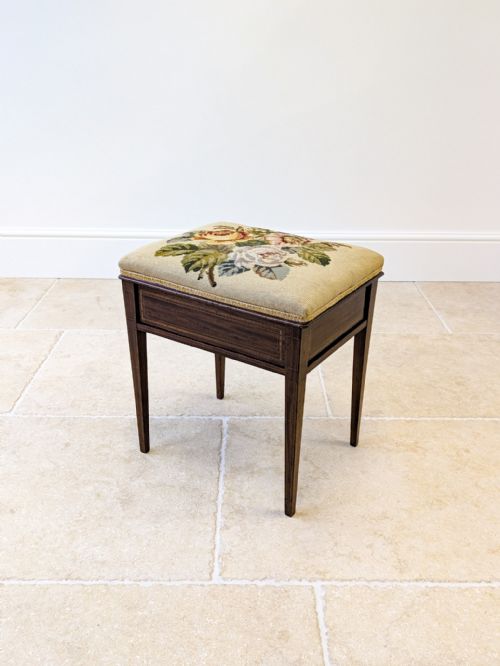
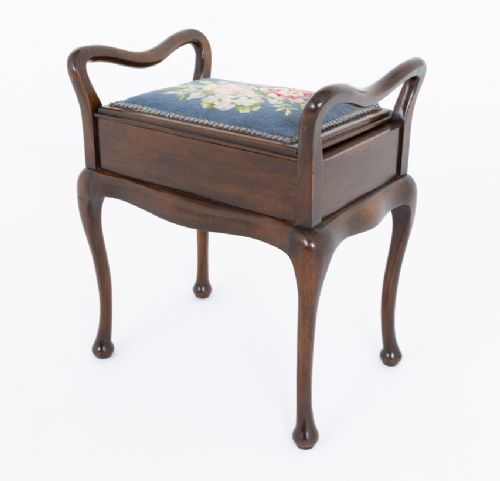
When you search for tapestry music seat, you encounter piano stools and dressing table stools designed for the nineteenth and early twentieth centuries. These pieces serve musicians and homemakers alike, providing seating at keyboards and dressing tables.
The versions most commonly met on this page date from the Victorian, Edwardian, and Regency eras, constructed from timbers such as mahogany, walnut, and rosewood. Forms range from revolving tops to tripod bases and adjustable mechanisms.
How they were made
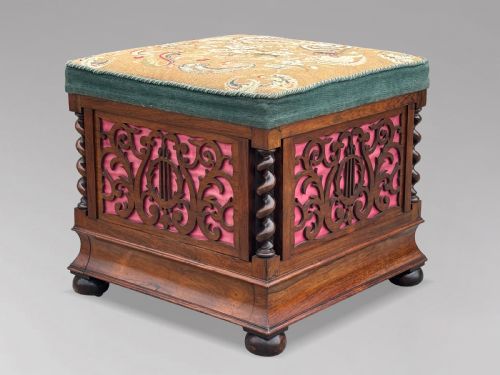
Cabinet makers utilised dense hardwoods including mahogany, walnut, rosewood, and oak to build the frames of each tapestry music seat. These timbers were carved, turned, and sometimes inlaid to suit the prevailing Victorian and Edwardian tastes.
Upholstery involved securing tapestry, fabric, velvet, or other textiles over padded seats, often incorporating brass hardware for adjustable or revolving mechanisms. The combination of sturdy timber frames and durable woven coverings ensured longevity during daily use at the piano.
Tapestry Music Seat Retail Price Guide 2026
Typical asking prices for tapestry music seat among the pieces listed under this phrase on Sellingantiques today, from the lower quarter to the upper quarter. They describe what is for sale here now, not the wider market.
Listings feature woods such as mahogany, walnut, and rosewood, alongside textiles including velvet and tapestry across Victorian and Edwardian periods.
What varies in quality
The refinement of the timber carving and the complexity of the wood turning dictate the distinction between standard production and superior examples. Finer pieces display carefully figured rosewood or walnut, precise inlay work, and robust revolving or adjustable mechanisms.
The integrity of the upholstery and the retention of original tapestry or textile coverings influence the overall character of the piece. Superior examples maintain structural stability in their tripod or four-legged bases without looseness in the joints.
Jas Shoolbred
The Tapestry Music Seat Glossary
- Revolving top
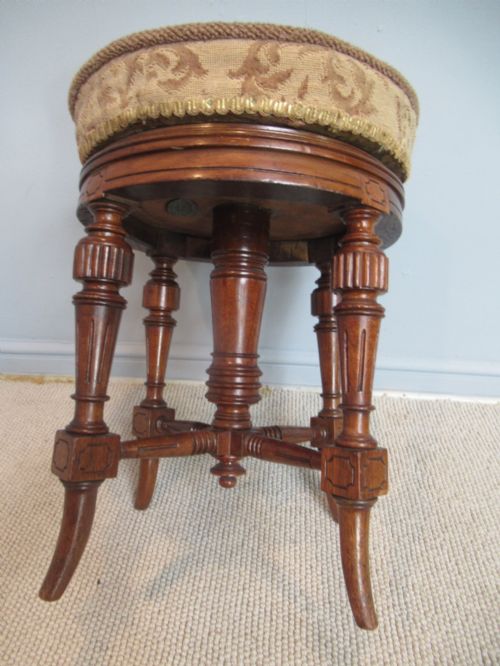
- A seat design that turns on a central screw mechanism to alter the height or allow rotation. This feature proved essential for musicians adjusting their posture at the piano.
- Tripod base
- A three-legged support structure commonly found on Victorian piano stools. It provides stability on uneven floorboards.
- Inlay
- The technique of embedding pieces of contrasting timber into the primary wood surface. Edwardian makers utilised this method to decorate piano stool margins.
- Adjustable mechanism
- Internal hardware that raises or lowers the seat height. These devices allowed players of different statures to use the same instrument comfortably.
Tapestry Music Seat: Frequently Asked Questions
What is a tapestry music seat?
A tapestry music seat is a period stool designed for use at a piano or dressing table, featuring a textile or tapestry upholstered top.
These pieces date primarily from the nineteenth and early twentieth centuries, constructed in timbers like mahogany and walnut.
How do I identify a Victorian piano stool?
Victorian piano stools often feature carved walnut or rosewood frames, heavy turning, and sometimes revolving or tripod mechanisms.
They reflect the ornate aesthetic of the period, differing from the lighter inlay work seen on later Edwardian examples.
Did these stools adjust in height?
Many period music stools incorporated mechanical screws or rotating tops to allow players to alter their seating height.
This adjustability accommodated different performers at upright and grand pianos.
How do I care for the tapestry upholstery?
Protect the woven textile and tapestry surfaces from direct sunlight to prevent fading of the coloured threads.
Gentle surface cleaning and avoiding excessive moisture help preserve the integrity of the antique fabric.