





Tapestry Floral Pillow
A tapestry floral pillow brings centuries of woven artistry into a room, offering tactile historical depth and rich botanical patterns.
Tapestry Floral Pillow
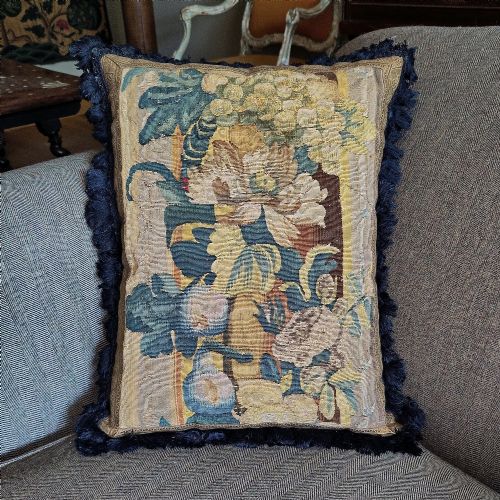
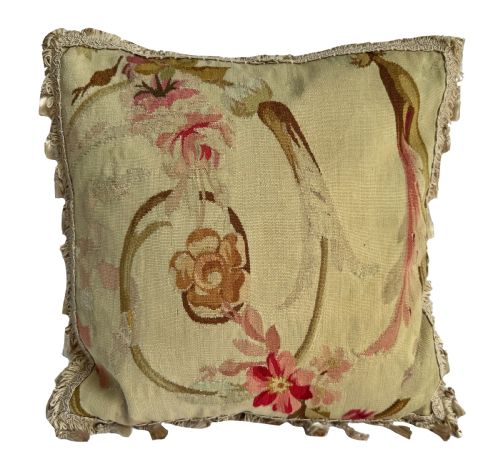
The most common versions on this page are antique Aubusson cushions dated eighteen-sixty, alongside cushion covers formed from seventeenth century Flemish tapestry borders.
Textile art takes the form of functional cushions and cushion covers, preserving historical woven fragments for modern interiors.
Materials and construction
These pieces utilise wool, silk, cotton, and linen woven together to create detailed floral and figurative imagery. Wood occasionally supports the structural elements of associated furnishings, while passementerie and passementerie trim finish the edges.
Weaving techniques rely on traditional hand-loom methods, incorporating tapestry construction to build durable and ornate textile surfaces.
Tapestry Floral Pillow Retail Price Guide 2026
Typical asking prices for tapestry floral pillow among the pieces listed under this phrase on Sellingantiques today, from the lower quarter to the upper quarter. They describe what is for sale here now, not the wider market.
Listings feature items spanning the seventeenth century up to eighteen-sixty, utilising wool, silk, cotton, and linen.
Judging quality
The distinction between ordinary and exceptional examples rests in the fineness of the weave and the complexity of the botanical design. Early seventeenth century fragments display intricate needlework, whereas later nineteenth century pieces utilise established Aubusson workshop patterns.
The preservation of the original fibres, including silk and wool, dictates the integrity of the surface. Surviving passementerie trim adds substantial authenticity to the completed cushion.
The Tapestry Floral Pillow Glossary
- Aubusson
- A traditional type of tapestry woven in the French town of Aubusson, known for floral and architectural motifs. These cushion covers date around eighteen-sixty.
- Passementerie
- Decorative edgings such as gimps, fringes, and threads used to trim textile furnishings. It provides a finished border to antique cushions.
- Flemish tapestry
- Woven textile art originating from Flanders during the seventeenth century, celebrated for dense pictorial and floral compositions. Fragments are often repurposed into cushion covers.
- Baroque
- An ornate artistic style spanning the seventeenth century, characterised by drama, rich detail, and grand botanical forms. It influences many of the woven cushion designs.
Tapestry Floral Pillow: Frequently Asked Questions
How are antique tapestry cushions cleaned?
Maintenance requires gentle surface care rather than immersion in water. Professional textile conservation methods protect delicate wool and silk fibres.
Regular light vacuuming through a mesh screen prevents dust accumulation without disturbing the antique weave.
Are seventeenth century cushions durable?
Seventeenth century cushion covers utilise sturdy wool and linen threads designed to withstand daily use. However, fragile silk highlights require careful placement away from direct sunlight.
Using a supportive inner pad prevents undue strain on the historic textile.
How do I identify Flemish tapestry work?
Flemish tapestry work displays dense, painterly compositions using muted vegetable-dyed wools and silks. Seventeenth-century examples often incorporate verdure or floral border fragments.
Examining the reverse reveals hand-woven knotting and ageing consistent with early European workshops.