

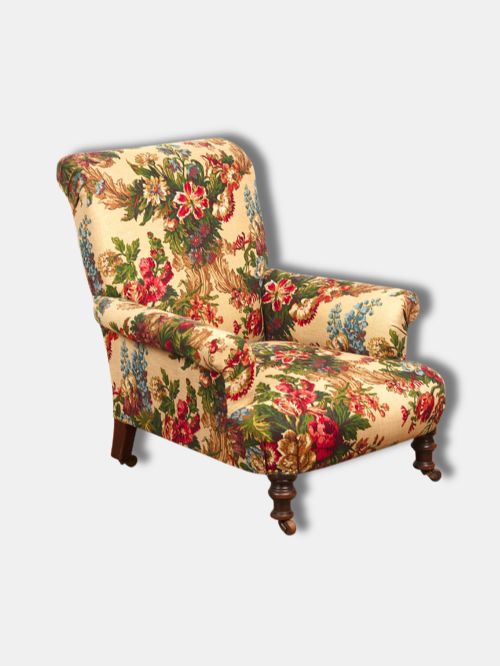
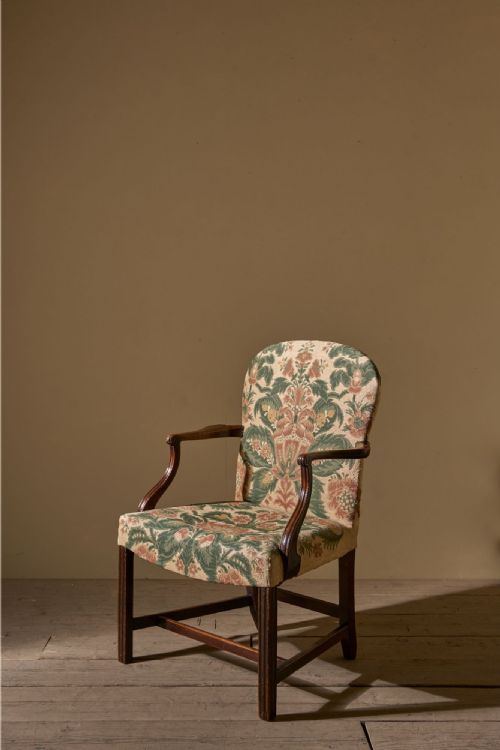
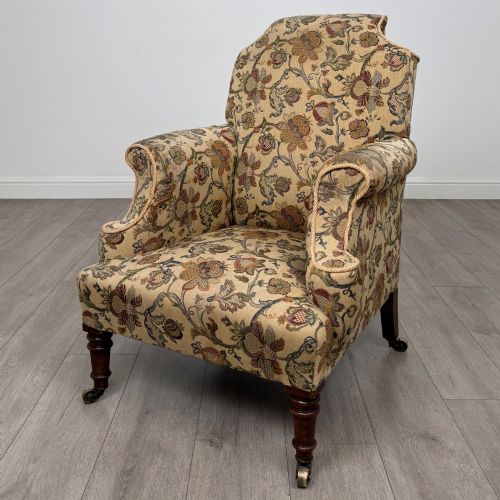
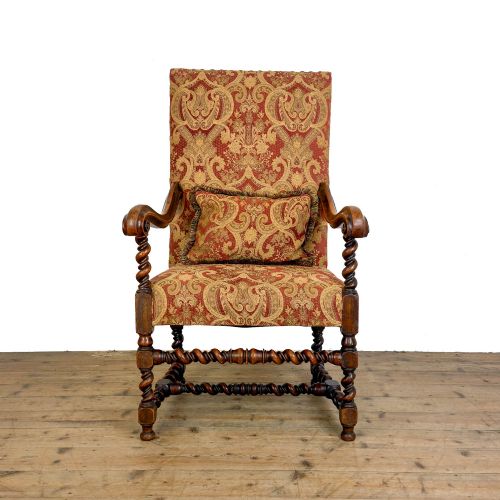




Tapestry Fabric Armchairs
Tapestry fabric armchairs bring texture and traditional pattern into a room, offering robust seating shaped across the nineteenth and early twentieth centuries.
Tapestry Fabric Armchairs
Tapestry fabric armchairs combine sturdy wooden frames with woven textile upholstery, creating substantial seating for domestic interiors. When searching for tapestry fabric armchairs, buyers encounter various historical forms ranging from Georgian desk chairs to Victorian wingbacks and early twentieth century barrel backs.
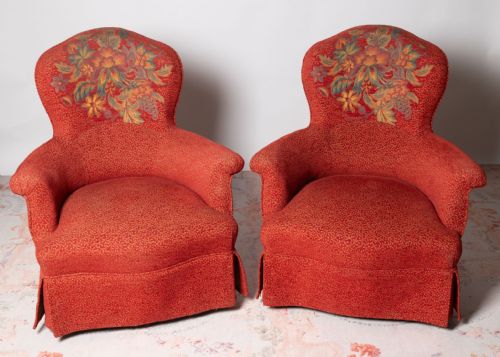
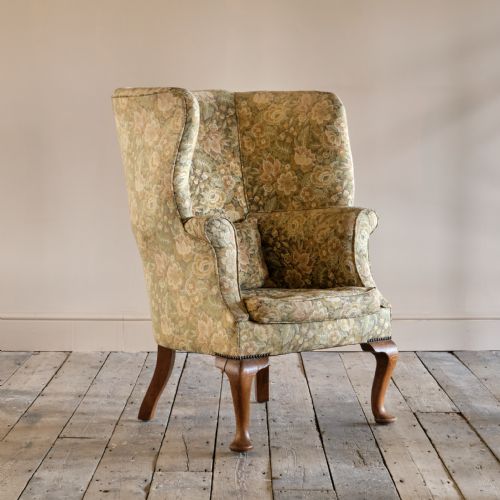
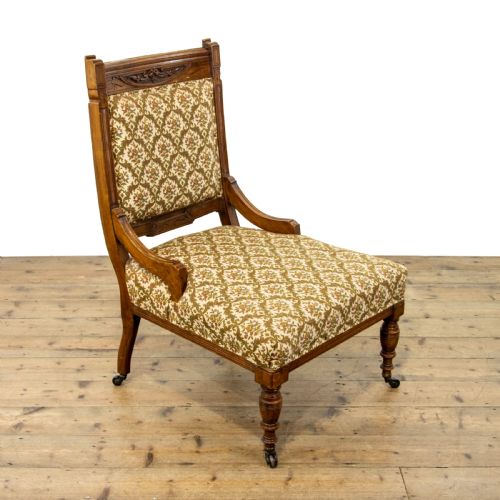
The selection on this page demonstrates several distinct stylistic revivals, including Queen Anne, Carolean, and French Napoleon III influences. Pieces appear as individual desk chairs, open armchairs, and pairs suitable for a traditional study or drawing room.
Makers utilised resilient timbers to support heavy woven covers, resulting in durable seating solutions that span multiple decades of design history. These chairs serve both functional seating roles and decorative focal points within English country house aesthetics.
How they were made
Carpentry construction relies upon hardwoods such as mahogany and walnut, providing a strong skeleton for the upholstered components. Timber frames are shaped into open armchairs, wingbacks, and barrel backs using traditional joinery methods.
Upholstery combines textile fabrics, tapestry panels, carpet sections, and velvet to cover internal padding. These heavy woven textiles are secured directly to the wooden frameworks to withstand daily sitting.
Tapestry Fabric Armchairs Retail Price Guide 2026
Typical asking prices for tapestry fabric armchairs among the pieces listed under this phrase on Sellingantiques today, from the lower quarter to the upper quarter. They describe what is for sale here now, not the wider market.
Current listings feature hardwood frames in mahogany and walnut, upholstered in tapestry fabric, velvet, and carpet textiles.
What varies in quality
Construction quality depends upon the selection of dense hardwood timber and the precision of the frame joinery. Superior examples maintain structural rigidity within the arms and legs without loosening over time.
The execution and density of the woven tapestry fabric dictate the visual standard of the piece. Intricate textile work paired with substantial walnut or mahogany framing distinguishes finer examples from simpler utilitarian seating.
The Tapestry Fabric Armchairs Glossary
- Barrel back
- An armchair featuring a semicircular upholstered back enclosing the sitter in a continuous curve. This form appears frequently in early twentieth century designs.
- Wingback
- A fireside chair with projecting side panels designed to shield the occupant from draughts. Victorian and later examples utilise heavy textile upholstery.
- Mahogany
- A durable reddish brown hardwood utilised extensively for framing historical seating. It provides the structural strength necessary for heavy armchair designs.
- Carolean revival
- A nineteenth or twentieth century stylistic movement imitating late seventeenth century English furniture. These pieces incorporate carved woodwork alongside traditional upholstery.
Tapestry Fabric Armchairs: Frequently Asked Questions
What periods do these armchairs span?
The available selection spans from the Georgian era through the Victorian period and into the early twentieth century. Pieces represent distinct design movements including Edwardian and Art Nouveau aesthetics.
Craftsmanship evolves across these periods from formal mahogany desk chairs to comfortable fireside wingbacks and barrel back seating.
What woods were used for the frames?
Framing relies predominantly on hardwoods such as mahogany and walnut, chosen for their structural resilience. These timbers support the weight of heavy textile upholstery.
Cabinetmakers shaped these woods to form the exposed legs and arm supports characteristic of nineteenth and early twentieth century seating.
Are these chairs sold as pairs?
Several listings comprise matched pairs of armchairs alongside individual fireside and desk chairs. Pairs are particularly common in Edwardian and nineteenth century upholstery.
Buyers can select matching seats to coordinate traditional drawing room or country house interiors.