



Tambour Front Tables
Tambour front tables bring together sliding slatted shutters and clever timber craftsmanship to conceal practical storage in desks, bedside cabinets, and commodes.
Tambour Front Tables
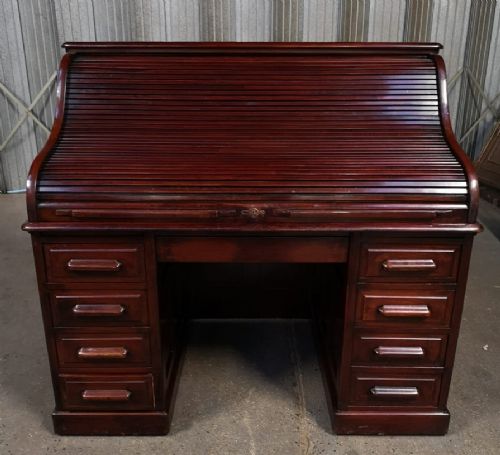
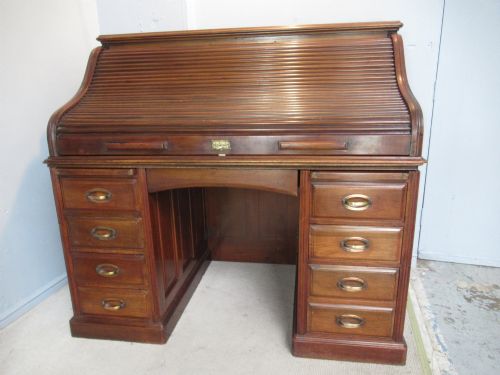
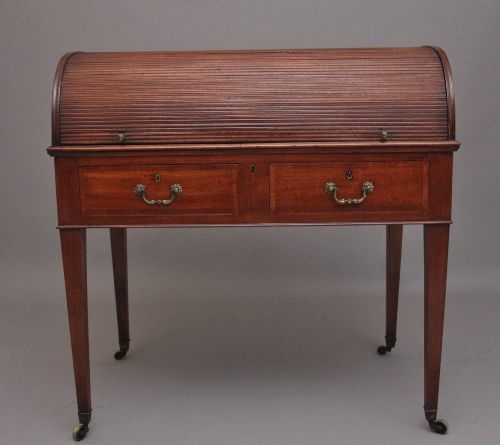
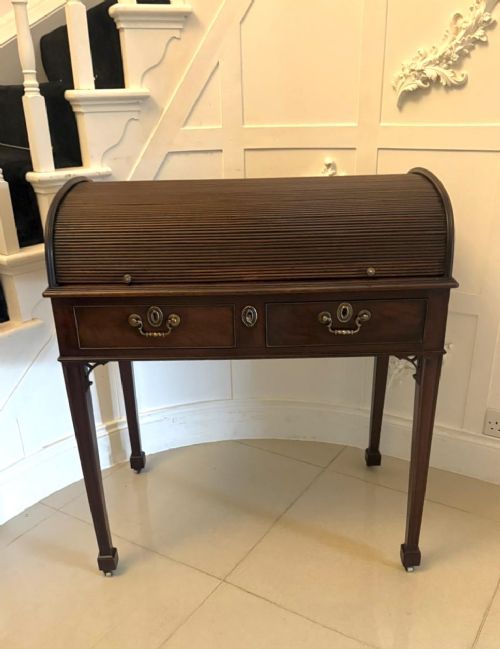
Tambour front tables encompass a range of functional furniture forms, most notably desks, bedside cabinets, commodes, and writing tables. When searching for tambour front tables, you encounter pieces designed to hide contents behind flexible wooden slats while maintaining a compact footprint.
The selections span distinct historical periods including the 18th Century, Georgian, Regency, Victorian, and Edwardian eras. Pieces often incorporate specific regional attributes, such as French 19th Century and Dutch designs alongside traditional British cabinet-making.
Desks and writing tables dominate the workspace forms, whilst bedside cupboards and commodes provide enclosed storage for domestic quarters. These items serve both functional and decorative roles through fitted pull-out writing slides and compartmented interiors.
How they were made
Cabinet-makers constructed the flexible tambour shutters by gluing narrow strips of wood onto a sturdy canvas or leather backing. This method allowed the wooden curtain to slide smoothly around tight curved corners within tracks cut into the frame.
Primary timbers such as mahogany, walnut, and satinwood form the structural bodies, often complemented by boxwood inlay and brass feet. Artisans matched grains carefully across the sliding slats to create a uniform appearance when the shutter closed.
Tambour Front Tables Retail Price Guide 2026
Typical asking prices for tambour front tables among the pieces listed under this phrase on Sellingantiques today, from the lower quarter to the upper quarter. They describe what is for sale here now, not the wider market.
Listings feature mahogany, satinwood, walnut, and oak alongside specialised forms including cylinder desks, bonheur du jour tables, and bedside commodes.
What varies in quality
The precision of the sliding mechanism determines the operational fluidity of the shutter, separating well-adjusted assemblies from stiff or binding tracks. Superior examples demonstrate smooth movement along the curved channels without catching on the backing material.
Material selection and decorative detailing distinguish finer pieces, such as the use of figured satinwood, delicate boxwood inlay, and solid brass hardware. Structural integrity relies on the tightness of the joinery in the carcass and the secure fixing of the slat backing over time.
The Tambour Front Tables Glossary
- Tambour
- A flexible shutter made from narrow vertical strips of wood attached to canvas or leather, allowing it to slide around a curved track. This technique conceals storage compartments in desks and cabinets without requiring clearance for swinging doors.
- Commode
- A decorative chest of drawers or enclosed cabinet originating in French furniture design and adopted by British makers. In the context of bedside storage, these pieces frequently feature enclosed cupboards or tambour fronts.
- Bonheur Du Jour
- A light ladies writing desk featuring a small tiered superstructure with drawers, shelves, or a tambour enclosure above the main writing surface. These refined pieces emerged during the 18th Century and showcase delicate satinwood and mahogany veneers.
- Tray Top
- A table or cabinet top finished with a raised moulded edge or gallery to prevent items from rolling off. This practical feature appears frequently on Georgian bedside tables and commodes.
- Cylinder Desk
- A writing desk featuring a rotating quarter-cylinder wooden shutter that pulls down to enclose the desk surface and pigeonholes. Unlike vertical tambour tracks, this curved solid or slatted panel rolls back into the body of the desk.
Tambour Front Tables: Frequently Asked Questions
What is a tambour front?
A tambour front consists of narrow wooden slats glued to a fabric backing, forming a flexible curtain that slides in a track.
This clever mechanism allows furniture makers to enclose curved spaces where traditional hinged doors would require clearance to swing open.
How were these tables used?
These pieces served practical functions in bedrooms, dressing rooms, and home offices as bedside storage, nightstands, and writing desks.
The enclosed compartments kept personal items, writing materials, and night equipment neatly hidden from view while remaining easily accessible.
How do I identify a Georgian piece?
Georgian furniture is characterised by classical proportions, high-quality mahogany or satinwood timbers, and restrained decorative elements such as boxwood stringing.
Cabinet-makers of this period focused on functional elegance, often incorporating tray tops, tapered legs, and subtle curved serpentine fronts.
How do I care for tambour furniture?
Maintain the sliding shutter by keeping the internal tracks clean and free from dust build-up that might obstruct the canvas backing.
Apply traditional wax polish sparingly to the timber surfaces and avoid placing the furniture in areas with fluctuating humidity to prevent the wooden slats from binding.