

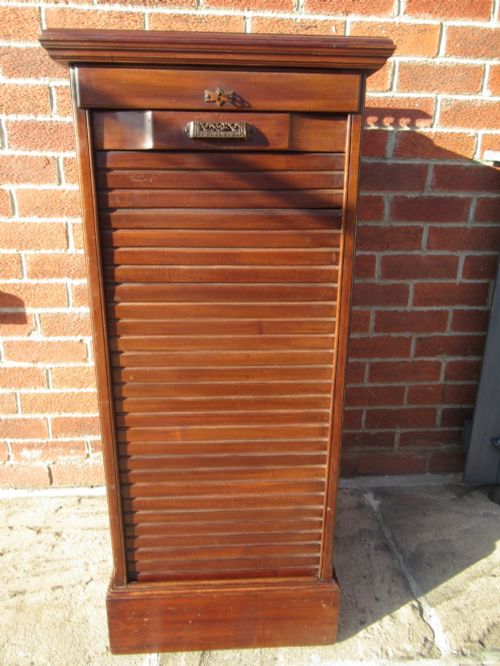
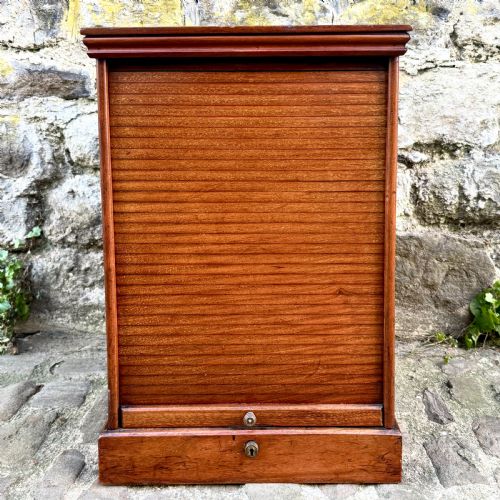
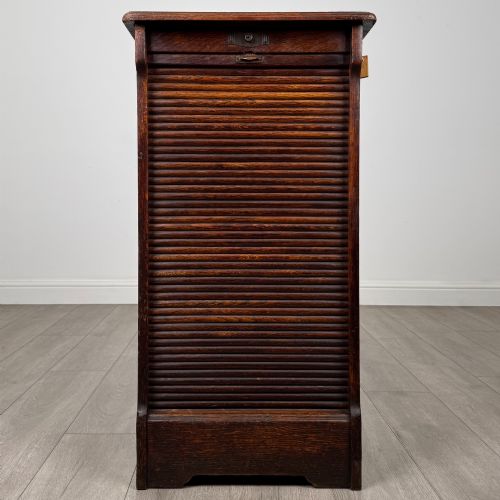
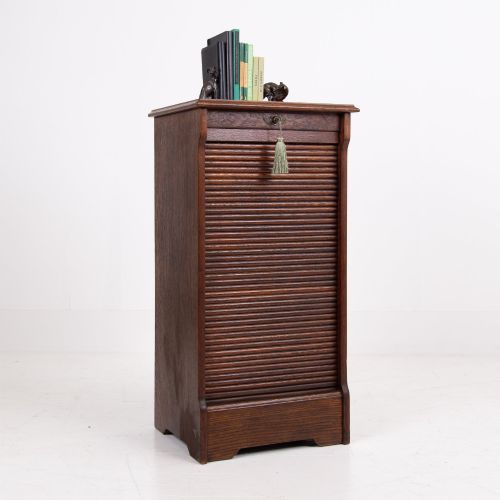


Tambour Filing Cabinet
These tambour filing cabinet examples combine slatted wooden shutters with practical office storage, offering a clever space-saving solution for the workspace.
Tambour Filing Cabinet
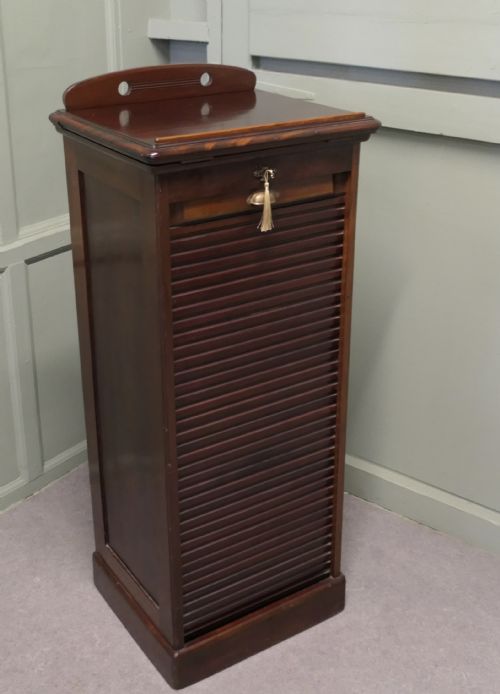
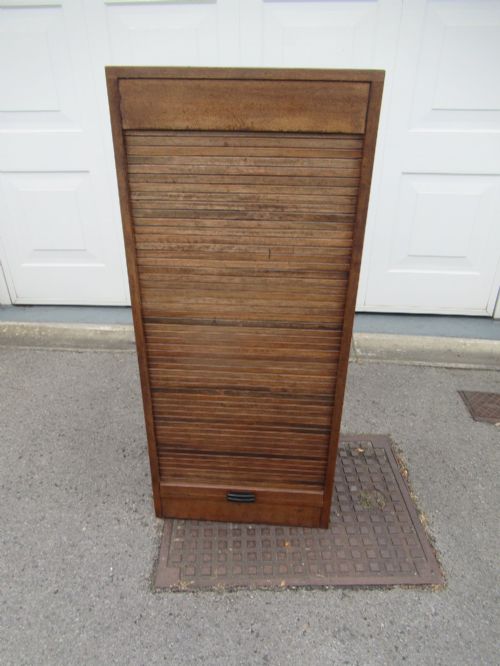
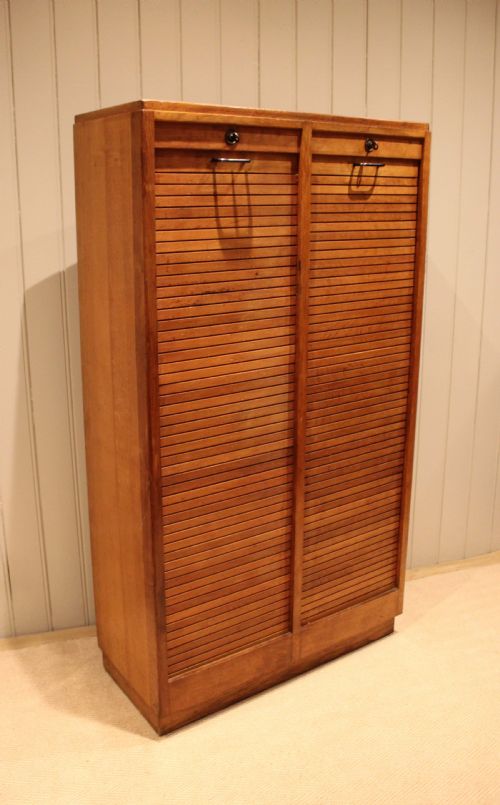
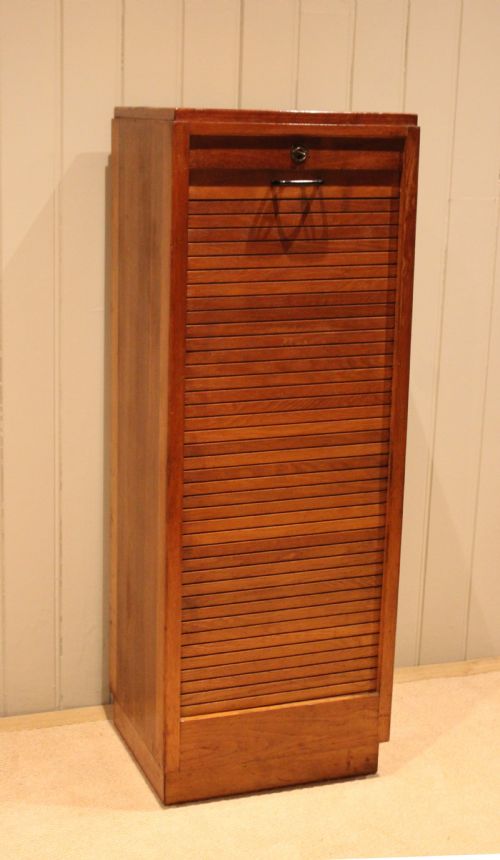
A tambour filing cabinet is a functional piece of office furniture designed to keep documents organised while concealing them behind a flexible slatted door. Buyers searching for a tambour filing cabinet will find examples dating from the late nineteenth century through to the mid-twentieth century, with oak appearing frequently alongside mahogany, rosewood, and pine. These cabinets range from single-door office units to double-door variations and pedestal formats intended for reception spaces.
The dominant forms on this page span Edwardian, Victorian, and Art Deco styles, alongside French Utility and early twentieth-century designs. Most pieces utilise sturdy timber construction with adjustable internal shelving to accommodate varying paperwork needs. Whether styled as an English office cabinet or a continental double-door piece, each item reflects the commercial requirements of its period.
How they were made
Makers constructed these cabinets using solid hardwoods like oak, mahogany, and rosewood, frequently backed by canvas to support the flexible tambour slats. The signature sliding shutter mechanism relies on individual wooden strips glued to a fabric backing, allowing the door to curve smoothly around a track inside the cabinet frame.
Brass hardware often appears on handles and key escutcheons, complementing the rich grain of the polished timber surfaces. Joinery techniques from the Victorian and Edwardian eras ensure the structural integrity of the outer case while housing the intricate sliding mechanism.
Tambour Filing Cabinet Retail Price Guide 2026
Typical asking prices for tambour filing cabinet among the pieces listed under this phrase on Sellingantiques today, from the lower quarter to the upper quarter. They describe what is for sale here now, not the wider market.
Current listings feature pieces spanning the late nineteenth century through to the 1940s, constructed primarily in oak, mahogany, and pine.
What varies in quality
Smooth operation of the tambour door track indicates careful initial construction and subsequent maintenance. Superior examples also feature well-fitted internal adjustable shelving and original brass fittings that remain fully intact.
The Tambour Filing Cabinet Glossary
- Tambour
- A flexible door made of narrow wooden slats attached to a canvas backing. This allows the shutter to slide smoothly around a curved track within the cabinet carcass.
- Pedestal
- A supportive base or lower section of a desk or cabinet, often fitted with drawers. In office furniture, this term describes freestanding units designed for reception or administrative use.
- Escutcheon
- A protective plate surrounding a keyhole. These metal fittings are commonly cast in brass on period office furniture.
- Edwardian
- Pertaining to the reign of King Edward VII, spanning the early years of the twentieth century. Furniture from this period often retains lighter proportions than heavy Victorian designs.
Tambour Filing Cabinet: Frequently Asked Questions
How do tambour doors operate?
The door consists of narrow wooden slats mounted onto a flexible canvas backing that runs along a recessed track inside the cabinet frame. This design allows the shutter to slide open sideways or vertically without swinging outward into the room.
Such a mechanism provides secure closure for office files while saving floor space in compact working environments.
What woods were used for these cabinets?
Common timbers include oak, mahogany, rosewood, pine, and occasionally mixed hardwoods. Oak and mahogany dominate the surviving office pieces from the Edwardian and early twentieth-century periods.
Finer examples utilise decorative veneers or dense tropical hardwoods, whereas utilitarian pieces rely on domestic pine and plain oak.
Are the internal shelves adjustable?
Many period examples feature adjustable shelving systems to accommodate different file sizes and office stationery. Wooden supports or metal rack strips inside the cabinet allow users to reposition shelves at various heights.
This adaptability made them popular for changing administrative needs throughout the twentieth century.
How do I identify an Edwardian piece?
Edwardian cabinets generally date from the early 1900s and exhibit lighter timber tones and refined proportions compared to heavy Victorian furniture. They frequently incorporate quarter-sawn oak with visible medullary rays alongside simple brass hardware.
Stylistic restraint and functional office utility define the craftsmanship of this era.