


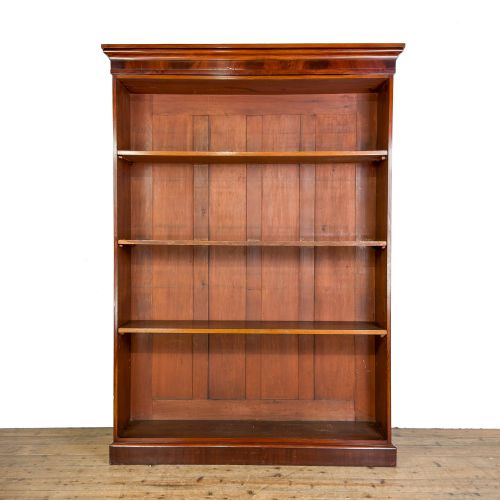
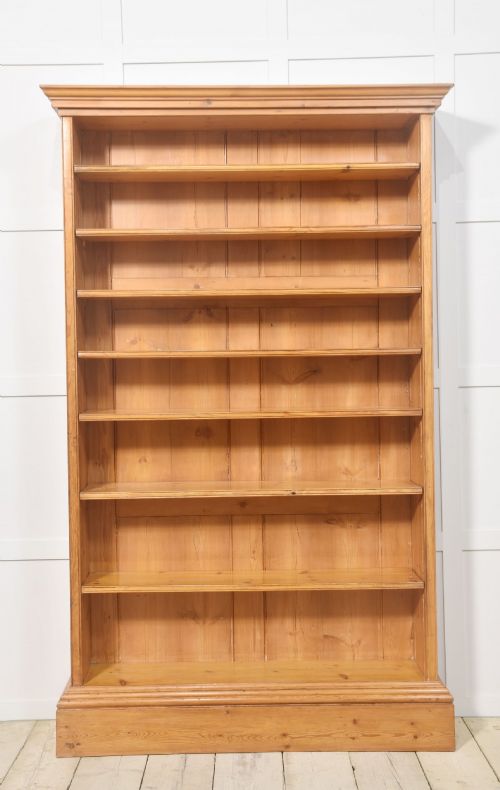


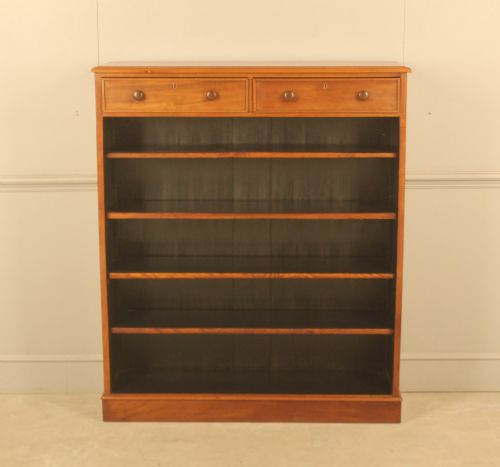


Tall Wooden Library Shelves
Tall wooden library shelves bring order to a room, offering sturdy timber uprights and deep tiers designed to hold a serious collection of books.
Tall Wooden Library Shelves
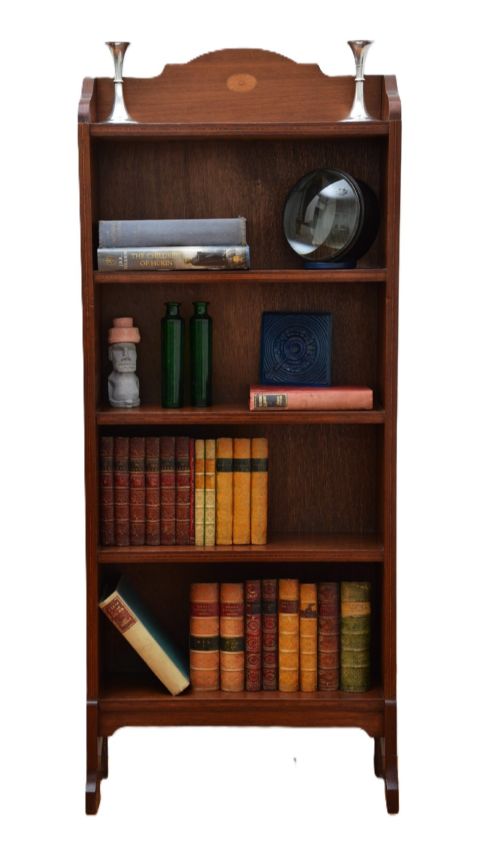
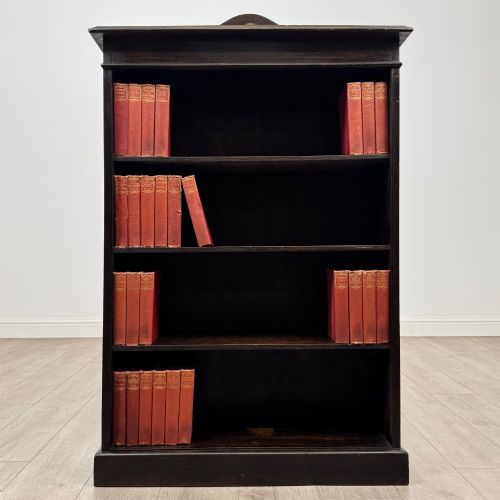
When searching for tall wooden library shelves, you encounter substantial bookcases and open shelving units built to accommodate large volumes. These pieces predominantly date from the Victorian and Edwardian eras, alongside items from the 19th and early 20th centuries.
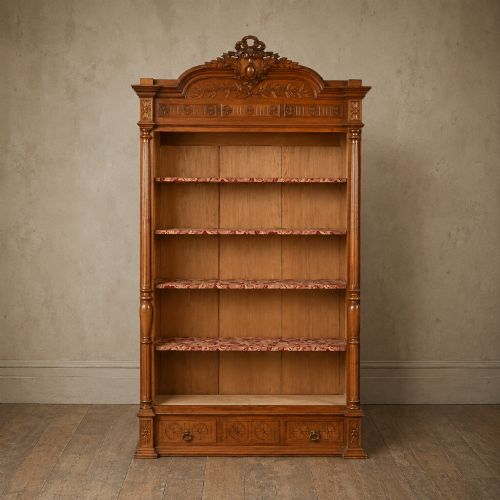
Origins span British workshops of the Victorian and Edwardian periods as well as 19th-century continental makers. Buyers find both single-width formats and larger double-width structures suited to domestic or institutional rooms.
Materials and construction methods
Construction relies heavily on hardwoods and softwoods including mahogany, oak, walnut, pine, deal wood, and softwood. Cabinetmakers utilised solid wood and walnut veneer, occasionally adding satinwood inlay for decorative contrast.
Makers built these tall structures to bear significant weight, integrating adjustable shelf mechanisms and robust carcases. Cornices, galleries, and carved details show the hand of traditional joinery across the 19th and 20th centuries.
Tall Wooden Library Shelves Retail Price Guide 2026
Typical asking prices for tall wooden library shelves among the pieces listed under this phrase on Sellingantiques today, from the lower quarter to the upper quarter. They describe what is for sale here now, not the wider market.
Listings feature pieces spanning from the 1850s Victorian era through the Edwardian period and into 1930s designs, constructed in mahogany, oak, pine, and walnut.
Assessing quality in library shelving
Quality rests in the choice of timber and the precision of the joinery, distinguishing finely figured mahogany or quarter-sawn oak from standard pine or deal wood. Superior examples display careful timber selection for prominent areas such as cornices and uprights.
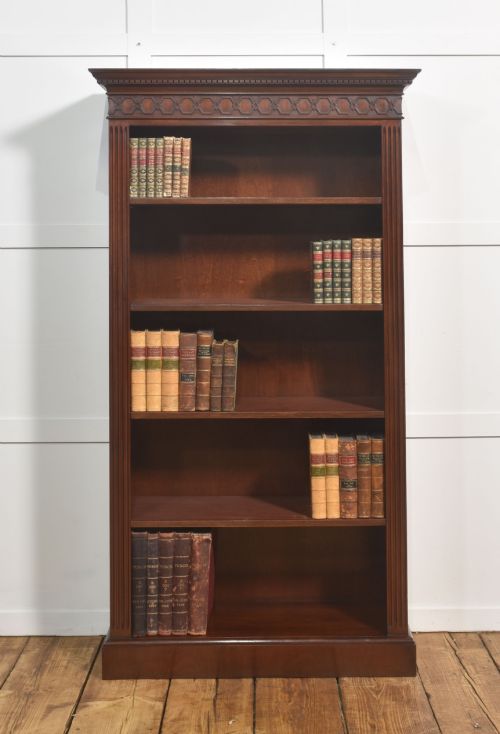
The sophistication of architectural detailing, such as dentil moulding, inlaid satinwood work, or carved solid wood elements, separates standard utility items from finer cabinetwork. Integrated adjustable shelving mechanisms that operate smoothly also indicate higher execution.
The Tall Wooden Library Shelves Glossary
- Open bookcase
- A bookcase without doors, allowing direct access to the contents on each tier. This form is typical for working libraries.
- Dentil cornice
- A decorative horizontal projection near the top of a piece, featuring a series of small square blocks resembling teeth. It is common in Georgian and revival styles.
- Adjustable shelves
- Shelves resting on supports that can be repositioned at different heights. This system accommodates books of varying sizes.
- Raised gallery
- A low decorative railing or border situated on the top surface of a piece. It prevents items from sliding off.
- Double bay
- A wide bookcase structure divided vertically into two distinct sections for shelving. This layout provides expanded storage capacity.
- Satinwood inlay
- Contrasting light-coloured wood inserted into the primary timber surface to create decorative patterns. It adds visual refinement to cabinet furniture.
Tall Wooden Library Shelves: Frequently Asked Questions
How do I date an antique wooden bookcase?
Dating relies on timber choices, construction methods, and stylistic cues such as Victorian proportions or Edwardian inlay work. Examining the backboards and fixings often reveals the period of manufacture.
Cabinetmakers changed their techniques over the nineteenth and early twentieth centuries, shifting from hand-sawn boards to machine-prepared timber by the Edwardian era.
Are the shelves usually adjustable in these bookcases?
Many period bookcases feature adjustable shelving systems supported by wooden pegs, metal pins, or ratcheted pilasters. This allowed owners to alter shelf heights for different book sizes.
Fixed shelves do appear in simpler pine or deal utility pieces built for specific institutional or domestic storage needs.
What woods were used for tall library shelves?
Traditional library furniture makes frequent use of dense hardwoods like mahogany and oak for strength and appearance. Walnut, satinwood inlay, and softer timbers such as pine and deal also appear.
Cabinetmakers matched the timber to the expected setting, using rich hardwoods in formal rooms and sturdy softwoods in utility spaces.