



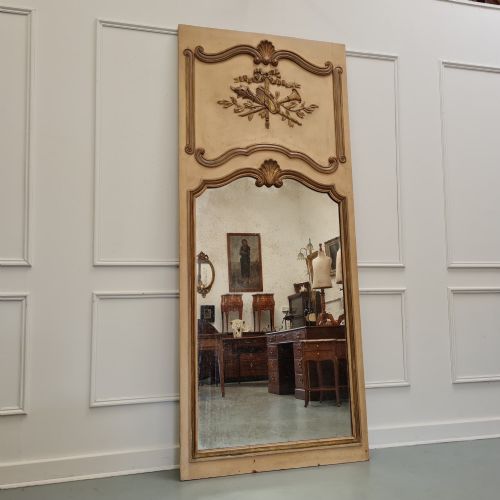


Tall Wood Floor Mirror
A tall wood floor mirror commands a room, reflecting light and scale with the presence of period craftsmanship.
Tall Wood Floor Mirror
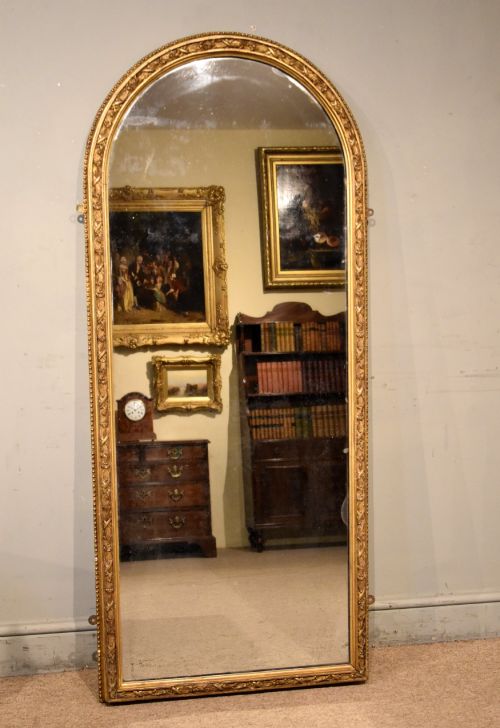
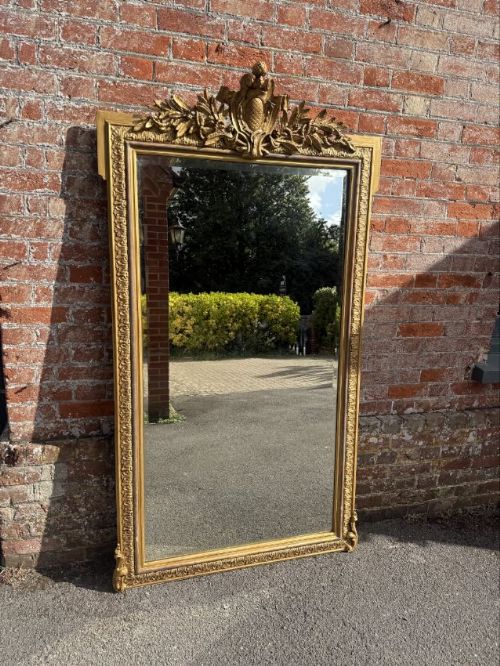
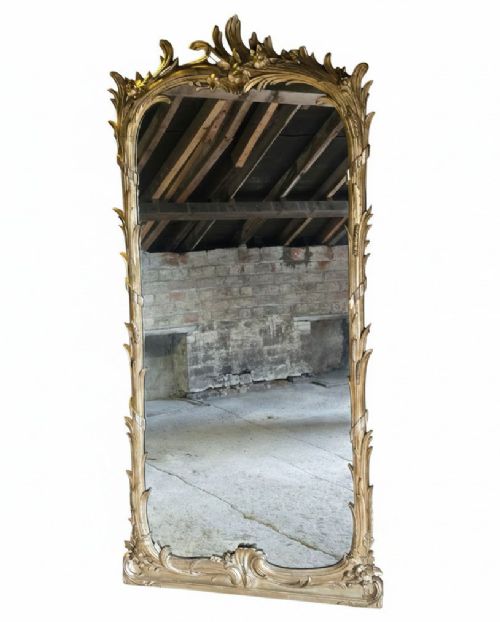
A tall wood floor mirror provides full-length reflection through substantial vertical proportions designed to stand upon the floor or lean against a wall. When searching for a tall wood floor mirror, buyers encounter grand architectural forms originating from the nineteenth and early twentieth centuries.
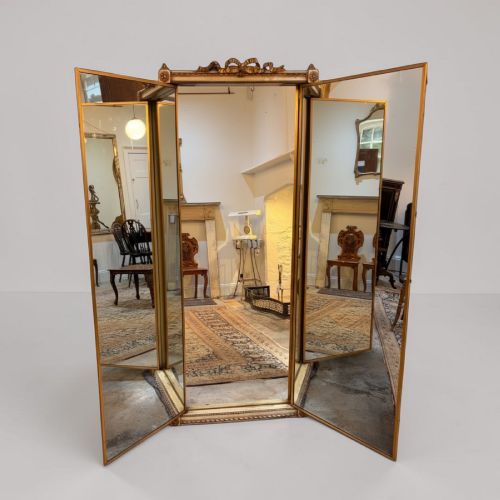
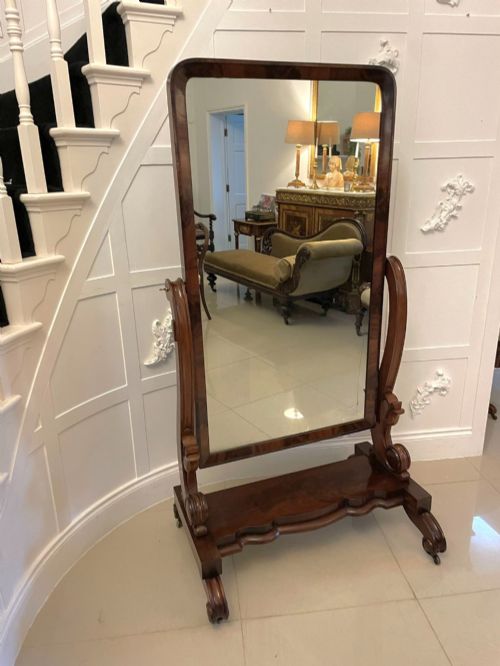
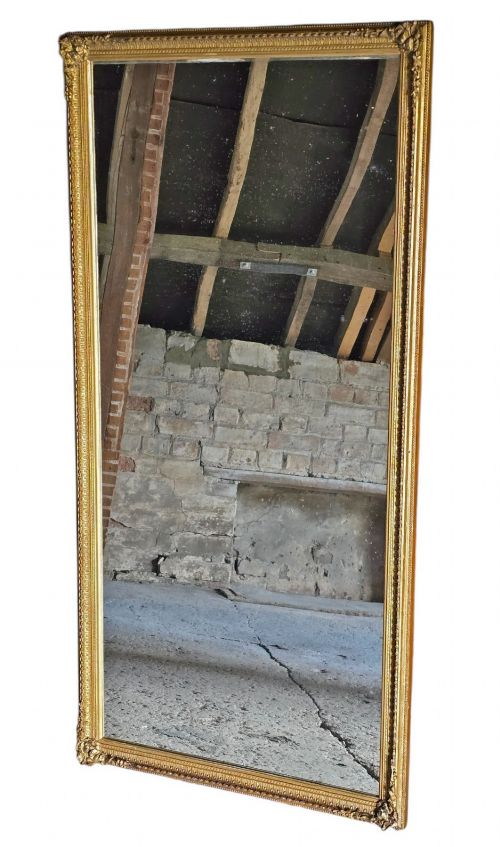
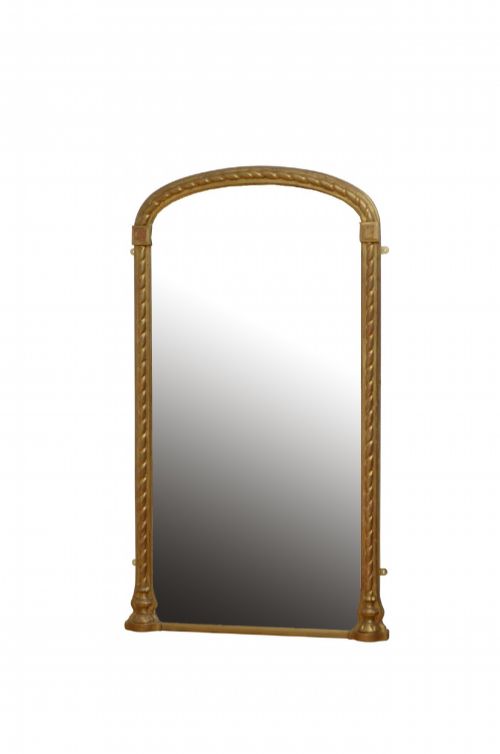
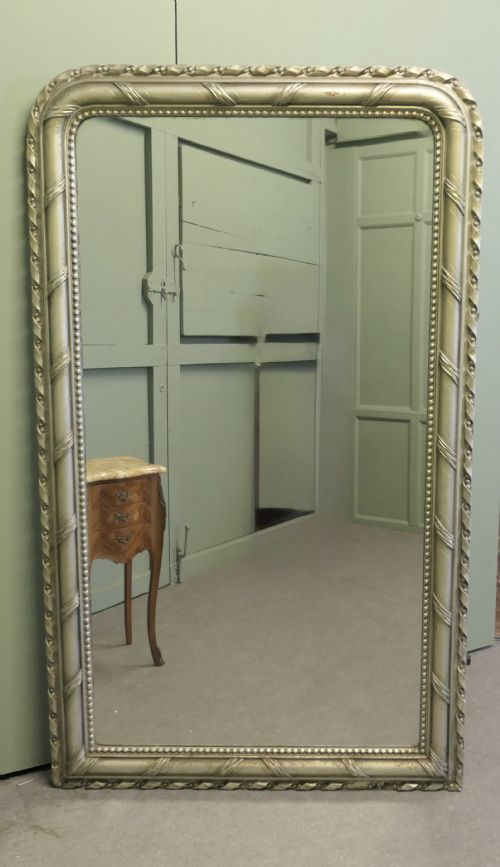
The selection on this page centres on substantial wall-mounted leaner mirrors, pier mirrors, and freestanding cheval mirrors. These pieces span Victorian, Edwardian, and French stylistic influences, ranging from carved giltwood statements to painted bistro designs.
Originating largely from English and French workshops, these items serve both functional dressing purposes and decorative architectural expansion within domestic interiors. The prevalent formats utilise generous heights exceeding standard domestic furniture to alter the perceived volume of a space.
Materials and construction methods
Makers constructed the structural frames from solid timbers such as mahogany, walnut, and pine, applying carved wooden enrichment or moulded gesso relief. These foundational wooden carcasses provide the necessary rigidity to support heavy glass plates across expansive vertical heights.
Surfaces received decorative finishes including gold leaf, silver leaf, paint, or traditional gilding applied over gesso grounds. Brass and other metal hardware frequently secured pivoting mechanisms on freestanding cheval designs or structural joints on triptych configurations.
Tall Wood Floor Mirror Retail Price Guide 2026
Typical asking prices for tall wood floor mirror among the pieces listed under this phrase on Sellingantiques today, from the lower quarter to the upper quarter. They describe what is for sale here now, not the wider market.
Materials documented across the selection include wood, gesso, giltwood, brass, and silver leaf.
Distinguishing quality in period mirrors
The depth and crispness of hand-carved wood and gesso ornamentation separate exceptional examples from standard production. Superior execution reveals sharp detail in scrolling foliage, rope carving, and Vitruvian motifs without the softening of edges often found in lesser mouldings.
The integrity of the original silvering and the thickness of the glass plate dictate historical authenticity and visual clarity. Higher quality pieces retain substantial, heavy glass with bevelled edges that reflect light evenly across the full frame.
The Tall Wood Floor Mirror Glossary
- Cheval mirror
- A freestanding full-length mirror hung on a central vertical pivot between two upright posts. This design allows the glass to tilt to various angles for dressing.
- Pier mirror
- A tall, narrow mirror traditionally hung on the pier or wall space between two windows. They often coordinate with console tables placed directly beneath them.
- Gesso
- A plaster-like mixture applied to wood frames to create a smooth surface for gilding or painting. Artisans carve intricate relief decorations directly into this hardened layer.
- Trumeau mirror
- An antique decorative mirror incorporating a painted panel or oil painting within the upper section of the wooden frame. These pieces originated primarily in eighteenth and nineteenth-century French interior design.
- Leaner mirror
- A large wall mirror designed to rest directly against a wall without being hung from brackets. Their substantial weight and height maintain stability under gravity.
Tall Wood Floor Mirror: Frequently Asked Questions
Where should I place a tall floor mirror?
Position the piece opposite a window to maximise natural daylight and visually expand the dimensions of smaller rooms. Placing it in a hallway or bedroom also allows for practical full-length dressing use.
Ensure the floor surface is level and secure heavy leaner frames against the wall with appropriate anti-tip fixings to prevent accidental movement.
How do I distinguish a cheval mirror from a leaner mirror?
A cheval mirror is entirely freestanding, supported by a dedicated wooden frame with side pivots that permit the glass to tilt. It stands independently in the middle of a room or against a wall without requiring structural wall support.
Conversely, a leaner mirror relies on gravity and wall contact, resting its base on the floor while tilting backward against the vertical plaster.
What is a pier mirror used for?
Historically, pier mirrors were hung in the architectural wall space between two windows to reflect interior candlelight and daylight. Their vertical proportions match the narrow wall intervals typical of nineteenth-century reception rooms.
Today, they function similarly in hallways or living spaces, often positioned above low cabinets or console tables to create a unified decorative arrangement.
How do I date a nineteenth-century wood mirror?
Examine the construction of the wooden frame, the composition of the gesso, and the backboards for tool marks and timber shrinkage. Nineteenth-century pieces frequently display hand-cut joinery and heavy pine or mahogany framing behind the gilded surface.
Glass characteristics also offer clues, as older plates can exhibit minor manufacturing ripples or subtle foxing within the silvered backing.