






Tall Walnut Dresser
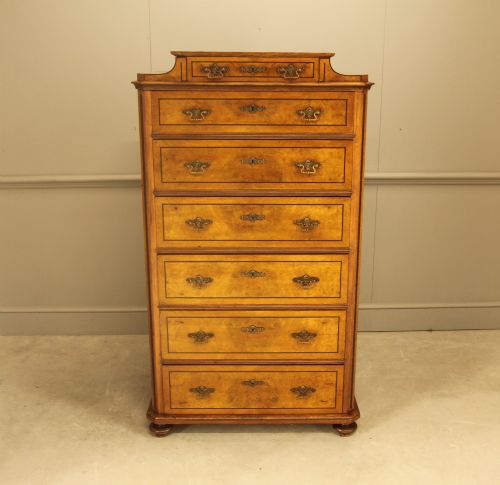
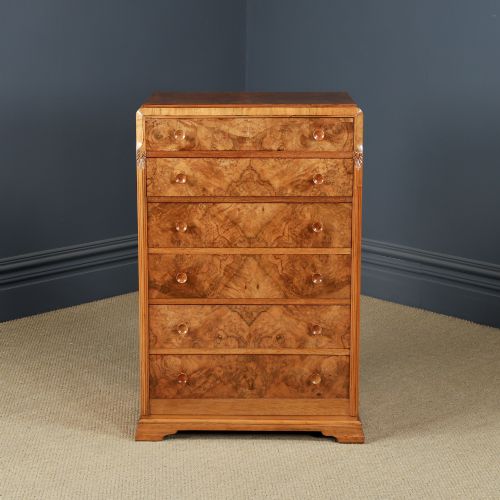
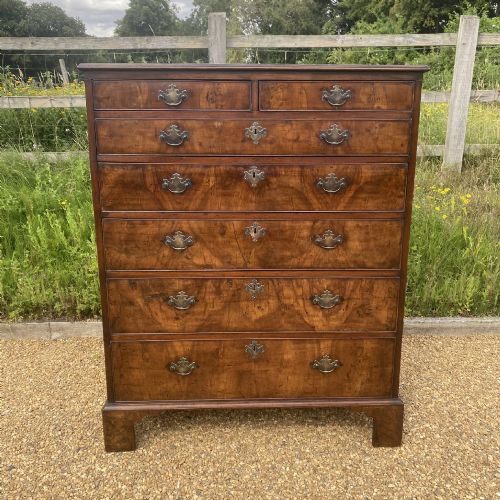
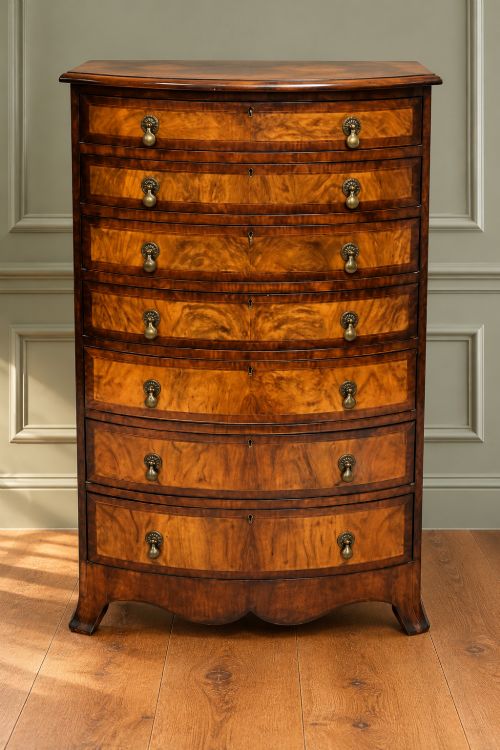
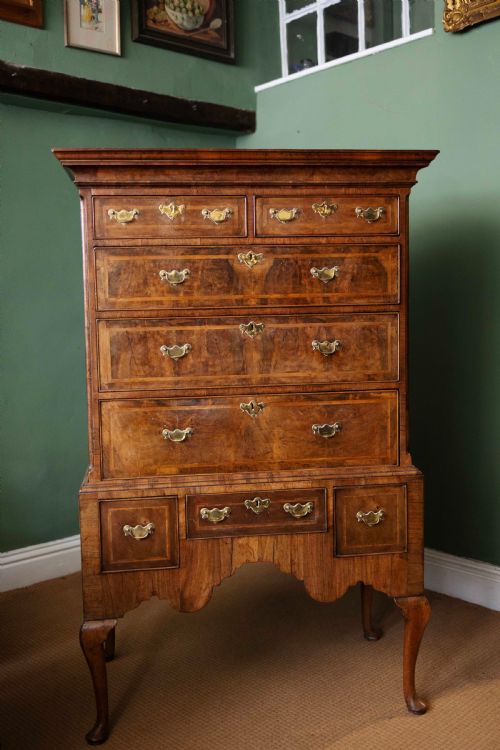
A tall walnut dresser offers generous vertical storage wrapped in warm, figured timber, making it a striking choice for any bedroom.
Tall Walnut Dresser
When you search for a tall walnut dresser, you are looking at substantial case furniture designed to maximise storage while occupying a modest floor footprint. These pieces stand high against a wall, utilising vertical space to provide multiple tiers of drawers for linens and clothing.
How they were made
Cabinetmakers constructed these carcases using sturdy secondary timbers such as oak and pine, which provided a stable frame for more decorative external surfaces. Walnut timber and burr walnut veneers were then applied across the drawer fronts and top panels to create rich, figured visual patterns.
Fine decorative detailing relied on traditional techniques, including bookmatching veneers, crossbanding, and occasional brass or gilt bronze hardware. Skilled joinery ensured that heavy stacked chests maintained their structural integrity over centuries of daily use.
Tall Walnut Dresser Retail Price Guide 2026
Typical asking prices for tall walnut dresser among the pieces listed under this phrase on Sellingantiques today, from the lower quarter to the upper quarter. They describe what is for sale here now, not the wider market.
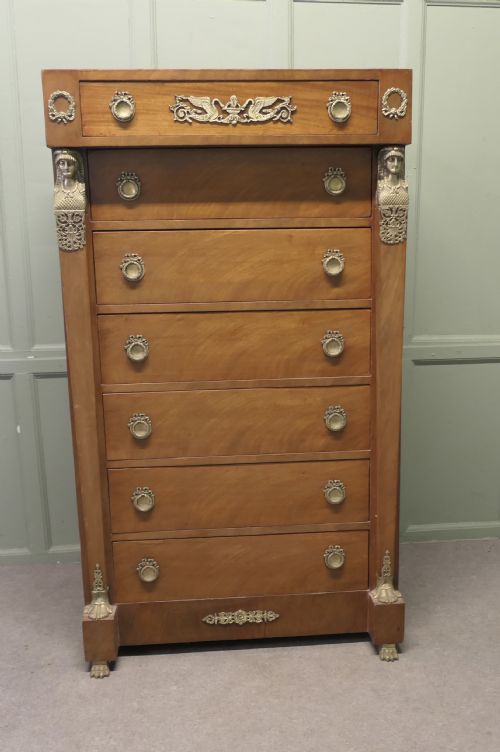
Several pieces arrive dressed in decorative ormolu mounts, proving that even a humble chest enjoys wearing its Sunday best.
What varies in quality
The grade of timber and the complexity of the veneer work largely determine the visual distinction of a piece. Highly figured burr walnut, bookmatched panels, and precise crossbanding elevate the surface artistry well beyond plain timber builds.
Construction methods and original hardware also differentiate examples across the range. Hand-doved drawer boxes, substantial secondary woods, and intact period brass mounts or ormolu details indicate careful workshop execution.
Gillows of Lancaster
The Tall Walnut Dresser Glossary
- Burr walnut
- A prized veneer taken from the knotted growth of a walnut tree, producing swirling, highly decorative grain patterns. This material was frequently selected for the primary drawer fronts of grand furniture.
- Crossbanding
- A narrow strip of veneer laid perpendicularly to the surrounding grain along the borders of a drawer or top. It creates a neat framing effect that highlights the main timber.
- Bookmatching
- A technique where adjacent veneer leaves are opened like a page to mirror each other. This creates a symmetrical, patterned reflection across large surfaces such as chest fronts.
- Chest on chest
- A tall storage unit formed by stacking a slightly smaller chest of drawers directly on top of a deeper base chest. It is also historically known as a tall-boy.
- Chest on stand
- A cabinet or drawer section elevated on an open frame with legs, typically featuring cabriole supports. This form lifts the main storage body off the floor for a lighter visual profile.
Tall Walnut Dresser: Frequently Asked Questions
What is a tall walnut dresser?
A tall walnut dresser is a vertical storage unit featuring multiple drawers, designed to hold clothing and household linens while saving floor space.
These pieces showcase rich wood grains and timber surfaces, ranging from Georgian chest on chest forms to later Art Deco designs.
How were tall walnut dressers used?
Historically, these tall chests served as primary bedroom storage for garments, personal items, and valuable textiles. Their vertical build made them practical for rooms with limited floor space.
Today, they function similarly in domestic interiors, offering deep drawer capacity while adding architectural warmth to a bedroom or hallway.
How do I care for walnut furniture?
Walnut timber benefits from stable indoor humidity and protection from direct sunlight, which can alter the colour of the wood over time. Regular dusting with a soft cloth keeps the polished surface clean.
Applying occasional appropriate wax preserves the moisture and natural lustre of the veneer without building up a heavy residue.
How can I tell the period of a walnut chest?
Stylistic clues such as bracket feet, cabriole legs, or ormolu mounts point toward specific eras like the Georgian period, the French Empire style, or later Victorian and Art Deco movements. Examining the construction methods inside the drawer boxes also reveals the likely manufacturing era.
Secondary woods like oak or pine used in the carcase interior help confirm traditional workshop origins and chronological age.