



Tall Slim Shelving Unit
These tall slim shelving unit pieces offer practical vertical storage in narrow footprints, fashioned from mahogany, oak, and walnut for traditional interiors.
Tall Slim Shelving Unit
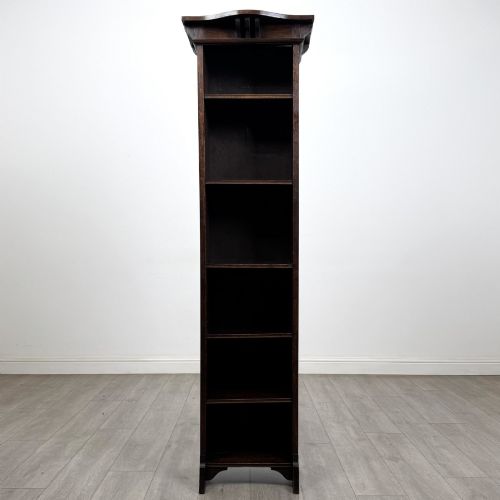
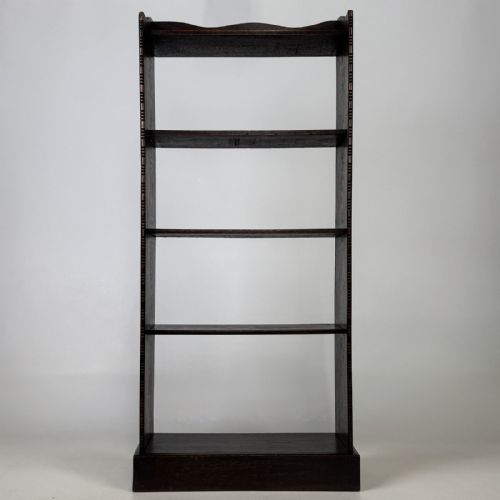
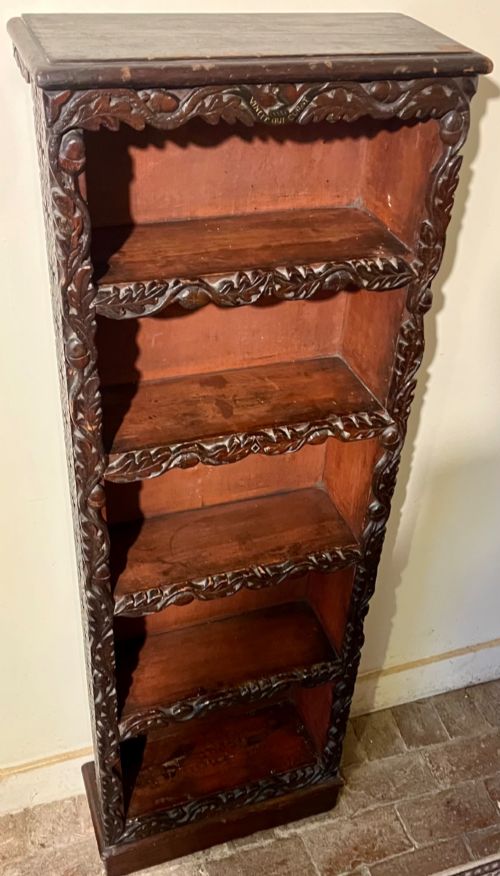
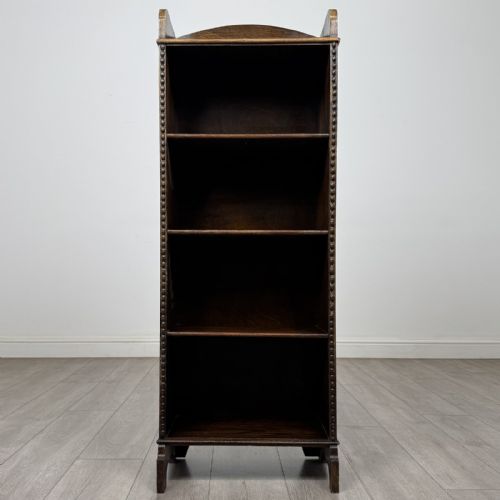
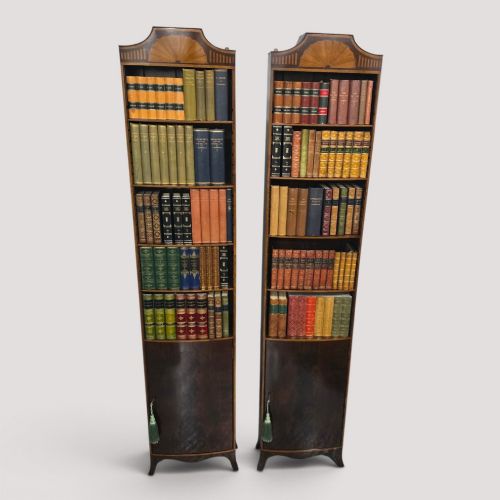
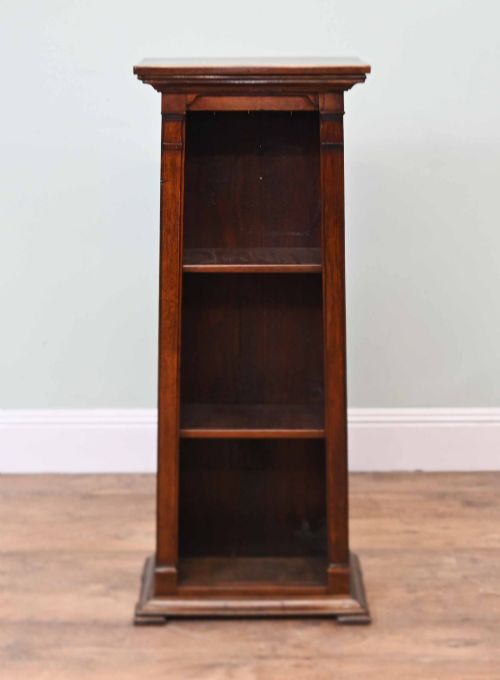
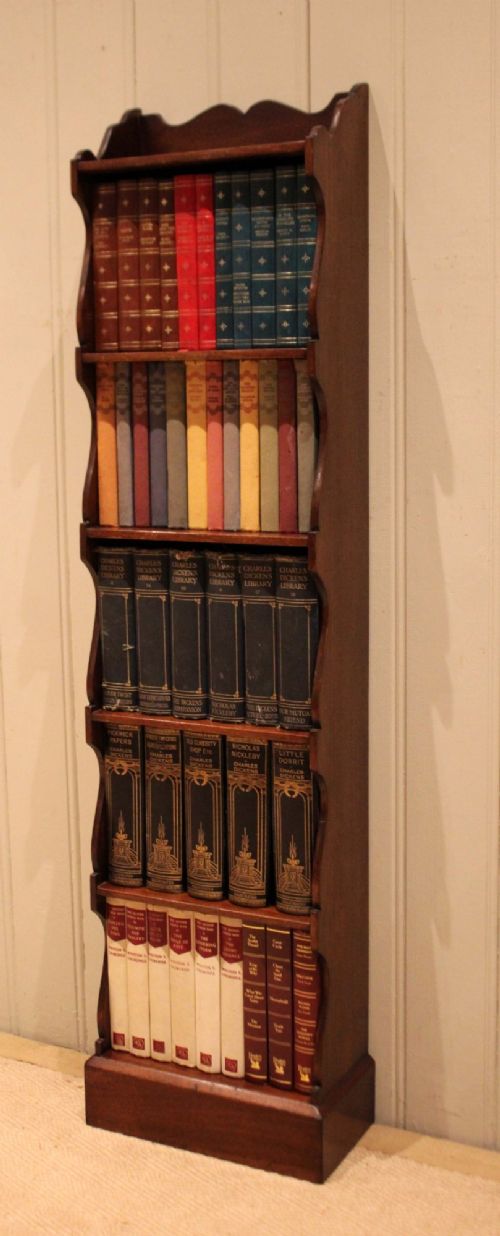
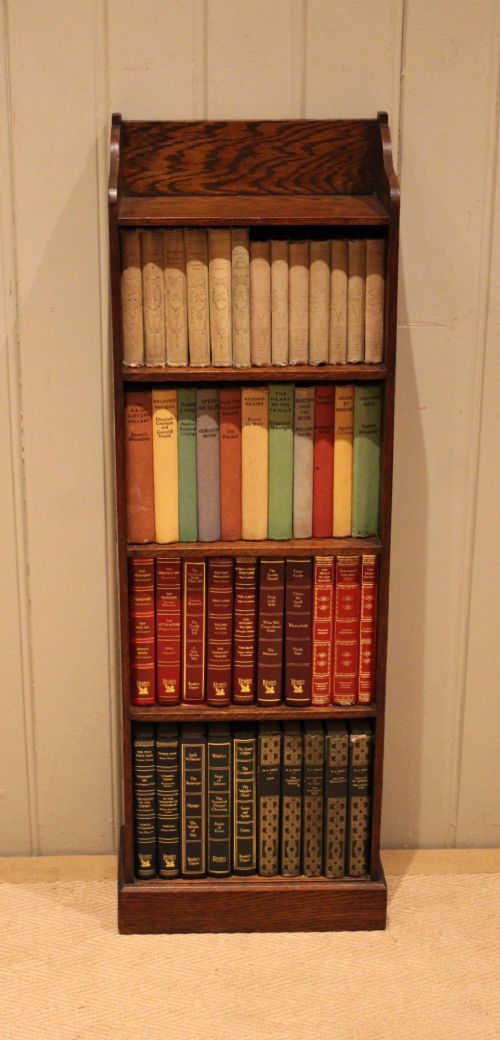
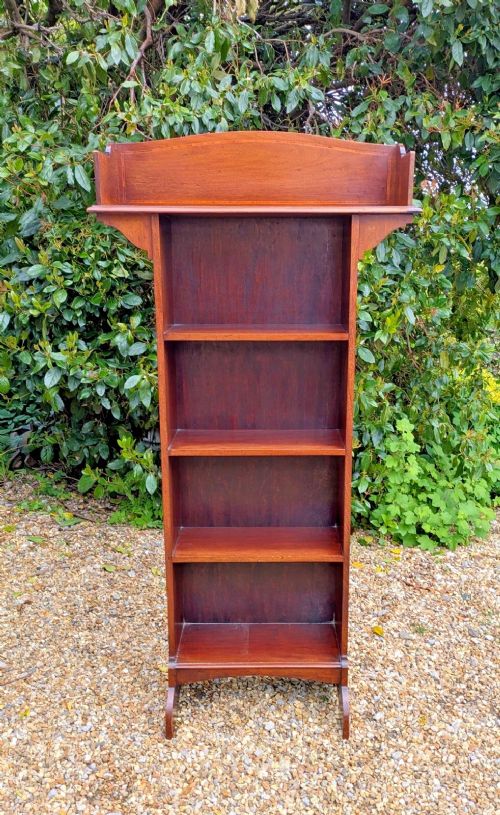
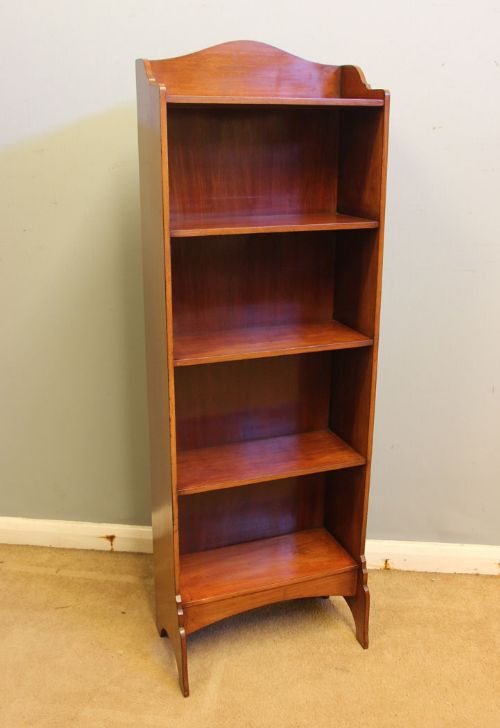
A tall slim shelving unit primarily takes the form of an open bookcase designed to maximise vertical storage within a confined footprint. These pieces range from narrow Victorian examples to early 20th century iterations in mahogany, oak, and walnut.
Buyers will most frequently encounter Edwardian and 1920s examples featuring open shelving, sometimes enhanced with raised or arched galleries. Proportions remain narrow and tall, suiting compact spaces while maintaining traditional utility.
How they were made
Cabinet makers utilised solid timbers like oak and mahogany, alongside walnut and burr walnut veneers, to construct these upright frames. Construction methods prioritised sturdy open shelving, occasionally incorporating adjustable shelves to accommodate varying book heights.
Decorative detailing on these pieces often includes satinwood inlay and brass hardware, reflecting revival styles such as Sheraton Revival and Queen Anne Revival. The joinery relies on traditional carpentry techniques suited to load-bearing upright furniture.
Tall Slim Shelving Unit Retail Price Guide 2026
Typical asking prices for tall slim shelving unit among the pieces listed under this phrase on Sellingantiques today, from the lower quarter to the upper quarter. They describe what is for sale here now, not the wider market.
Some upright bookcases feature arched galleries, giving miniature architectural dignity to a modest line of paperbacks.
What varies in quality
Quality differences stem from the choice of primary timber and the sophistication of decorative embellishments like inlay work. Finer pieces demonstrate superior timber selection, such as burr walnut or figured mahogany, alongside refined proportions.
The integration of architectural details, including raised or arched galleries, distinguishes standard utilitarian bookcases from more decorative revival pieces. Superior examples balance functional vertical capacity with balanced proportions and deliberate stylistic details.
The Tall Slim Shelving Unit Glossary
- Open bookcase
- A bookcase lacking doors, exposing the shelves and book spines directly to the room. This form predominates among tall slim examples.
- Gallery
- A small decorative upstand along the top edge of a piece of furniture, designed to prevent items from sliding off the surface. These appear as raised or arched wooden barriers.
- Burr walnut
- A highly figured wood veneer taken from the wart-like growths on walnut trees. It provides intricate grain patterns on select cabinet surfaces.
Tall Slim Shelving Unit: Frequently Asked Questions
Where do I put a tall slim shelving unit?
These pieces suit narrow wall spaces, alcoves, and hallways where standard furniture proves too bulky. Their vertical orientation provides substantial storage without dominating the floor area.
Position them away from direct heat sources and strong sunlight to protect the timber surfaces and any veneered elements from drying out or fading over time.
Are the shelves adjustable on these units?
Certain examples feature adjustable shelving to accommodate volumes of different heights. Check individual piece descriptions to confirm the shelf configuration.
Fixed shelves offer rigid structural stability, whereas adjustable systems provide flexibility for changing storage requirements.
How do I identify an Edwardian tall bookcase?
Edwardian pieces often combine traditional forms with lighter decorative touches, such as delicate satinwood inlay on mahogany structures. They typically date from the early part of the twentieth century.
Construction details, timber patination, and stylistic markers like Sheraton Revival influences help distinguish this period from earlier Victorian or later 20th century items.
What woods were used for these bookcases?
Mahogany and oak form the primary timbers for the majority of these upright shelving units. Walnut, burr walnut, and satinwood inlay appear on more decorative revival examples.
Each timber brings distinct grain patterns and colour variations, influencing the overall visual weight of the furniture in a room.