





Tall Ships Canvas
These tall ships canvas works bring historic marine scenes and naval vessels straight to your walls through traditional oil painting.
Tall Ships Canvas
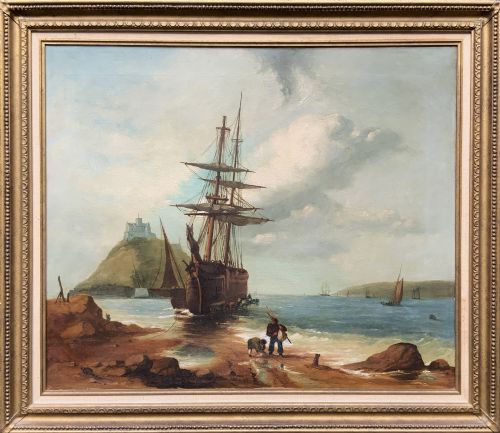
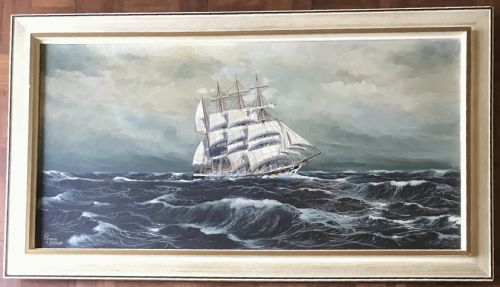
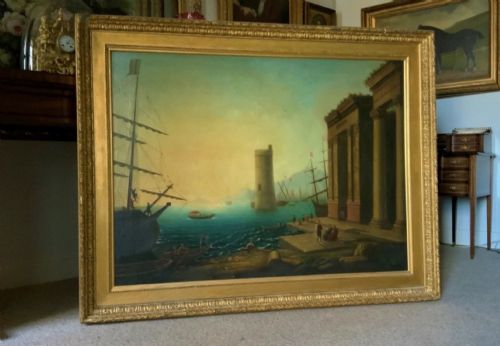
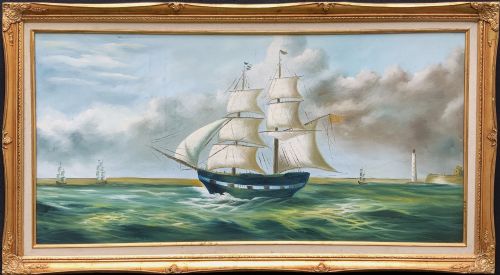
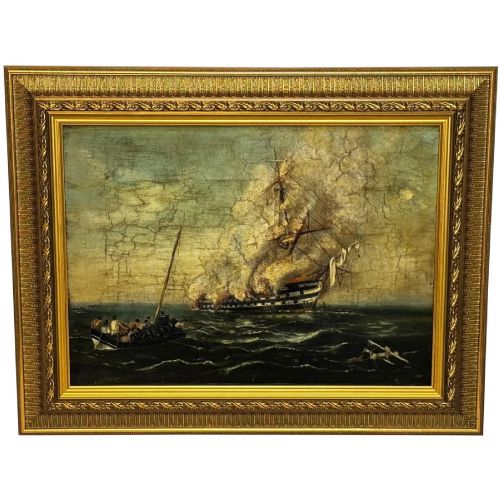
A tall ships canvas captures maritime history, from dramatic sea battles to detailed port scenes and ship portraits. These works range across several periods, including Regency, Victorian, and Edwardian eras, as well as mid-century interpretations.
You will encounter pieces depicting specific historical vessels such as the Cutty Sark and HMS Swift, alongside anonymous harbour views and coastal figures. The subject matter focuses heavily on sailing ships, multi-masted barques, and open sea voyages.
Most examples take the form of traditional oil paintings on canvas, often housed in period frames of giltwood or gesso. They serve as historical records of naval architecture and maritime trade routes.
Materials and construction
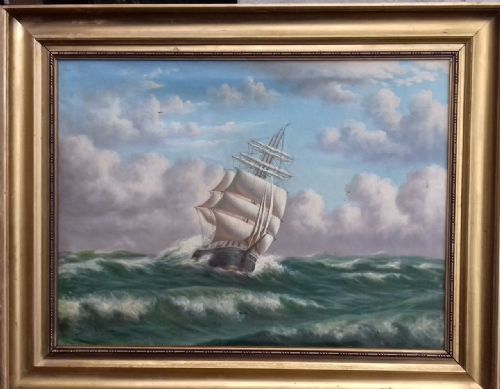
These artworks rely fundamentally on oil paint applied to stretched canvas, utilising traditional brushwork techniques to capture water, sky, and rigging with precision. Artists built up layers of pigment to achieve depth in stormy seas and atmospheric coastal lighting.
Many of the surviving pieces retain their original wooden frames, frequently enhanced with gesso, gold leaf, and gilding. These frames complement the maritime subject matter and provide structural support for the canvas.
Tall Ships Canvas Retail Price Guide 2026
Typical asking prices for tall ships canvas among the pieces listed under this phrase on Sellingantiques today, from the lower quarter to the upper quarter. They describe what is for sale here now, not the wider market.
Listings feature works spanning the Regency, Victorian, and Edwardian periods, executed in oil on canvas with wood and giltwood frames.
Assessing quality in marine art
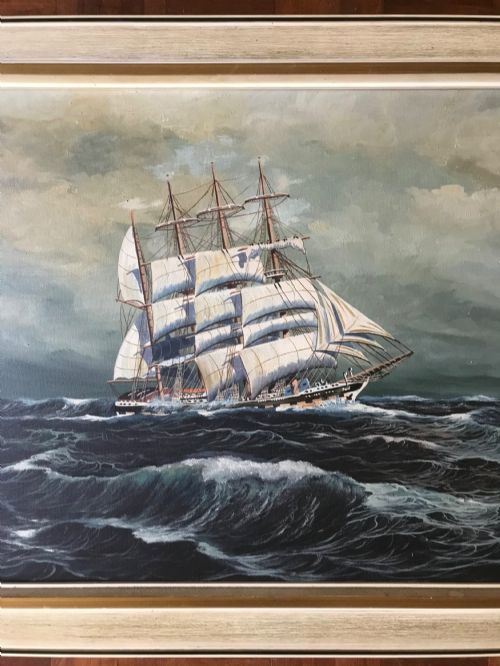
Quality rests primarily on the artist's ability to render nautical anatomy accurately, from the rigging of a four-masted barque to the movement of waves. Works by named painters often demonstrate superior handling of light and maritime atmosphere compared to anonymous workshop pieces.
The condition of the canvas and the preservation of the original giltwood or gesso frame also influence the overall standard of a piece. Finer examples maintain their original pigment vibrancy without extensive overpainting or structural canvas repairs.
Bernard Gribble·Dion Pears·John Callow·Joseph Heard·George Stainton
The Tall Ships Canvas Glossary
- Oil on canvas
- A painting medium where pigments are bound with drying oils, applied to a woven fabric support. This technique allows for rich colour blending and textured brushwork.
- Giltwood
- Wood that has been treated with a thin layer of gold leaf or powder. It provides a decorative and protective border for traditional paintings.
- Gesso
- A paint mixture consisting of a neutral binder mixed with chalk, gypsum, or pigment. It prepares the wooden frame surface before gilding.
- Maritime Realism
- An art style focused on the accurate depiction of ships, seascapes, and naval history. Artists working in this manner prioritize observational detail.
- Ship portrait
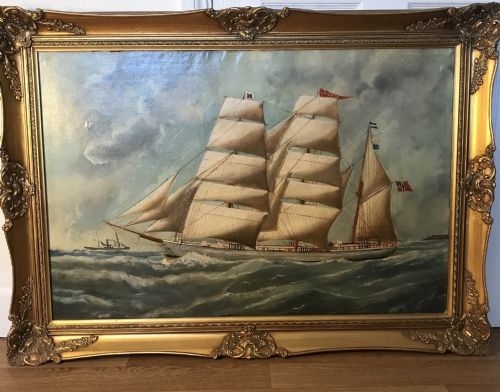
- A specialised painting genre dedicated to depicting a specific vessel from a flattering profile angle. These works often document merchant ships and naval vessels for their owners.
Tall Ships Canvas: Frequently Asked Questions
What periods do these paintings cover?
The selection spans from the late eighteenth century through the Victorian and Edwardian eras up to the mid-twentieth century. This timeline covers shifting styles in marine art from traditional Georgian works to later realist interpretations.
Buyers will find specific dates referenced in individual titles, ranging from early nineteenth-century harbour scenes to twentieth-century depictions of historic vessels.
How should I display a canvas painting?
Keep oil paintings away from direct sunlight and excessive humidity to protect both the canvas and the traditional giltwood frames. Stable indoor environments prevent the wood and gesso from cracking.
Ensure the hanging hardware on the back securely supports the weight of the framed canvas before mounting it on a wall.
How do I identify a ship portrait?
A ship portrait typically shows a specific named vessel in clear profile, often set against a recognizable coastline or lighthouse. The rigging and flags are usually rendered with technical accuracy.
Inscriptions on the frame or canvas often name the vessel, such as the Cutty Sark or HMS Swift, confirming its identity.
What is maritime realism?
Maritime realism is an artistic approach focused on the precise representation of ships, water, and weather conditions. Painters aimed to record naval architecture and maritime activity with factual correctness.
This style differs from romanticized seascapes by paying close attention to the actual operation of sailing vessels at sea.