


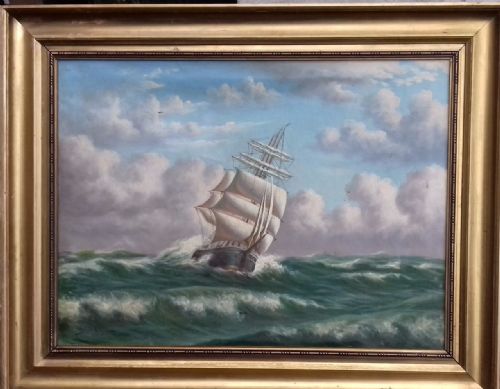


Tall Ship Canvas Painting
These tall ship canvas painting works capture historic vessels under sail, offering a direct connection to centuries of maritime heritage.
Tall Ship Canvas Painting
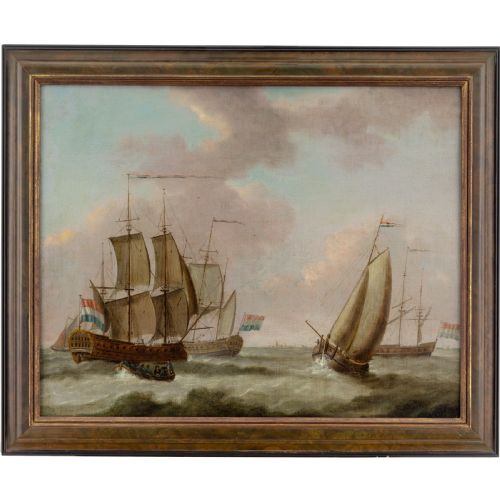
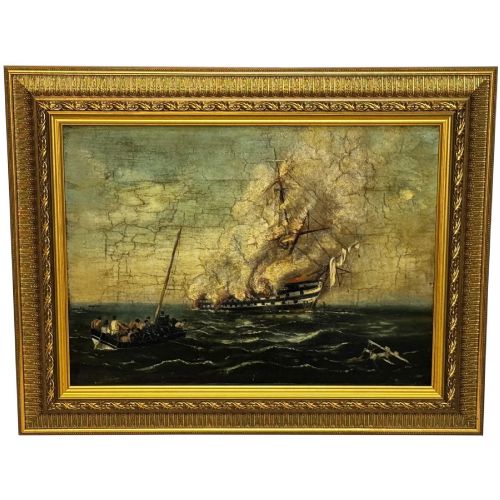
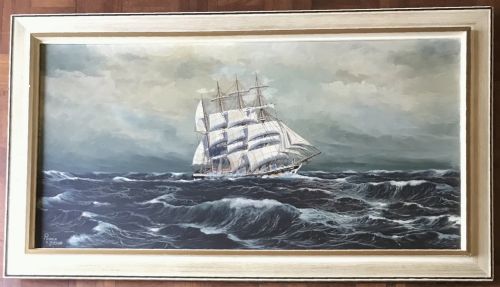
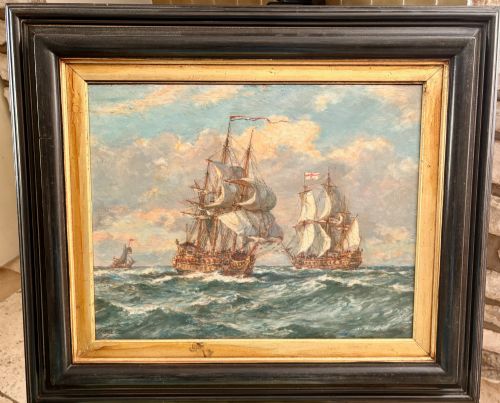
A tall ship canvas painting depicts large sailing vessels, frigates, barques and harbour scenes rendered in oil paint. These works range from early nineteenth century compositions to mid-century marine realism.
Buyers encounter depictions of specific historic vessels, sea battles, coastal figures and dramatic stormy seas. The subjects span named ships such as the Cutty Sark and HMS Swift alongside anonymous harbour views.
Origins stretch across the Regency, Victorian, Edwardian and mid-century periods, showing shifts in maritime art from detailed ship portraits to atmospheric seascapes.
Materials and methods
Artists painted primarily with oil paint on stretched canvas supports, building up rich layers of pigment to render water, sky and rigging. This traditional combination allowed for deep tonal variation and durable surfaces.
Many works sit within wood frames finished with gesso, gold leaf, gilding and giltwood accents. These ornate surrounds complement the maritime subjects and protect the edges of the canvas.
Materials recorded across the inventory include giltwood, gesso, gold leaf and wood.
What separates the finest works
Quality rests upon the precision of the vessel's rigging and hull construction combined with the atmospheric treatment of the sea and sky. Works by recorded artists command greater attention through their detailed historical accuracy.
The sophistication of the oil paint handling dictates visual depth, separating simpler decorative pieces from accomplished maritime realism that captures movement and light effectively.
Bernard Gribble·Dion Pears·John Callow·Joseph Heard·V Dybdal·George Stainton
The Tall Ship Canvas Painting Glossary
- Oil on Canvas
- Pigments bound in a drying oil applied directly to a woven fabric support. This technique provides rich colour depth and lasting flexibility.
- Giltwood
- Wood carved and covered with a thin layer of gold leaf or metallic powder. It provides a traditional reflective border for historic paintings.
- Maritime Realism
- An artistic style focused on the accurate depiction of ships, seas and coastal topography. Artists balance technical nautical detail with atmospheric conditions.
- Gesso
- A paint mixture consisting of a binder mixed with chalk, gypsum or pigment. It creates a smooth preparatory layer on wooden frames before gilding.
Tall Ship Canvas Painting: Frequently Asked Questions
What periods do these paintings cover?
The selection includes works from the Regency, Victorian and Edwardian eras, stretching through to the mid-twentieth century.
These periods show distinct shifts in maritime painting styles, moving from formal ship portraits toward more expressive seascapes.
How do I identify the ship in a painting?
Artists often recorded specific vessel names in titles, on framing plaques or within the composition itself, such as flags and stern lettering.
Researching the registry or historical records of named vessels like the Cutty Sark helps verify the exact subject.
Are all these works signed by the artist?
Signatures appear on several pieces alongside documented attributions to known painters from the nineteenth and twentieth centuries.
Many period marine paintings remain unsigned yet display distinct technical traits typical of traditional maritime art.
What frames typically accompany these canvases?
Surrounds frequently consist of wood frames enhanced with gesso, gold leaf, gilding or giltwood mouldings.
These decorative borders reflect period framing conventions designed to complement oil paintings on canvas.