

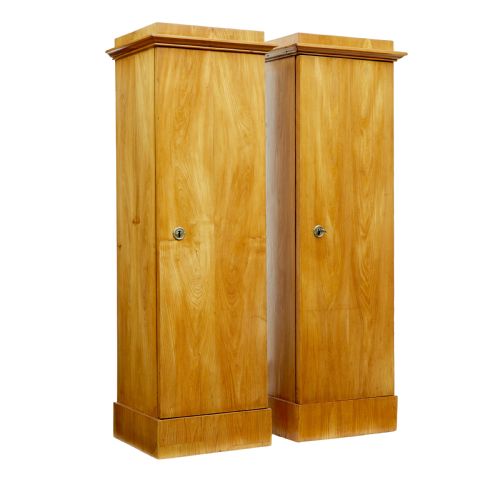
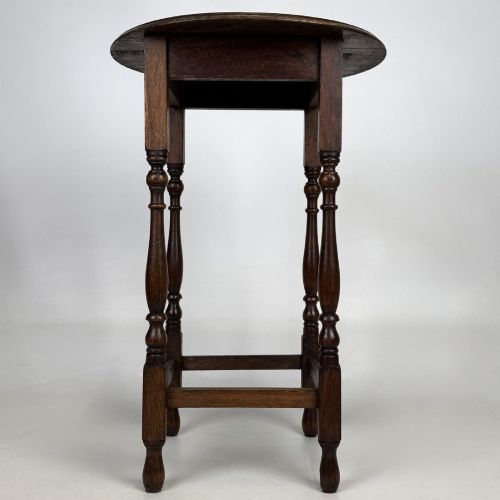
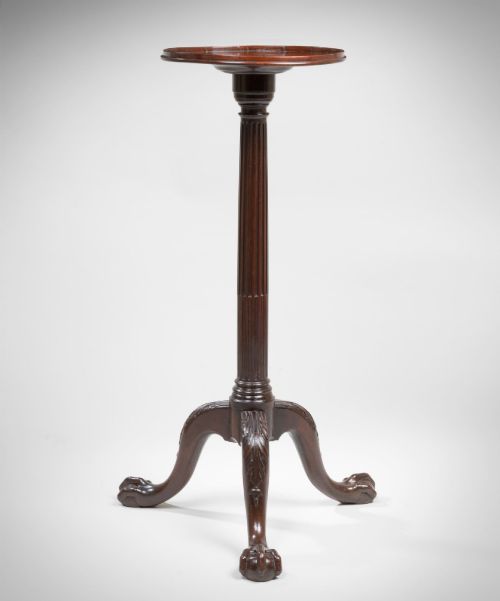
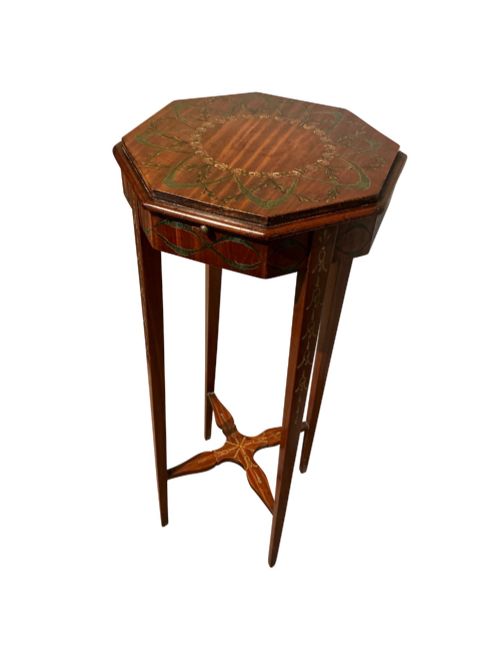
Tall Pedestal Table
A tall pedestal table brings height and proportion to a room, offering a functional surface for display in compact footprints.
Tall Pedestal Table
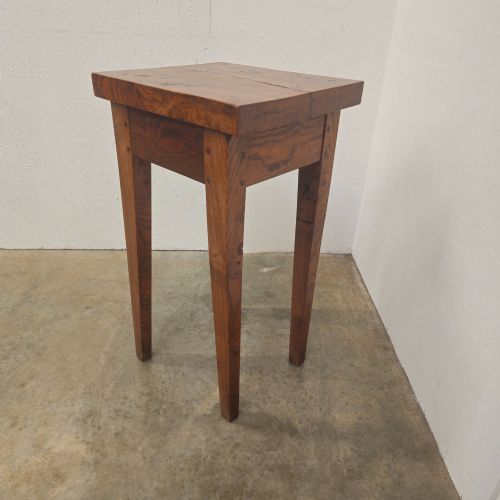
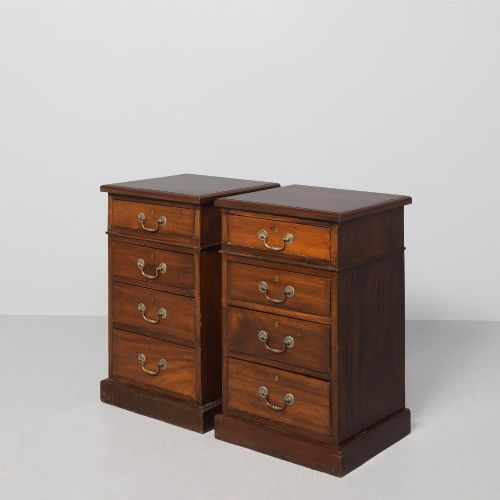
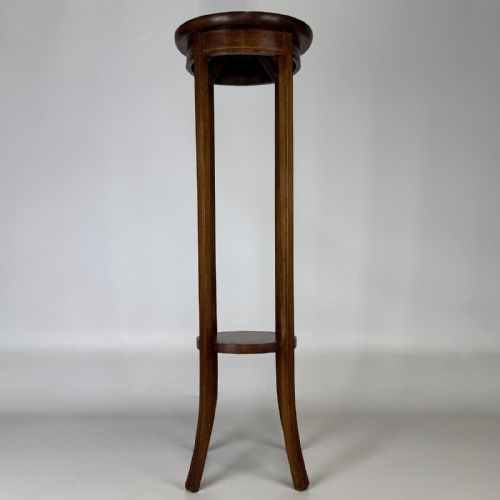
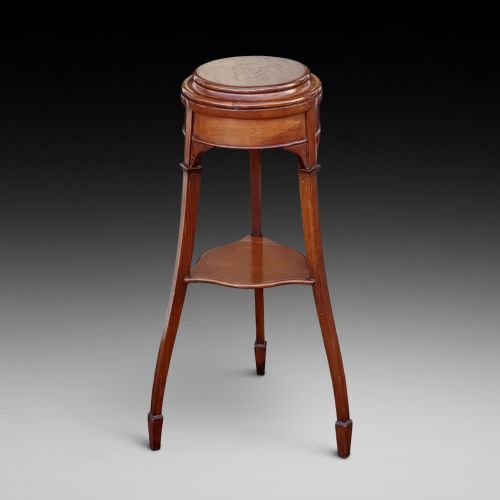
A tall pedestal table encompasses plant stands, torchere candle stands, and jardiniere stands raised on central columns or slender legs. These elevated forms span periods from the Georgian era through the Edwardian years, utilising timber frames designed to hold decorative objects at eye level.
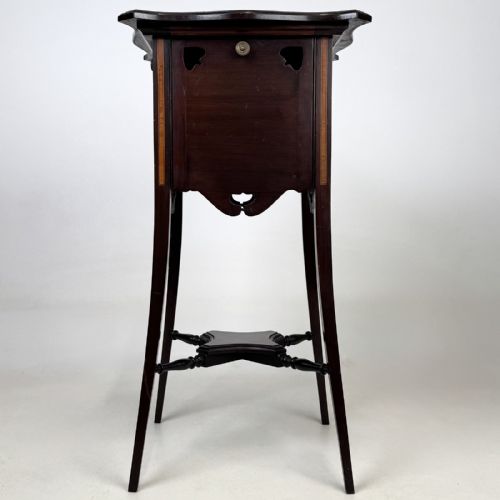
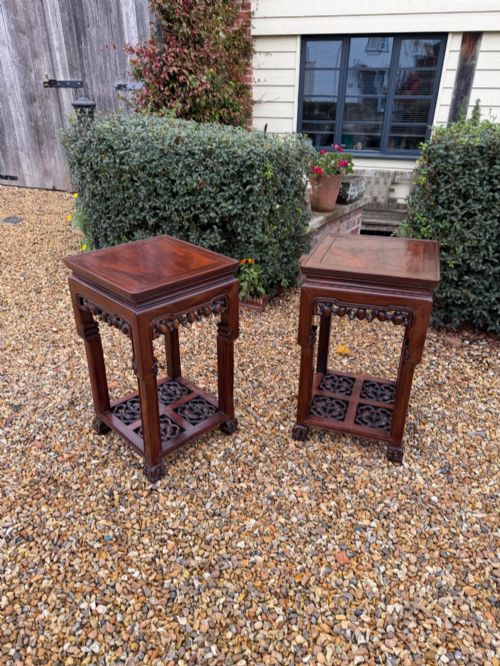
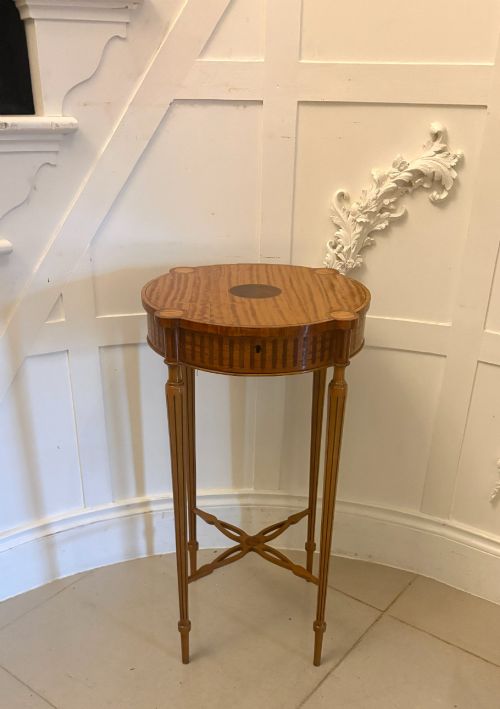
The version most commonly encountered on this page is the Edwardian mahogany plant stand or the 19th-century hardwood vase stand. These pieces frequently feature circular or shaped tops supported by a single central shaft or slender corner uprights, often incorporating lower shelves for stability.
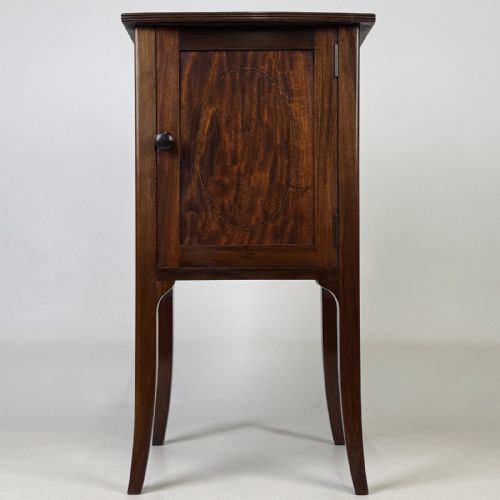
Makers and cabinetmakers produced these varied designs for domestic interiors, ranging from simple oak Arts & Crafts examples to intricately inlaid satinwood and mahogany pieces. Their primary function remains the display of urns, plants, lamps, and sculptures within reception rooms and hallways.
Materials and construction
Cabinetmakers constructed these tables using dense timbers such as mahogany, oak, walnut, and satinwood, frequently selecting figured veneers and exotic hardwoods for decorative effect. Structural stability in tall, narrow forms required careful joinery, weighted bases, or splayed legs to prevent tipping.
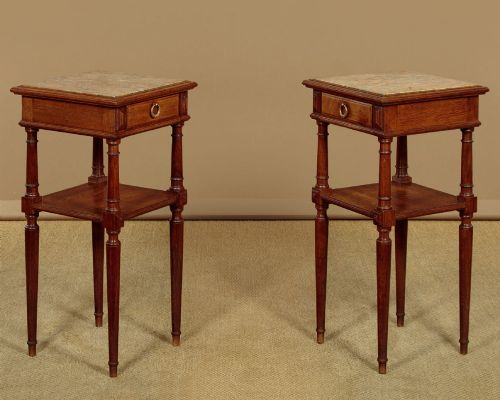
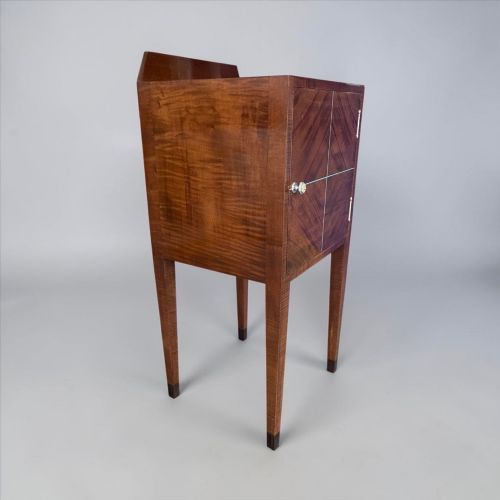
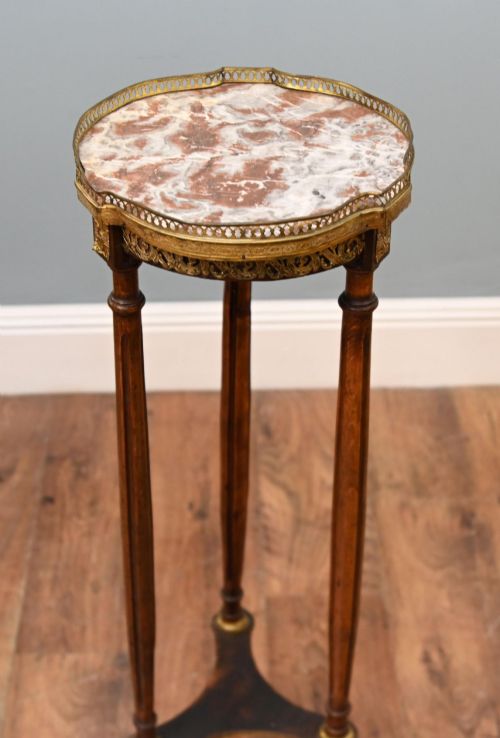
Surface decoration involved marquetry inlay, satinwood banding, and carved detailing along the columns and borders. Certain regional and period pieces integrated contrasting materials, setting marble or onyx inserts directly into timber tops to support heavy planters and lamps.
Tall Pedestal Table Retail Price Guide 2026
Typical asking prices for tall pedestal table among the pieces listed under this phrase on Sellingantiques today, from the lower quarter to the upper quarter. They describe what is for sale here now, not the wider market.
Periods represented range from 18th-century Georgian designs through Victorian, Arts & Crafts, and Edwardian eras up to the 1930s.
Indicators of quality
Quality rests in the stability of the central column and the precision of the joints connecting the top to the pedestal and base. Timbers chosen for secondary elements match the grain and colour selection of the primary display surfaces, reflecting higher workshop standards.
Refined execution appears in crispness of hand-carved details, balanced proportions in narrow shafts, and the integrity of inset marble or onyx panels. Pieces retaining original surface patination and tight structural alignment demonstrate superior original manufacture.
Druce & Co London·Shoolbred·François Linke
The Tall Pedestal Table Glossary
- Torchere
- A tall stand designed specifically to support a candelabrum, lamp, or candle. These slender forms originated in the late 17th century and continued through the Georgian and Regency periods.
- Jardiniere stand
- A specialised low or tall table built to hold a plant container or flower receptacle. They frequently incorporate waterproof liners or stone tops to manage moisture.
- Marquetry
- The art of applying decorative veneer pieces in geometric or floral patterns onto a timber substrate. Master craftsmen utilised contrasting wood types to create pictorial surface designs.
- Galleried top
- A raised rim or low railing surrounding the edge of a table surface. This feature prevents small items or lamps from sliding off the elevated platform.
Tall Pedestal Table: Frequently Asked Questions
What were tall pedestal tables used for?
These tables served primarily to elevate lighting, decorative urns, and potted plants above floor level to draw the eye upward in formal interiors.
Their narrow footprint allowed them to occupy corners and tight wall spaces where standard furniture could not fit.
How do I distinguish Edwardian stands from Georgian ones?
Edwardian examples often display lighter satinwood banding, inlaid shell motifs, and simpler spindle structures reflecting revival tastes around 1900.
Georgian pieces rely on dense, solid mahogany figures, classical urn motifs, and precise hand-carving characteristic of 18th-century cabinetmaking.
Are marble top stands suitable for heavy objects?
The integrated marble or onyx inserts provide a stable, heat-resistant, and moisture-proof surface capable of supporting heavy bronze vases and large planters.
The heavy stone slab also adds downward weight to the base, improving overall balance in tall forms.
Where should I place a tall pedestal table at home?
They function effectively in empty room corners, beside seating arrangements, or in hallways where vertical interest is needed.
Their elevated design makes them ideal for displaying table lamps or trailing plants without cluttering floor space.