


Tall Oak Bookcase Cupboard
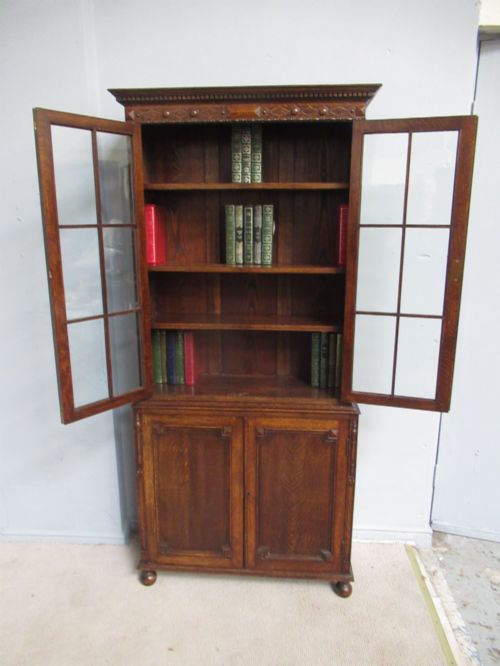
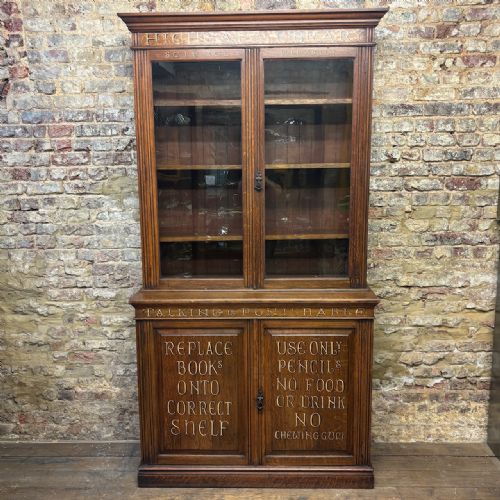
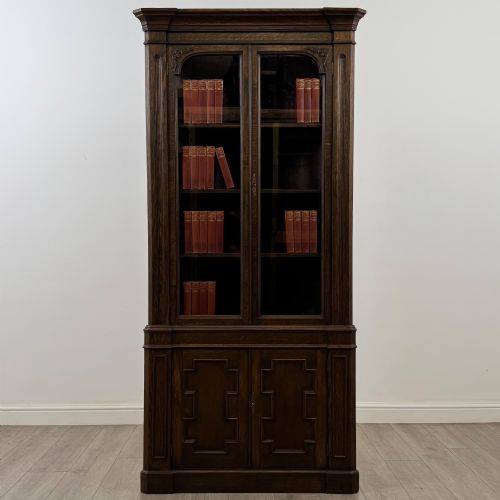
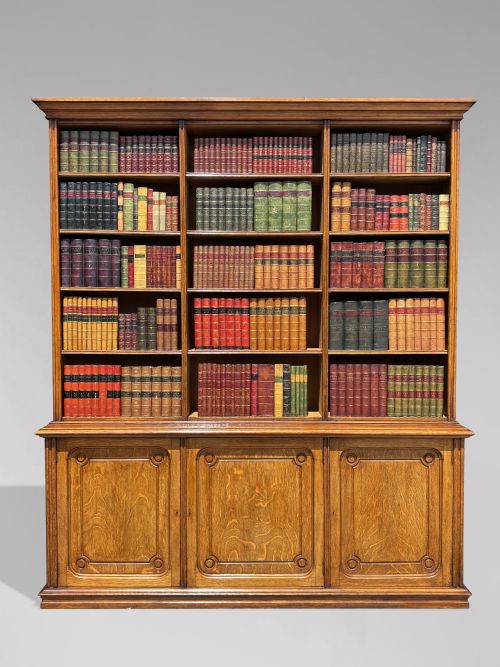
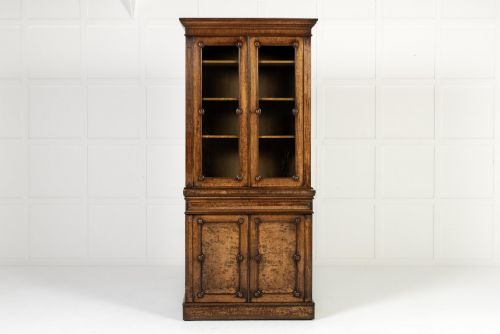
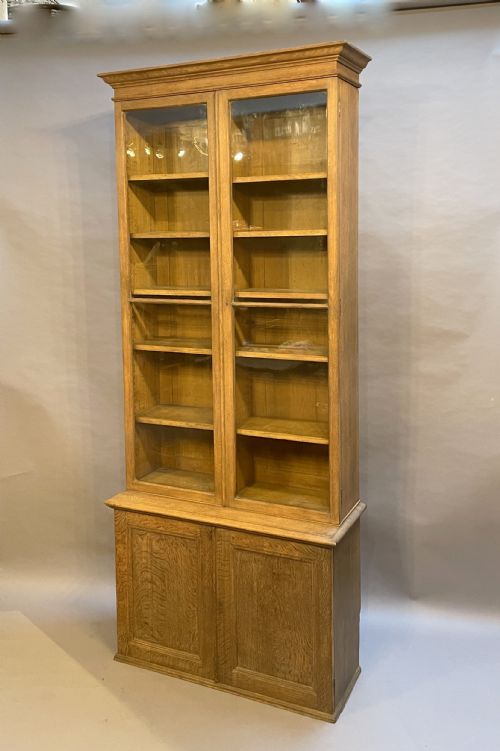
These tall oak bookcase cupboards are towering storage pieces built to hold libraries while displaying treasures behind glazed or open fronts.
Tall Oak Bookcase Cupboard
A tall oak bookcase cupboard combines shelved upper compartments for books with enclosed lower storage, built in sturdy timber across the nineteenth and twentieth centuries. You will most frequently encounter Victorian, Edwardian, and early twentieth-century interpretations on this page.
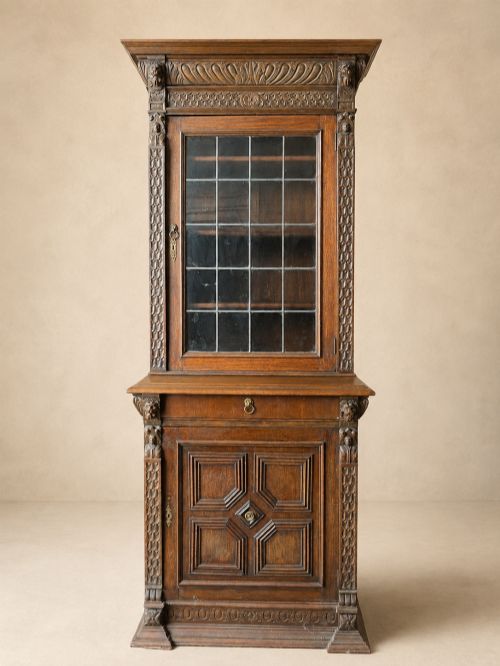
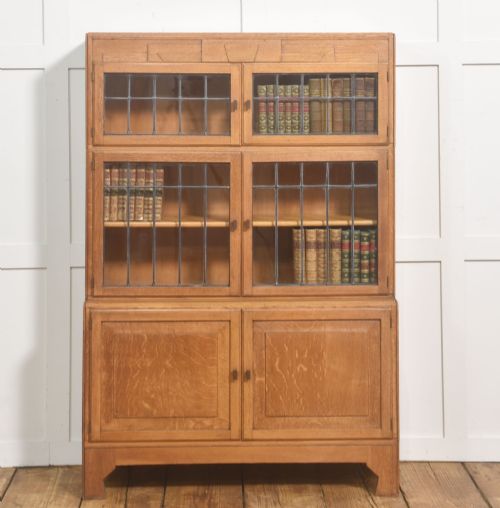
These pieces range from English and French provincial workshops to school libraries, utilising solid oak, pollard oak, and occasionally contrasting woods. Forms span open shelving, glazed display doors, leaded glass panels, and corner cabinets designed for practical domestic storage.
How they were made
Joiners constructed these cabinets primarily from solid oak and pollard oak, incorporating brass hardware, iron fittings, and lead for glazed panels. Many examples utilise two-part construction to ease transport of such towering furniture.
Makers embellished the timber through deep carving, beaded edges, and Gothic revival detailing, whilst mounting glass into doors for display purposes and fitting drawers into the lower sections.
School library books once lived inside these exact oak frames, bearing the quiet gravity of a century of studious silence.
What varies in quality
The distinction between standard utility furniture and superior cabinet-making lies in the selection of figured pollard oak veneers and the crispness of hand-carved ornamentation. Exceptional examples display harmonious proportions across two-part forms and retain original brass or iron hardware.
Internal joinery, the thickness of solid oak boards, and the quality of leaded or clear glass panes further separate ordinary workshop production from pieces bearing maker attributions.
Howard & Sons·A Blain & Son Liverpool
The Tall Oak Bookcase Cupboard Glossary
- Pollard oak
- Timber taken from trees that were cut back to promote a dense head of branches, creating highly figured, mottled grain patterns. Cabinet-makers prized this for decorative veneer panels on high-status furniture.
- Leaded glass
- Small panes of glass held together within a framework of lead cames to form geometric or decorative window patterns. This technique frequently appears in early twentieth-century and Art Deco display doors.
- Two part
- Furniture constructed as a separate upper and lower section that stack together. This method allowed heavy library bookcases to be moved through domestic doorways.
- Beaded edge
- A narrow, rounded moulding run along the corner or edge of a shelf or frame. It softens harsh right angles and adds subtle texture to simple oak surfaces.
- Gothic revival
- An architectural and decorative style drawing on medieval forms, featuring pointed arches, tracery, and heavy carved ornamentation. It heavily influenced late nineteenth-century cabinet design.
Tall Oak Bookcase Cupboard: Frequently Asked Questions
How do I date a tall oak bookcase cupboard?
Dating relies on observing construction methods, timber selection, and stylistic markers such as Victorian Gothic carvings or Art Deco leaded glass. Hardware and drawer dovetails also offer clues to whether a piece originates from the eighteenth, nineteenth, or early twentieth century.
Cabinet construction shifted from hand-cut joints towards machine assistance by the 1920s, while revived styles like Jacobean or Gothic point to specific Victorian and Edwardian revivals rather than original periods.
Are these bookcases heavy to move?
These towering pieces are substantial and heavy, particularly those fashioned from solid oak or configured as large two-part cabinets. Their sheer height and dense timber demand careful handling during relocation.
Many examples separate into an upper glazed bookcase and a lower cupboard base to make transport manageable. Securing tall furniture to a wall is standard practice for domestic safety.
What is the difference between open and glazed bookcases?
Open bookcases provide direct, unobstructed access to shelves for frequent book retrieval. Glazed versions protect volumes from dust and moisture behind glass doors, often incorporating lower cupboards for hidden storage.
Glazed cabinets suit display and archival preservation, whilst open variants function well as working library furniture. Both types utilise the same sturdy oak framework.
Where should I place a tall bookcase cupboard?
These imposing pieces require stable flooring and sufficient wall space to accommodate their height and depth. Placing them away from direct heat sources prevents the solid oak timber from drying out or splitting.
Corner cabinets specifically utilise awkward room angles, while grand two-part bookcases anchor living rooms or studies. Ensure clearance for doors that swing open on lower cupboards.