





Tall Oak Book Unit
A tall oak book unit brings sturdy vertical storage and rich grain into a room, offering practical shelving with traditional character.
Tall Oak Book Unit
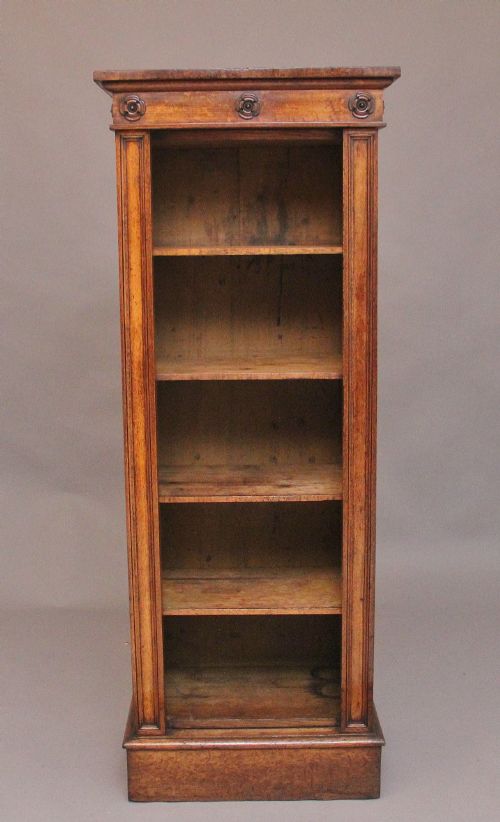
When you search for a tall oak book unit, you are looking at practical open shelving designed to hold volumes upright while drawing the eye upward with its vertical proportions. These pieces range from late Victorian examples down through Edwardian designs into the early twentieth century.
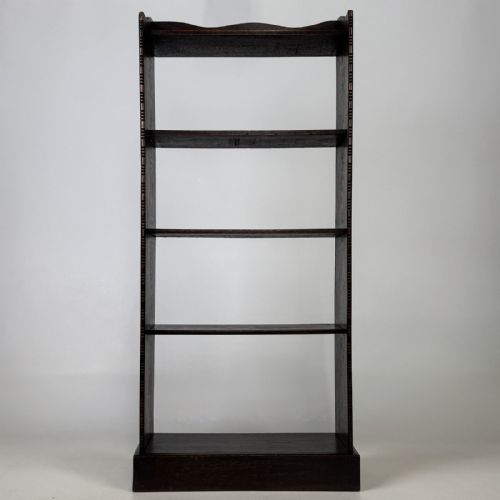
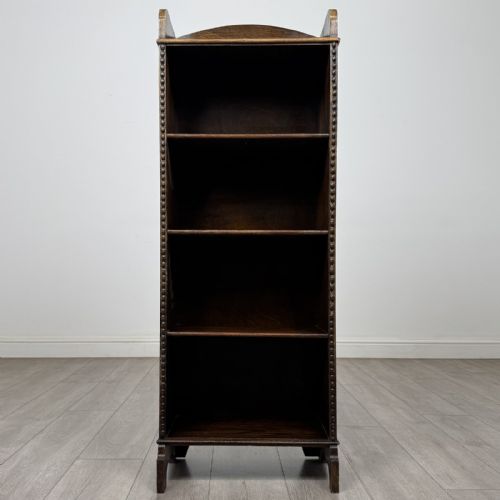
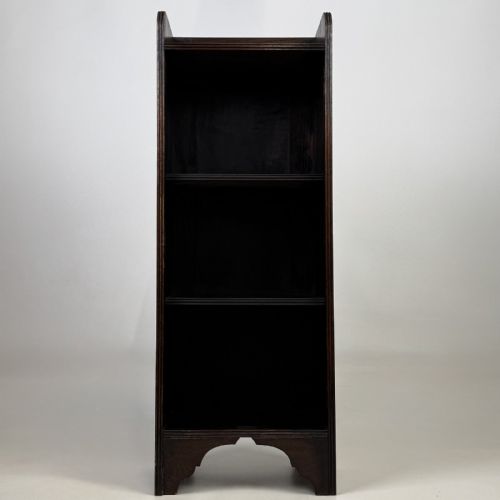
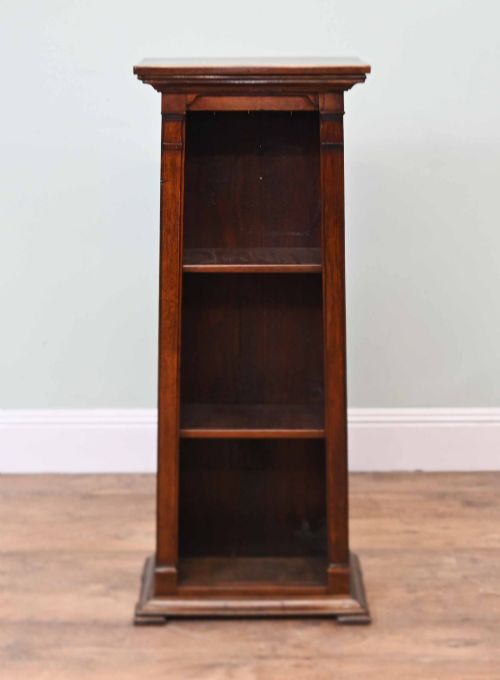
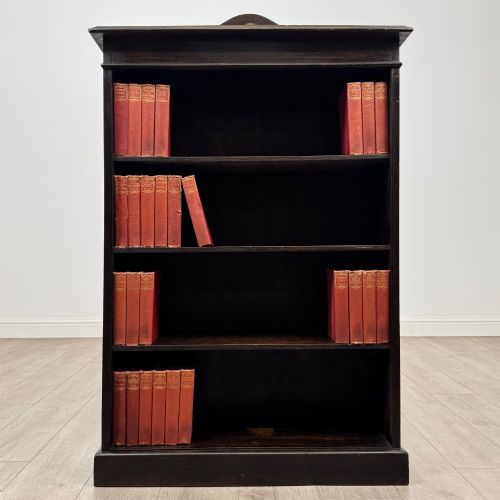
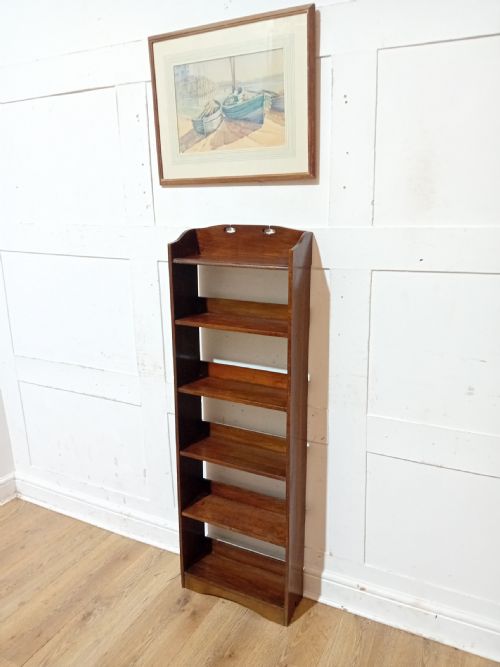
You will most commonly encounter open-fronted bookcase forms on this page, often featuring adjustable shelves, raised galleries, or arched tops. Many of these pieces display simple linear frames suited to everyday home organisation.
The selection encompasses straightforward utilitarian shelving alongside items bearing distinct design movements, including Arts and Crafts influences and regional workshop signatures. Golden oak and standard oak predominate throughout the available selection.
Materials and construction
Makers built these pieces primarily from solid oak, sometimes utilising golden oak varieties to highlight natural timber figuring. Construction methods focused on durability, employing sturdy vertical uprights to support heavy loads of books.
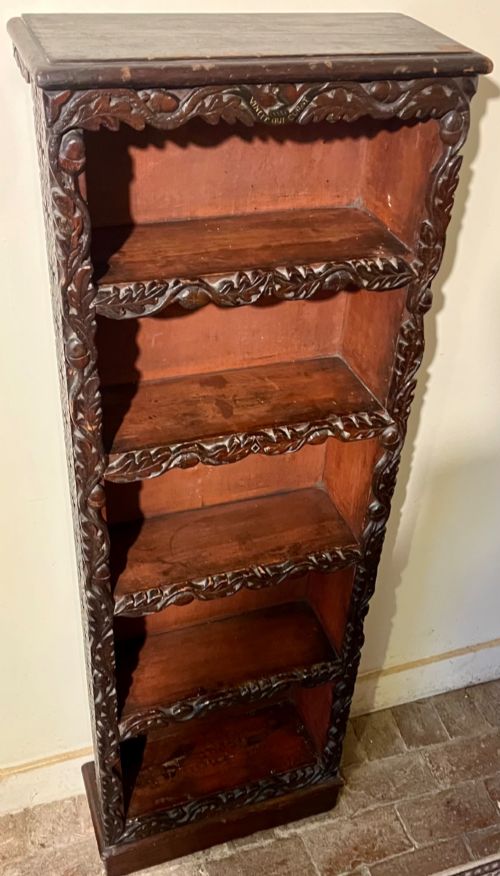
Detailing often included beaded edges, front mouldings, and raised or arched galleries along the top surface. Interior shelving was frequently made adjustable to accommodate volumes of varying heights.
Tall Oak Book Unit Retail Price Guide 2026
Typical asking prices for tall oak book unit among the pieces listed under this phrase on Sellingantiques today, from the lower quarter to the upper quarter. They describe what is for sale here now, not the wider market.
Listings span the Victorian era through the Edwardian period and into the nineteen-twenties, using oak and golden oak.
Judging quality in oak shelving
Quality in these units lies in the choice of timber and the crispness of the carpentry, separating standard utility furniture from more considered workshop pieces. Superior examples show careful attention to grain matching and robust joints that withstand heavy loading.
The presence of thoughtful decorative elements, such as arched galleries, beaded edges, or integrated mouldings, distinguishes finer cabinetwork from plain functional storage.
Wylie Lochhead of Glasgow·E.A. Taylor
The Tall Oak Book Unit Glossary
- Golden oak
- A bright, warm shade of oak timber popular in late Victorian and Edwardian furniture production. It was often finished to accentuate the natural medullary rays in the wood.
- Raised gallery
- A low decorative railing or upstand fitted to the top surface of a piece of furniture. It prevents items from sliding off the rear or sides.
- Adjustable shelves
- Shelving supported by pegs or ratchets that can be repositioned at different heights. This feature allows the owner to customise the interior space for books of various sizes.
- Arts and Crafts
- A design movement valuing handcraftsmanship, simple forms, and honest construction materials. Pieces from this tradition often emphasise the natural qualities of the oak.
Tall Oak Book Unit: Frequently Asked Questions
What is a tall oak book unit used for?
These units provide vertical storage for books and display items while taking up minimal floor space in a room. They keep frequently read volumes within easy reach.
In living areas or studies, open shelving also serves to display collections, ceramics, or framed photographs alongside a library.
How do I adjust the shelves?
Many period bookcases feature internal vertical rows of shelf supports or wooden notches that allow boards to be lifted and moved. You simply tilt the shelf to clear the supports and relocate it to the desired height slot.
Ensure the shelf settles evenly on all four supports to maintain stability before loading heavy volumes back onto it.
How do I care for oak furniture?
Oak benefits from dusting with a soft, dry cloth and occasional treatment with suitable natural wax to nourish the grain. Avoid placing the unit in direct sunlight or near heat sources to prevent the timber from drying out.
Keeping room humidity stable helps protect both the joints and the finish over decades of domestic use.