



Tall Mahogany Vitrine Cabinet
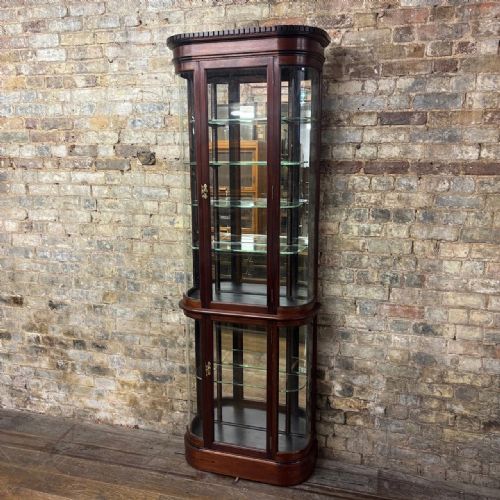
A tall mahogany vitrine cabinet turns light into a stage for silver and porcelain, offering glass-walled storage that dominates a room.
Tall Mahogany Vitrine Cabinet
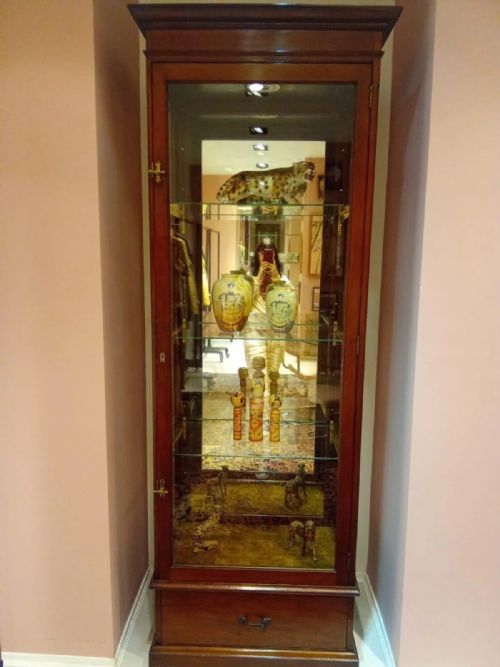
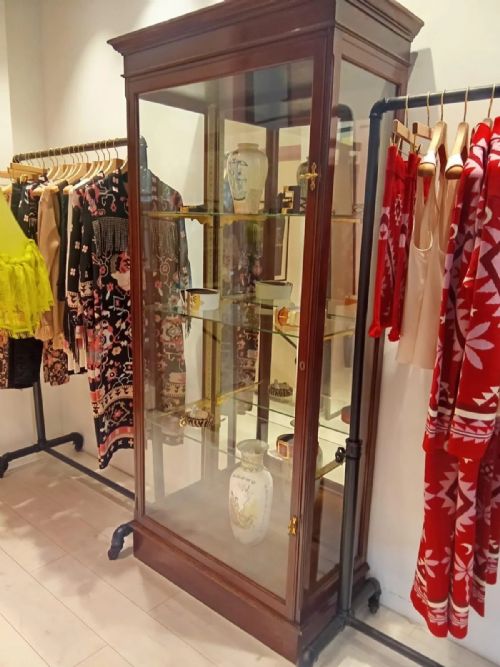
A tall mahogany vitrine cabinet brings together towering vertical display space and rich dark timber framing. When you search for this phrase, you find freestanding shop display cases, narrow bookcases with glazed doors, and corner units designed to make the most of wall space.
Edwardian pieces dominate the selections, alongside examples from the nineteenth century, nineteen-tens, and nineteen-twenties. These tall display cabinets and pedestals serve collectors who need vertical height without a massive floor footprint.
Materials and construction
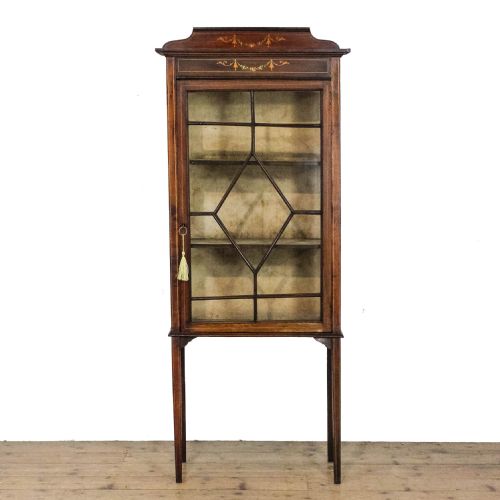
Makers built these cabinets using solid mahogany and mahogany wood veneer over secondary timbers, often lifting the surface with satinwood and boxwood inlay. Glazing forms the main structural visual, supported by timber framing and sometimes brass hardware.
Internal elements rely on adjustable glass shelves, mirrored backs, and fabric linings. Bow front and two-part constructions required precise cabinet-making to support heavy glass panels securely.
Materials recur as solid mahogany, glass, brass hardware, mirror plates, and delicate satinwood or boxwood inlay.
Judging the standard of manufacture
Quality rests in the precision of the timber joints, the crispness of any crossbanding or inlay work, and the clarity of the original glass panes. Superior examples use well-figured mahogany grain that has retained a deep, warm hue through decades of polishing.
The sophistication of the glazing bars, such as delicate astragal designs, separates standard utility pieces from finer parlour display furniture. Interior fittings like adjustable glass supports and finished mirror backs also indicate higher ambition in the original workshop.
E. Pollard And Co. Ltd.
The Tall Mahogany Vitrine Cabinet Glossary
- Vitrine
- A glass-panelled cabinet designed specifically for displaying objects of curiosity or fine porcelain. The term comes from the French word for glass.
- Astragal glazing
- Narrow wooden bars that divide a glass window into smaller panes within a door frame. These bars create geometric patterns across the front of a display cabinet.
- Satinwood crossbanding
- A decorative border technique where thin strips of yellowish satinwood are laid across the grain of the primary mahogany. This frames panels with a contrasting lighter tone.
- Bijouterie cabinet
- A specialised display case with a glass top and upper viewing section intended for jewellery and small precious items. They often sit on slender legs.
- Bow front
- A convex curved cabinet front that projects outward in a smooth arc. This shape softens the corners of a room and expands the interior viewing angle.
Tall Mahogany Vitrine Cabinet: Frequently Asked Questions
What is the difference between a vitrine and a bookcase?
A vitrine relies heavily on glass panels on the sides and doors to exhibit contents from multiple angles. Bookcases generally prioritise wooden shelves with glass restricted to the front doors.
Tall mahogany examples often blur this line, as cabinet-makers adapted tall frames for both library and drawing room use.
How do I place a tall cabinet in a small room?
Corner cabinets make use of awkward wall angles while preserving floor space. Narrow freestanding cupboards and bow-front variants offer vertical presence without overwhelming narrow walls.
Position the piece away from direct sunlight to protect interior fabrics and polished timber surfaces.
Are the shelves inside adjustable?
Many shop display pieces and Edwardian cabinets include adjustable glass shelves resting on metal supports. This allows you to alter the interior height to accommodate taller pieces of porcelain.
Fixed wooden shelving appears more often in pieces built closer to the nineteenth century style.
How do I distinguish Edwardian pieces from earlier work?
Edwardian versions often feature lighter satinwood or boxwood inlay and delicate crossbanding across the mahogany frame. Nineteenth-century pieces generally lean toward heavier proportions and simpler structural lines.
Shop display variants from the early twentieth century focus entirely on maximum glass visibility and sturdy commercial timber.