




Tall Locking Cabinet
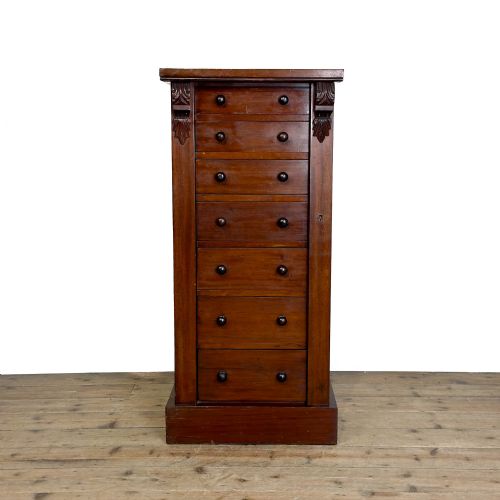
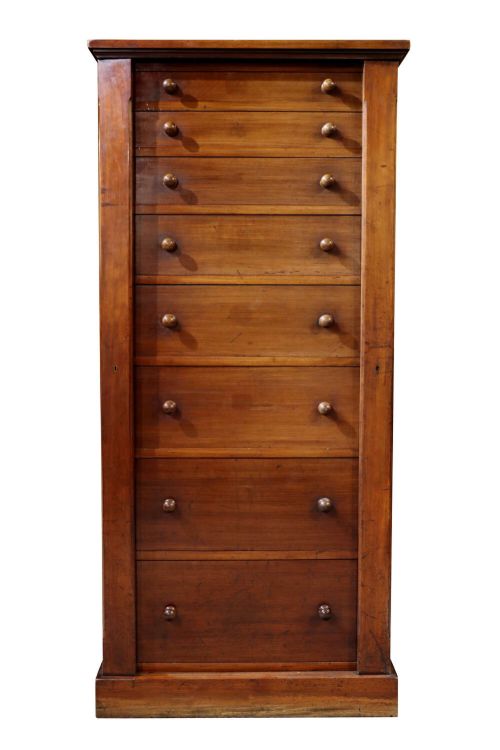
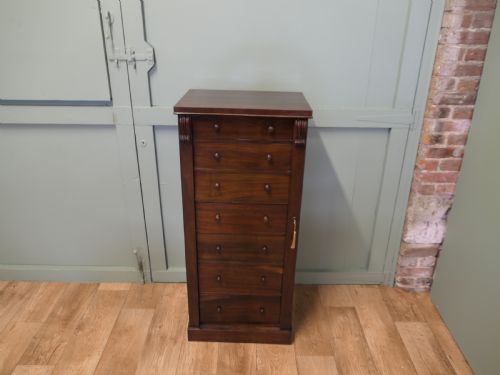
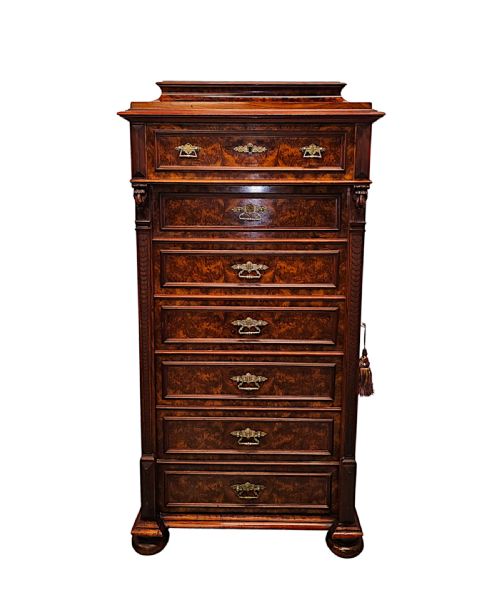
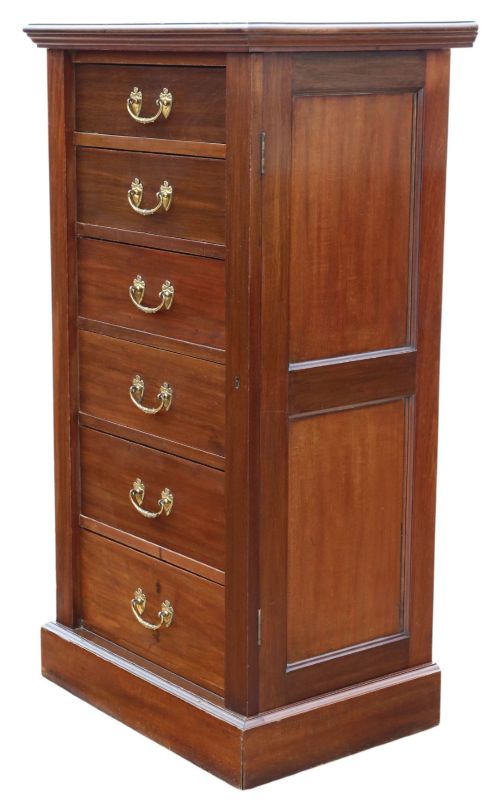
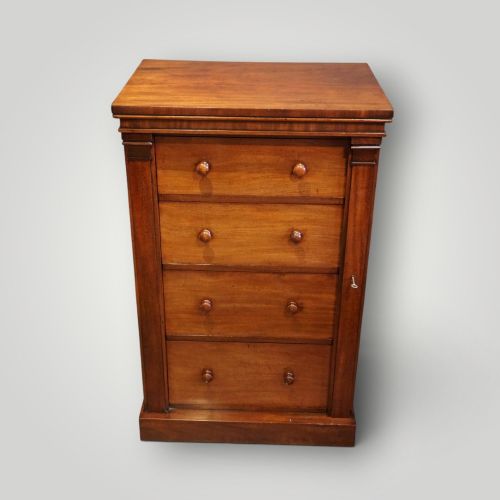
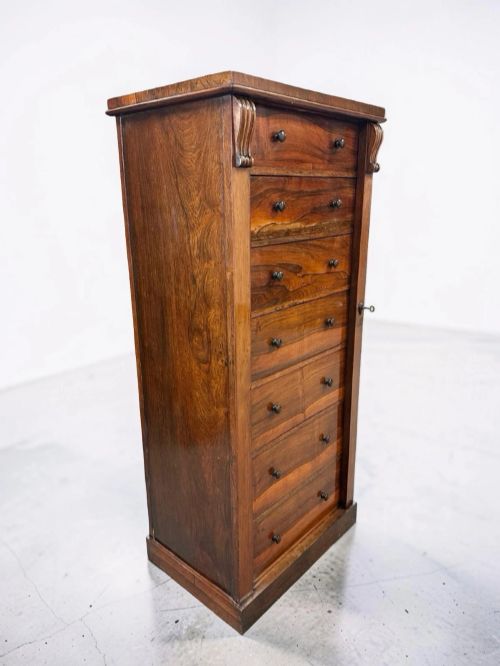
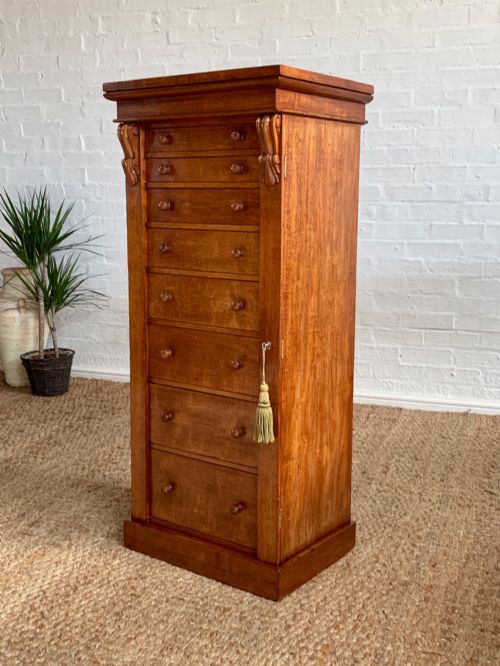
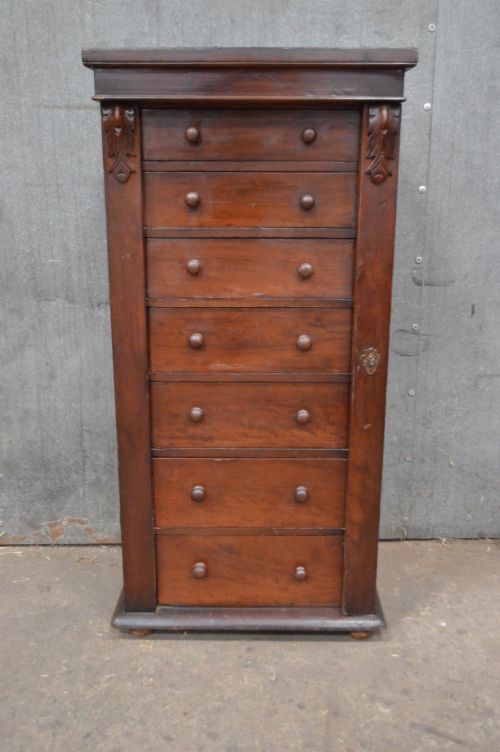
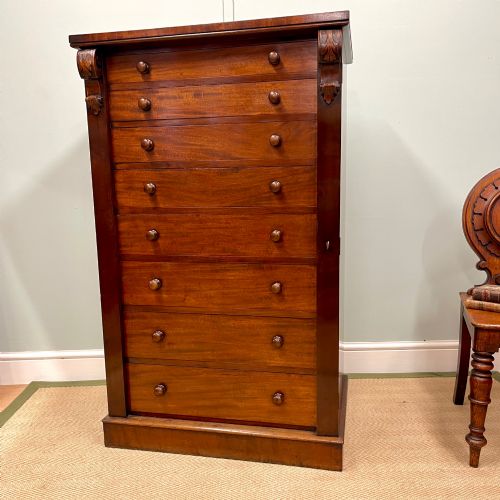
A tall locking cabinet offers secure vertical storage, most commonly taking the form of a slender Wellington chest with a hinged locking stile.
Tall Locking Cabinet
When you search for a tall locking cabinet, you encounter pieces designed for secure storage within a narrow footprint, predominantly represented by Wellington chests and tall filing cabinets from the nineteenth century. These upright forms maximise vertical space while keeping the contents safely enclosed behind a locking mechanism.
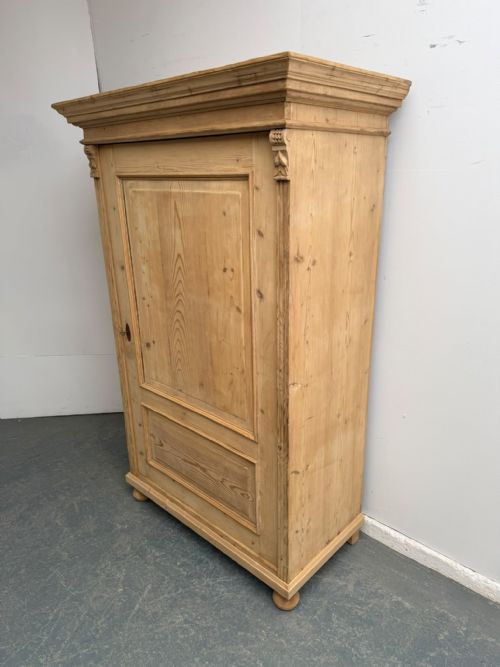
The selection spans periods from the Regency era through to the Edwardian period, with Victorian examples forming the vast majority of the pieces. You will find chests featuring between four and eight drawers, alongside specialised collector cabinets and single-door storage cupboards.
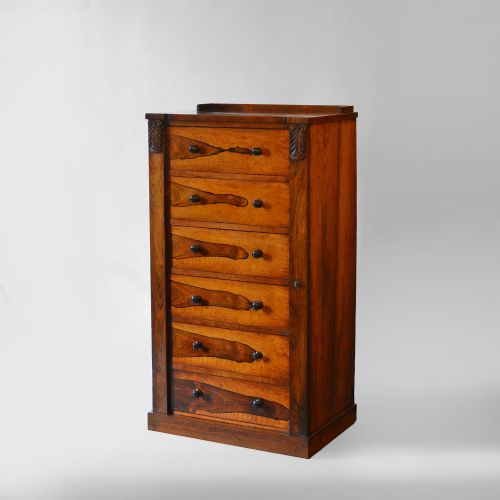
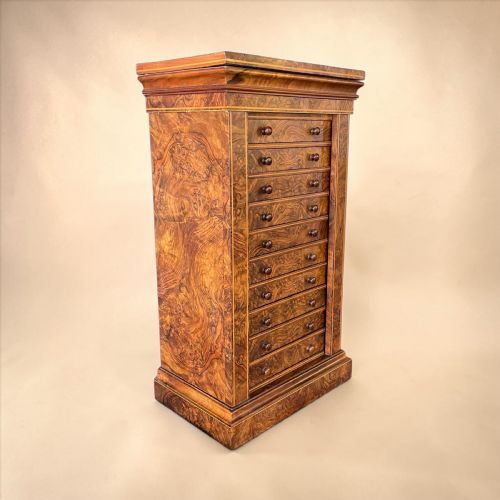
Mahogany and walnut dominate the offerings, often highlighted by burr walnut, rosewood, and satinwood veneers. Oak, pine, and fiddleback mahogany also appear, showing the range of timbers utilised by makers across different social tiers.
Materials and construction
Cabinet makers built these pieces using solid hardwoods like mahogany and oak for the primary carcases, frequently applying figured veneers of walnut, rosewood, and burr walnut to the drawer fronts and exterior surfaces. Timber selection governed both the structural integrity and the visual presence of the furniture.
The defining mechanical feature relies on a hinged locking stile, a vertical locking flap positioned on one side of the drawers that secures them all simultaneously when locked with a key. Brass hinges, escutcheons, and turned wooden knobs complete the functional assembly.
Tall Locking Cabinet Retail Price Guide 2026
Typical asking prices for tall locking cabinet among the pieces listed under this phrase on Sellingantiques today, from the lower quarter to the upper quarter. They describe what is for sale here now, not the wider market.
Specimen drawers hidden behind a locking stile provided Victorian collectors a private theatre for beetles, coins, and mineral shards.
Determinants of quality
Quality reveals itself in the choice of timber figure, such as highly figured mahogany, burr walnut, or fiddleback mahogany, which elevates a utilitarian piece into high-status furniture. The precision of the drawer dovetailing and the integrity of the locking mechanism further separate standard examples from finer works.
Attribution to documented makers such as Gillows of Lancaster, Holland & Sons, or Maple & Co introduces a distinct level of craftsmanship and provenance that defines the upper tier of these cabinets.
Holland & Sons·Gillows of Lancaster·Maple & Co·Druce & Co
The Tall Locking Cabinet Glossary
- Wellington chest
- A tall, narrow chest of drawers featuring a hinged locking stile on one side that secures all drawers when locked. This specific form originated in the nineteenth century and remains the dominant style for tall locking cabinets.
- Locking stile
- A vertical wooden flap attached to the side of a cabinet with hinges, designed to swing over the drawer edges and hold them shut. It operates with a key-turned lock to secure the entire vertical stack.
- Fiddleback mahogany
- A figure of mahogany wood displaying undulating transverse ripples that resemble the back of a violin. Cabinet makers utilised this timber figure on high-end Edwardian and Victorian pieces.
- Burr walnut
- A prized timber veneer derived from walnut tree growths, showing intricate swirling patterns and dark knots. It appears on elite Victorian and Regency pieces.
- Escutcheon
- A flat plate of brass surrounding a keyhole to protect the surrounding wood from wear. These fittings match the period style of the cabinet.
Tall Locking Cabinet: Frequently Asked Questions
What is a tall locking cabinet?
A tall locking cabinet is an upright piece of furniture designed for secure storage, most frequently seen as a nineteenth-century Wellington chest with multiple drawers.
These pieces use a hinged vertical locking stile secured by a key to keep all drawers shut simultaneously.
How do you operate the lock?
The locking mechanism relies on a hinged wooden flap attached to one side of the drawer stack. When swung into place and locked with a key, it blocks the drawer edges from opening.
Unlocking the stile allows it to swing outward, freeing the individual drawers for access.
What woods were used?
Makers utilised a variety of hardwoods including mahogany, walnut, oak, rosewood, and pine. Finer pieces featured decorative veneers such as burr walnut, satinwood, and fiddleback mahogany.
Primary timbers formed the sturdy carcase while decorative veneers enhanced the exterior appearance.
Where were they placed?
These cabinets served private studies, bedrooms, and libraries as secure repositories for documents, specimens, and personal valuables. Their narrow footprint allowed them to fit into confined wall spaces without obstructing room flow.
The vertical design provided substantial storage capacity while occupying minimal floor area.
How do I date a piece?
Dating relies on observing stylistic markers, timber choices, and construction methods associated with periods from Regency through Edwardian. Victorian examples often show robust mahogany or walnut construction with turned wooden knobs.
Later Edwardian pieces frequently incorporate inlaid details, while earlier nineteenth-century versions prioritize figured veneers.