

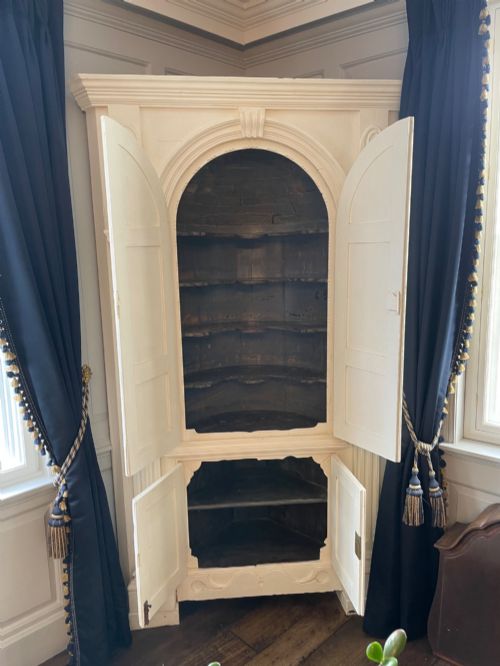
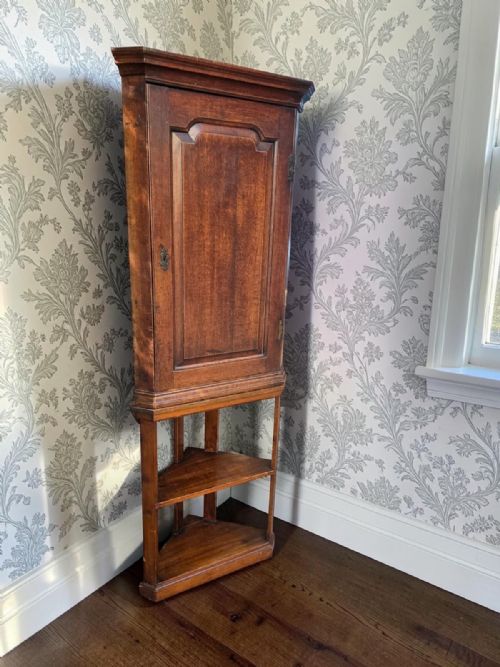
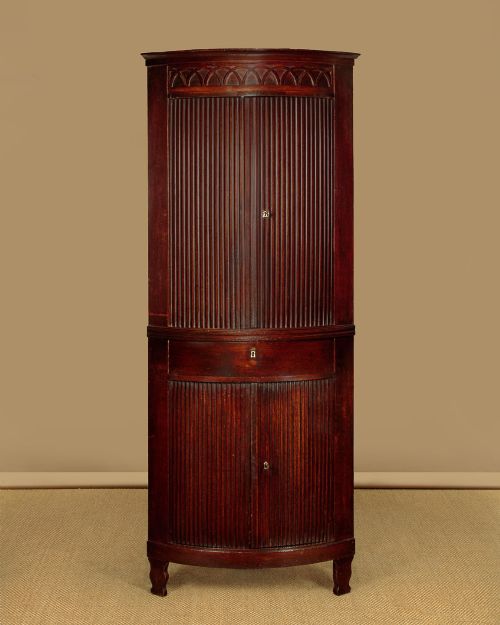
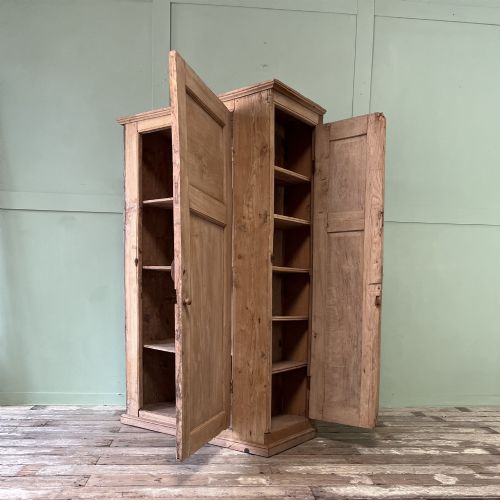




Tall Corner Cabinet
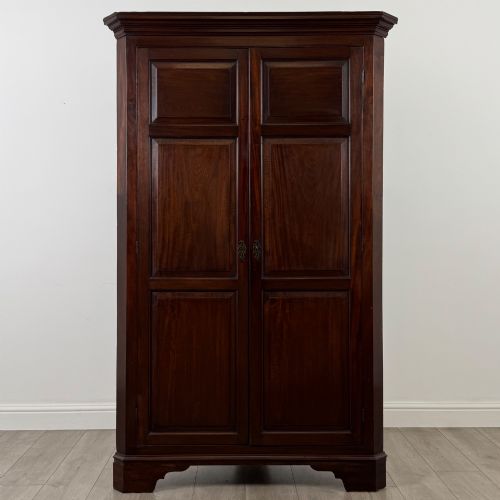
A tall corner cabinet fits tight into an unused room angle while offering significant display or storage space.
Tall Corner Cabinet
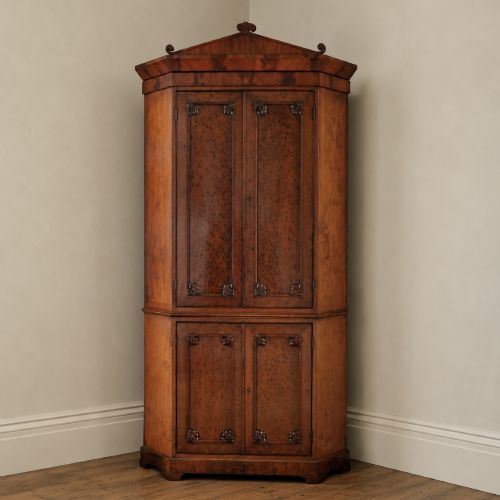
A tall corner cabinet is designed to utilise awkward angles in rooms, turning dead space into functional storage or display areas. The pieces gathered here span architectural floor-standing designs and mounted formats, often reaching significant heights to maximise vertical capacity.
Georgian and 18th Century examples frequently present architectural mouldings in mahogany or oak, whilst later Edwardian and Victorian pieces introduce glazed doors and lighter satinwood or fruitwood details. Buyers encounter both single-piece full-height cupboards and multi-part units that combine lower enclosed storage with upper display shelving.
Vernacular country pieces in pine and elm appear alongside formal urban furniture in plum pudding mahogany and walnut. This variety allows collectors to source items suited for grand dining rooms or modest domestic interiors alike.
Materials and Construction
Cabinet makers relied heavily on timber species such as mahogany, oak, and pine, selected for their structural stability and grain character. Elm and fruitwood appear in regional pieces, providing varied surface textures and tones.
Glazing techniques such as astragal bars divided doors into delicate panes for the display of porcelain and glassware. Inlays utilising satinwood and marquetry added decorative contrast to otherwise restrained geometric carcases.
Tall Corner Cabinet Retail Price Guide 2026
Typical asking prices for tall corner cabinet among the pieces listed under this phrase on Sellingantiques today, from the lower quarter to the upper quarter. They describe what is for sale here now, not the wider market.
Some tall cupboards arrive with their original iron keys still turning smoothly in stubborn locks after two centuries.
Assessing Quality and Execution
Quality reveals itself in the selection of timber veneers and the precision of joinery, particularly where doors meet rebated frames. Grain matching across panels and the crispness of carved mouldings separate standard workshops from master cabinet makers.
Hardware execution also defines the tier of a piece, from heavy brass hinges and original working locks with keys to simpler iron fixtures found on utilitarian vernacular cupboards.
The Tall Corner Cabinet Glossary
- Astragal glazing
- Glazing bars that divide a glass door into smaller panes, commonly seen in Edwardian and Georgian display cabinets.
- Bowfront
- A convex, curved cabinet front that projects outward, frequently utilised on Regency and Georgian mahogany pieces.
- Floor standing
- A piece built to rest directly on the floor rather than hang on a wall or sit upon a separate stand.
- Vernacular
- Regional furniture built by local craftsmen using available native timbers like elm and pine rather than following strict metropolitan stylistic rules.
Tall Corner Cabinet: Frequently Asked Questions
How do I place a tall corner cabinet in a small room?
These cabinets utilise empty room angles that standard rectangular furniture cannot occupy effectively. Their triangular footprint allows them to tuck deeply into corners while releasing valuable floor space elsewhere.
Measuring the diagonal depth and wall clearance before selection ensures the cornice and base mouldings fit the chosen room angle without obstruction.
What is the difference between a display cabinet and a cupboard?
Display versions incorporate glazed upper doors with astragal bars specifically intended to showcase ceramics, books, or glassware. Cupboards rely on solid timber panels, often in oak or pine, to conceal contents completely.
Many examples combine both formats by featuring an open or glazed top section paired with a closed lower storage compartment.
How can I tell a Georgian piece from a Victorian reproduction?
Georgian pieces generally display hand-cut dovetails, older secondary woods like pine or oak behind mahogany facades, and subtle irregularities in timber preparation. Victorian and later revivals often exhibit uniform machine sawing and standardised internal fittings.
Examining the backboards, hinge types, and lock plates helps establish the true period of manufacture.
Were these cabinets made in one piece or two?
Surviving examples include both single-height units and double-height constructions built in distinct upper and lower sections. Two-part pieces made transport easier through narrow domestic doorways in older properties.
The dividing line usually sits at the counter height or mid-moulding level of the cabinet.