



Tall Brass Oil Lamp
A tall brass oil lamp brings genuine period illumination to a room, standing out through cast metalwork and coloured glass reservoirs.
Tall Brass Oil Lamp
When you search for a tall brass oil lamp, you encounter substantial lighting pieces designed for domestic illumination during the Victorian era and around nineteen hundred. These items combine vertical metallic stands with functional oil reservoirs, appearing in both table and floor-standing standard formats.
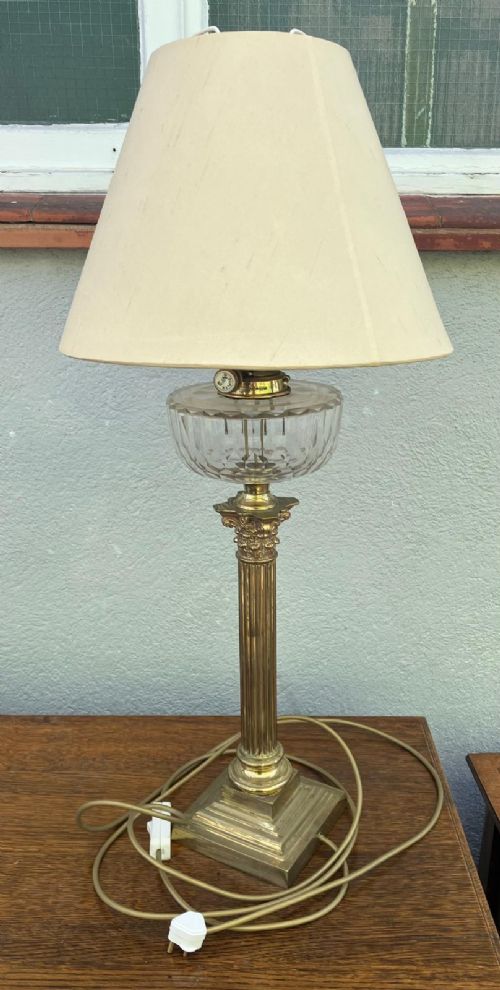
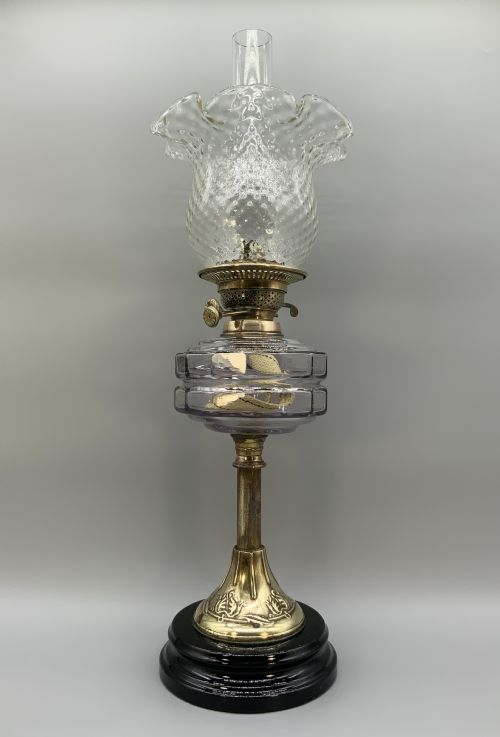
The versions most commonly met on this page span the nineteenth century up to nineteen hundred, showing styles from Victorian Neoclassical Revival to Art Nouveau. Many incorporate adjustable telescopic mechanisms or Corinthian column designs that elevate the overall height.
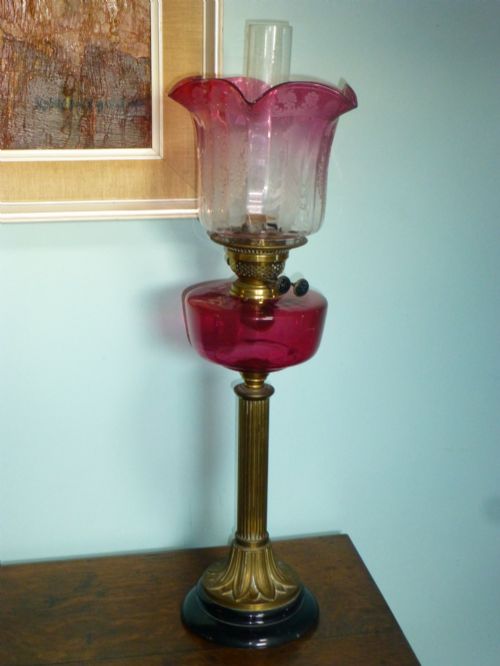
Makers such as Hinks produced substantial standard lamps, whilst other pieces utilise ceramic, felt, and cast iron components alongside the core metal structure. Cranberry and pink glass reservoirs frequently top these brass columns, paired occasionally with hand-blown shades or fabric elements.
What varies in quality
Quality in a tall brass oil lamp rests on the crispness of the casting work, particularly visible in the fluting and capitals of Corinthian column designs. Solid brass construction and heavy adjustable stands separate monumental standard lamps from lighter domestic table variants.
The integration of materials dictates the standard of execution, from hand-blown glass shades and rich cranberry glass reservoirs to finely fitted double burners by known makers like Hinks. The harmony between the brass body, ceramic elements, and glass components defines the better finished examples.
Tall Brass Oil Lamp Retail Price Guide 2026
Typical asking prices for tall brass oil lamp among the pieces listed under this phrase on Sellingantiques today, from the lower quarter to the upper quarter. They describe what is for sale here now, not the wider market.
Listings feature items from the nineteenth century, including the eighteen seventies, eighteen nineties, and nineteen hundred.
Hinks
The Tall Brass Oil Lamp Glossary
- Duplex burner
- A double wick burner mechanism designed to produce a brighter flame than single wick models. It typically uses two flat wicks operating side by side beneath the chimney.
- Corinthian column
- An architectural column style featuring ornate leaf-carved capitals at the top. Makers applied this classical form directly to the shafts of tall standard lamps.
- Telescopic standard
- An adjustable metal lamp shaft that permits the height to be raised or lowered. This mechanical feature often uses a sliding inner tube secured by a thumbscrew.
- Cranberry glass
- A rich pinkish-red glass produced by adding gold chloride to the molten batch. It frequently forms the font or reservoir section of Victorian lighting pieces.
Tall Brass Oil Lamp: Frequently Asked Questions
What is a tall brass oil lamp?
A tall brass oil lamp is a nineteenth-century lighting device featuring an elevated metal stand and a fuel reservoir. These pieces were designed to sit on tables or stand directly on the floor as standard lamps.
They combine brass columns with glass or ceramic reservoirs and double burner mechanisms to light Victorian interiors.
How do you adjust a telescopic standard lamp?
Telescopic standard lamps utilise an extending brass mechanism that allows you to change the overall height of the piece. You release the collar or screw on the shaft, raise or lower the upper section, and secure it in place.
This adjustment was originally intended to control the spread of light within a room.
What periods do these lamps come from?
The pieces available date from the nineteenth century through to nineteen hundred, encompassing the Victorian era. Styles range from Victorian Neoclassical Revival to Art Nouveau.
Design details like Corinthian columns and cranberry glass reservoirs reflect the prevailing aesthetics of these decades.
How were double burners used?
Double burners used twin wicks to draw oil from the reservoir and create a wider, brighter flame than standard single wick burners. They sat atop the brass columns beneath glass chimneys and shades.
Users trimmed the wicks regularly to maintain an even and smoke-free light.