



Tall Bedside Chest
A tall bedside chest offers practical storage beside the bed without taking up excessive floor space in the bedroom.
Tall Bedside Chest
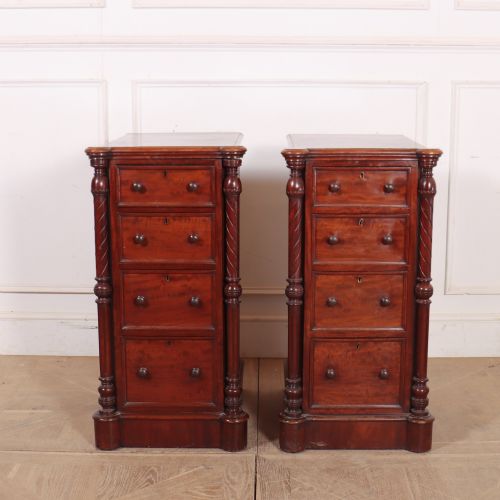
A tall bedside chest provides vertical drawer storage designed to sit neatly next to a bed frame. These pieces bridge the gap between traditional low bedside tables and larger chests of drawers.
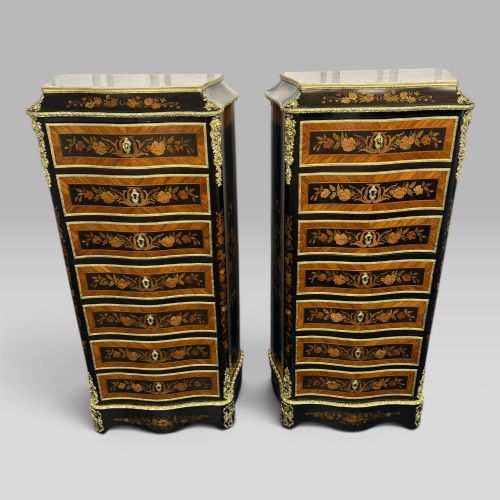
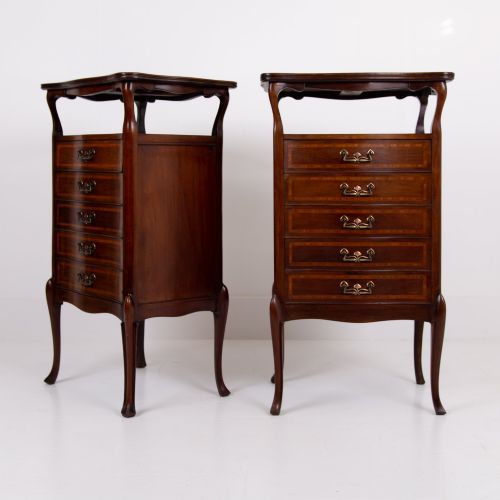
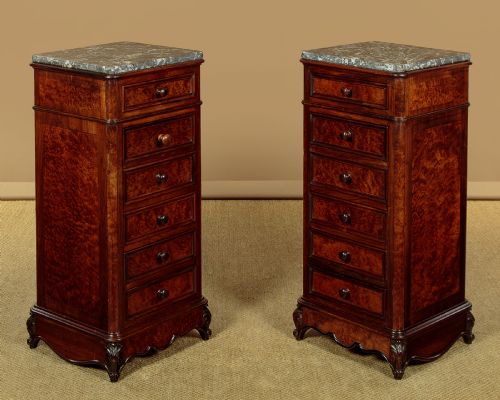
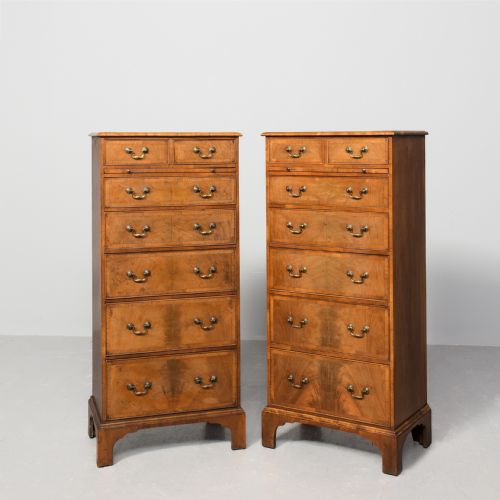
The selections span the Victorian, Edwardian, and early twentieth-century periods, alongside George III style and Louis XV Revival examples. Mahogany, walnut, rosewood, pine, and satin birch form the primary timbers used in their construction.
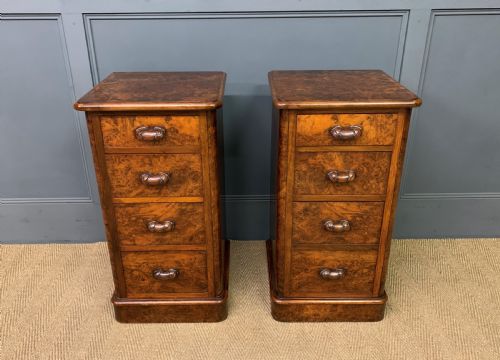
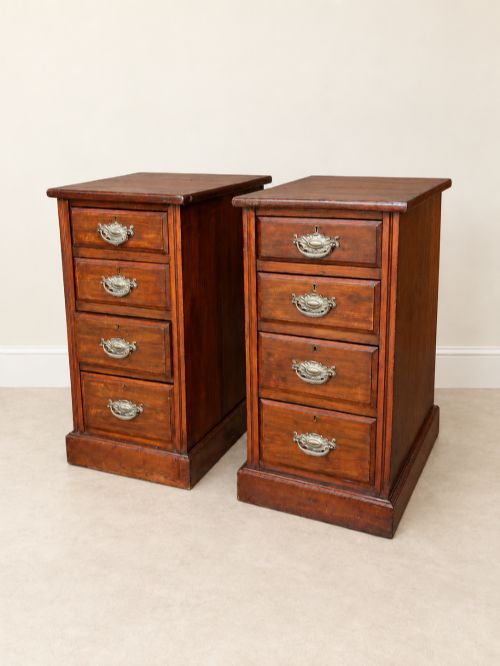
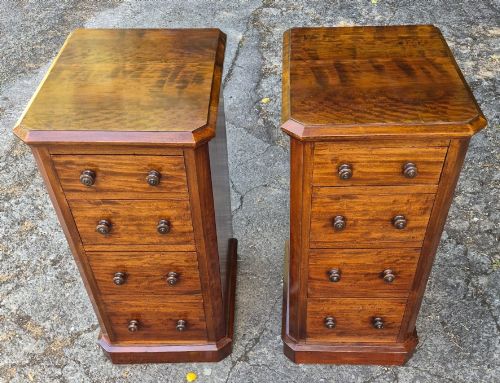
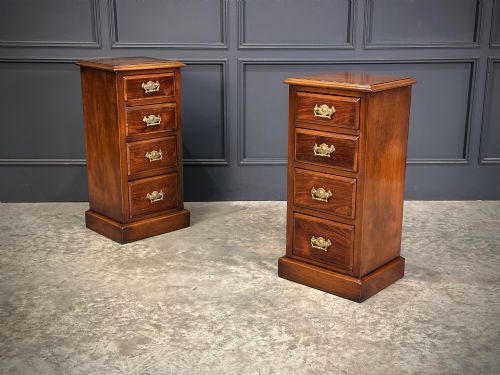
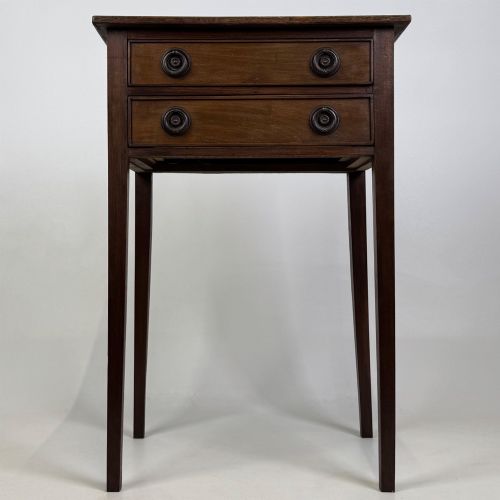
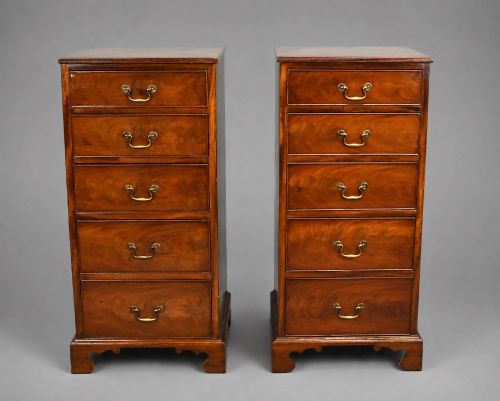
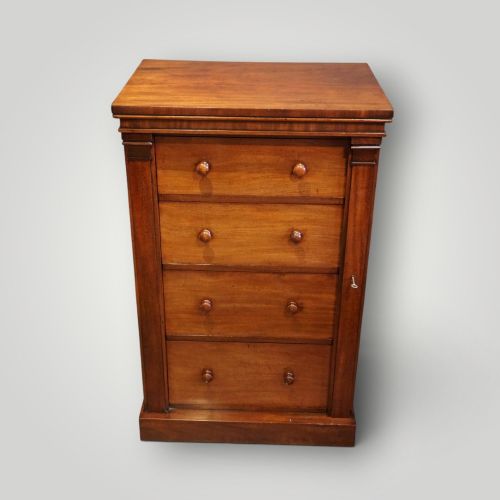
Most examples appear as matched pairs, incorporating multiple drawers, cupboards, or pedestal formats. Side tables, nightstands, and Wellington-style chests also share this functional category.
How they were made
Cabinet makers utilised dense hardwoods such as mahogany, walnut, and rosewood, often pairing them with secondary pine carcases. Parquetry veneer and amboyna add decorative surface detail to specific Edwardian and later pieces.
Brass handles, escutcheons, and hinges provide functional hardware, while select examples incorporate marble tops. Traditional joinery underpins the construction of the multiple drawers housed within these upright proportions.
Tall Bedside Chest Retail Price Guide 2026
Typical asking prices for tall bedside chest among the pieces listed under this phrase on Sellingantiques today, from the lower quarter to the upper quarter. They describe what is for sale here now, not the wider market.
Mahogany dominates the material records across Victorian and Edwardian listings for tall bedside chests, accompanied by walnut and rosewood.
What varies in quality
The refinement of the timber grain and the precision of the cabinet work determine the distinction between standard and superior pieces. Selected veneers and well-figured mahogany indicate careful material selection by the original maker.
Proportion and scale dictate the visual success of an upright bedside chest, where narrow footprints require balanced depth and height. Intricate details such as parquetry or quality brass fittings separate basic utility items from finer decorative pieces.
The Tall Bedside Chest Glossary
- Wellington chest
- A tall, narrow chest of drawers traditionally secured by a hinged locking side pilaster bar. This mechanism locks all drawers simultaneously with a single padlock or key.
- Parquetry
- A geometric mosaic of wood pieces used for decorative veneer on furniture surfaces. Craftsmen arrange contrasting timbers to create patterns across tabletops and drawer fronts.
- Pedestal chest
- A freestanding upright cabinet designed to stand beside a desk or bed. These pieces typically feature a stack of narrow drawers resting on a solid base.
- Nightstand
- A small low table or cabinet placed beside a bed for holding nighttime necessities. The term often intersects with bedside chests and lamp tables in older listings.
- Satin birch
- A pale, lustrous hardwood with a fine grain used extensively in Edwardian cabinet making. The timber yields a distinctive golden sheen when polished.
Tall Bedside Chest: Frequently Asked Questions
What is a tall bedside chest?
A tall bedside chest is an upright piece of bedroom furniture built with multiple drawers to provide extra storage within a compact footprint. It stands higher than a standard bedside table to accommodate more contents.
These pieces suit rooms where floor space is limited but vertical storage capacity is necessary next to the bed.
How do I date a Victorian tall chest?
Dating a Victorian piece involves examining the timber selection, drawer construction, and secondary woods like pine or oak used inside the carcase. Mid-Victorian examples often feature solid mahogany and hand-cut dovetails.
Stylistic hints such as heavy mouldings or Wellington locking mechanisms also point toward specific decades within the nineteenth century.
Are these chests sold as pairs?
Many listings for bedside chests appear as matched pairs intended to flank a double or king-size bed symmetrically. Finding matching pairs from the Victorian and Edwardian periods remains common.
Individual pieces also appear for smaller bedrooms or single beds.
What woods were used for Edwardian chests?
Edwardian cabinet makers frequently utilised mahogany, walnut, satin birch, and rosewood for bedside chests and nightstands. Inlays of contrasting timbers and parquetry veneer frequently decorate these later pieces.
Pine also appears as a primary wood, sometimes intended for subsequent painting or waxing.