





Tall Apothecary Drawers
Tall apothecary drawers bring utilitarian storage and period character into modern spaces, offering numerous small compartments crafted for sorting and organising small items.
Tall Apothecary Drawers
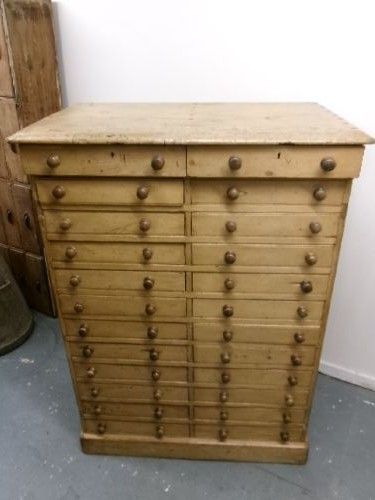
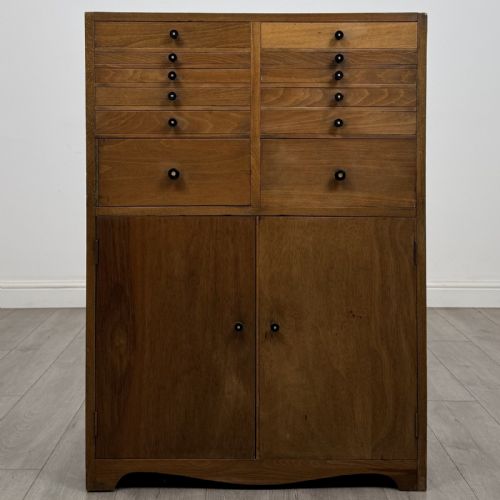
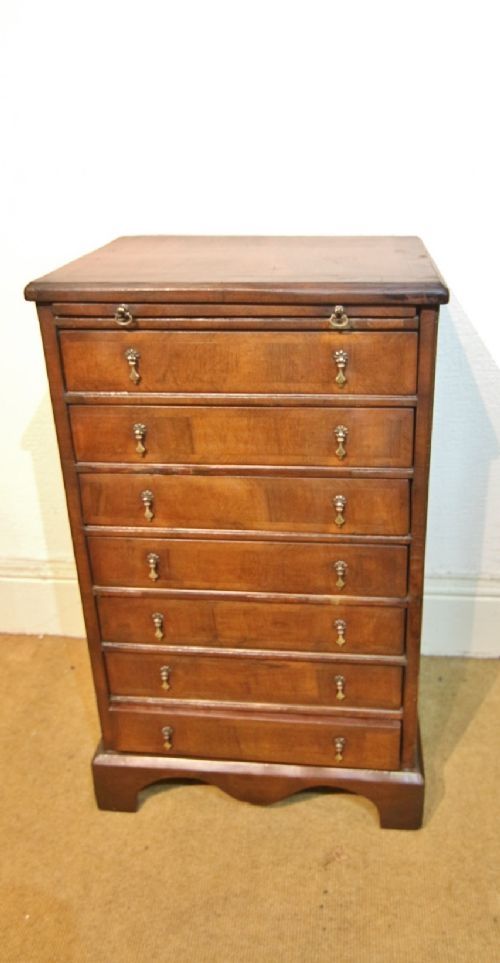
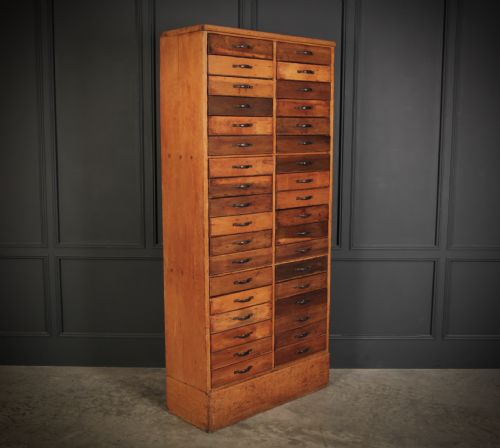
Tall apothecary drawers form banks of multiple compartments designed originally for pharmacies, watchmakers, and merchants. These pieces include specimen cabinets, haberdashery chests, and chemist drawers from the Victorian era and the early twentieth century.
Buyers encounter configurations ranging from compact five-drawer pharmacy chests to large banks comprising twenty-four or more drawers. Materials span walnut, mahogany, pine, fruitwood, and ironmongers' metal, reflecting commercial and domestic workshops.
Origins stretch across English estate and commercial workshops as well as nineteenth-century French pharmacy environments. Each piece provides practical vertical storage while displaying the distinct patination of working furniture.
How they were made
Cabinet makers constructed these multi-drawer units using durable hardwoods such as mahogany and walnut, alongside softer pines and fruitwoods. Drawer construction relies on traditional joinery designed to withstand daily commercial opening and closing.
Hardware details incorporate brass pulls, handles, and label holders that helped keepers identify contents quickly. Metal and glass elements appear in industrial and commercial variations, pairing with timber carcases for robust utility.
Tall Apothecary Drawers Retail Price Guide 2026
Typical asking prices for tall apothecary drawers among the pieces listed under this phrase on Sellingantiques today, from the lower quarter to the upper quarter. They describe what is for sale here now, not the wider market.
Listings feature 19th Century, Victorian, and 1920s pieces built from walnut, mahogany, pine, fruitwood, brass, and glass.
What varies in quality
Quality rests in the proportional balance of the tall carcase and the uniformity of the numerous small drawers. Pieces retaining their original brass handles, label slots, and uncompromised timber surfaces command greater interest.
The sophistication of the secondary timbers and the crispness of the drawer construction distinguish utilitarian workshop furniture from finer collector pieces.
The Tall Apothecary Drawers Glossary
- Bank of drawers
- A multi-drawer storage unit arranged vertically or horizontally for commercial or workshop use. These pieces often feature numerous uniform compartments.
- Specimen cabinet
- A specialised chest designed for storing natural history collections, minerals, or small artefacts. They typically contain shallow, dust-tight drawers.
- Haberdashery chest
- A multi-drawer cabinet originally utilised in retail shops for storing ribbons, threads, and small garments. They often combine glass panels with timber framing.
- Fruitwood
- Timber sourced from fruit-bearing trees such as pear or apple, known for a fine grain and warm tone. Cabinet makers utilised it for smaller decorative elements and drawer fronts.
Tall Apothecary Drawers: Frequently Asked Questions
How were tall apothecary drawers used originally?
These cabinets served in pharmacies, watchmakers' workshops, and retail shops to store dry goods, medicines, watch parts, and small merchandise.
The numerous small drawers kept specialised items segregated, labelled, and protected from dust and light during daily business.
What periods do these drawer units come from?
The available pieces originate primarily from the nineteenth century and the early twentieth century, spanning Victorian and Edwardian eras.
Industrial and commercial workshops produced robust banks of drawers alongside more refined walnut and mahogany collector pieces.
How do I live with tall apothecary drawers?
Their vertical footprint makes them practical for hallways, kitchens, studies, and living rooms where floor space is limited.
The many small compartments provide exceptional organisation for modern collections, stationery, craft supplies, and everyday items.
How do I distinguish apothecary drawers from haberdashery cabinets?
Apothecary and chemist drawers typically feature deep banks designed for medicinal ingredients, herbs, or small instruments.
Haberdashery chests often incorporate wider, shallower drawers or glass-fronted compartments originally intended for displaying and storing textiles.