





Tall Apothecary Chest
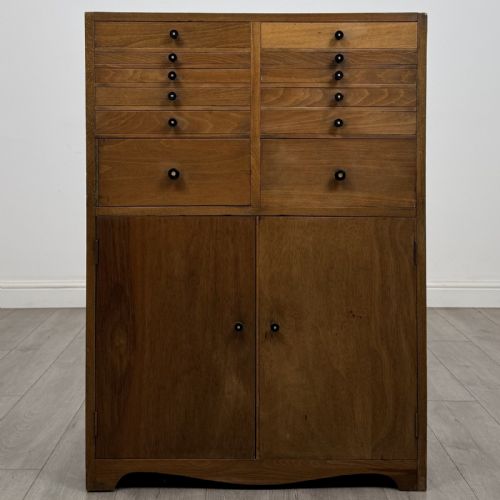
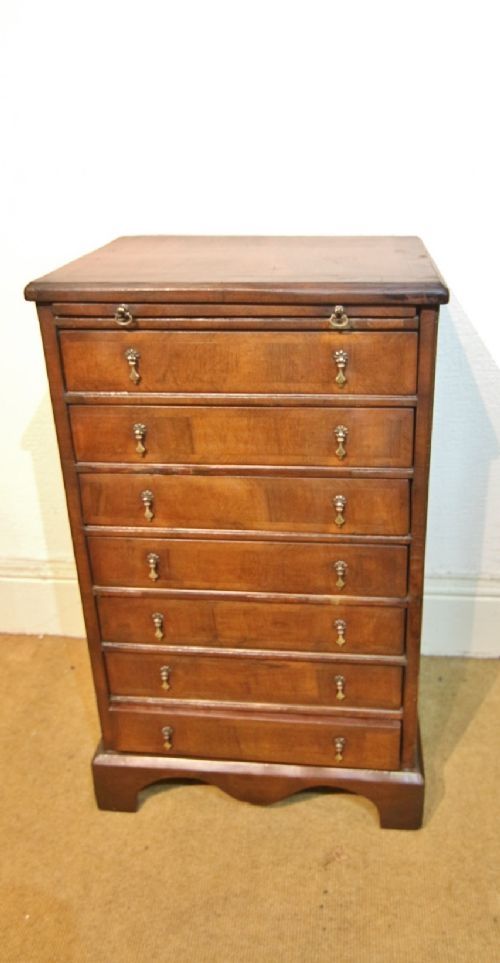
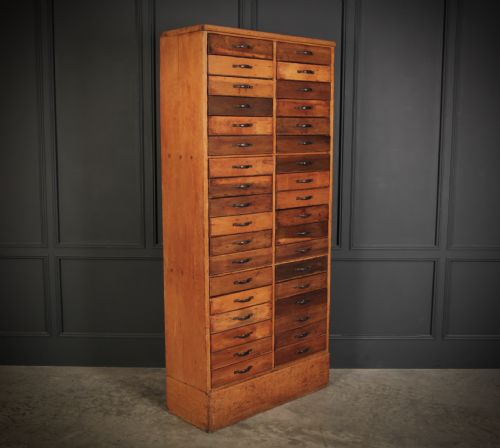
A tall apothecary chest organises small items within a multitude of drawers, offering practical utility and a striking presence.
Tall Apothecary Chest
A tall apothecary chest serves as a vertical storage unit with numerous small drawers designed for sorting contents. These pieces originate from commercial, medical, and domestic environments across the nineteenth century and the early twentieth century.
Buyers encounter variations including red walnut, fruitwood, mahogany, pine, and oak constructions. Certain items incorporate brass hardware and glass elements to complete their functional design.
Materials and construction methods
Cabinet makers utilised dense hardwoods like walnut, mahogany, and fruitwood alongside durable pine for internal framing and carcass construction. Metal handles, brass pulls, and glass components provide the necessary functional hardware for frequent access.
Joinery techniques focus on sturdy construction capable of supporting numerous small drawers under daily commercial use. Surfaces receive traditional finishes that highlight the natural grain of the timber.
Tall Apothecary Chest Retail Price Guide 2026
Typical asking prices for tall apothecary chest among the pieces listed under this phrase on Sellingantiques today, from the lower quarter to the upper quarter. They describe what is for sale here now, not the wider market.
Many watchmakers relied on tall drawer banks to keep track of tiny cogs and screws without losing their sanity.
Evaluating quality and proportion
The distinction between standard utility items and finer examples rests on the choice of timber and the precision of the drawer construction. Selection of superior hardwoods like walnut or figured mahogany elevates the overall visual weight of the piece.
Proportion and scale dictate the visual impact of a tall chest within a room. Well-balanced drawer configurations with original hardware display greater integrity than altered or mismatched units.
The Tall Apothecary Chest Glossary
- Bank of drawers
- A multi-drawer cabinetry unit designed for commercial or industrial storage. These pieces feature rows of uniform drawers built to hold small goods.
- Haberdashery cabinet
- A tall storage unit originally used in retail shops for textiles and small wares. They often incorporate glass-fronted or pull-out drawer designs.
- Specimen cabinet
- A specialised storage chest intended for natural history collections or scientific samples. The internal drawers are typically shallow to accommodate delicate items.
- Fruitwood
- Timber sourced from fruit-bearing trees such as pear or apple, prized for its dense grain and warm tone. Cabinet makers utilise it for both solid construction and decorative veneers.
Tall Apothecary Chest: Frequently Asked Questions
What is a tall apothecary chest?
A tall apothecary chest is a multi-drawer storage unit historically used in pharmacies and commercial spaces to organise small items. These vertical pieces maximise storage capacity while maintaining a narrow footprint.
Today, buyers use them in domestic interiors for modern organisation, displaying collections, or serving as striking focal points in hallways and living spaces.
How were these chests originally used?
Pharmacies, watchmakers, and merchants originally utilised these multi-drawer units to sort medicines, watch parts, and dry goods. The numerous small compartments kept distinct inventories separated and accessible.
Commercial environments required durable construction to withstand constant daily use by staff retrieving items from the banks of drawers.
How do I date a Victorian pharmacy chest?
Dating a Victorian pharmacy chest involves examining the timber species, construction methods, and hardware signatures. Nineteenth-century examples often feature hand-cut dovetails and solid timber carcasses rather than modern sheet materials.
Makers frequently utilised regional hardwoods like walnut and mahogany, accompanied by brass or iron pulls characteristic of the period.
How do I care for antique wood drawers?
Maintaining antique wood drawers requires stable indoor humidity levels to prevent timber warping or cracking. Avoid placing the chest near direct heat sources or strong sunlight that might fade the finish.
Gentle cleaning with a dry or slightly damp cloth preserves the surface polish without stripping the historic patina built up over decades.