





Syrian Wood Table
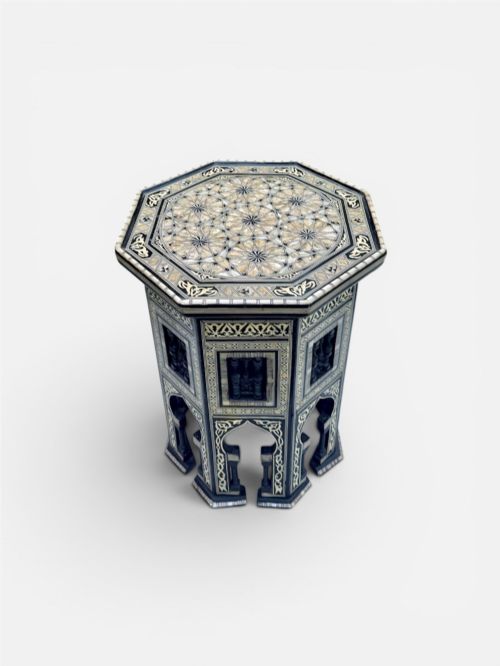
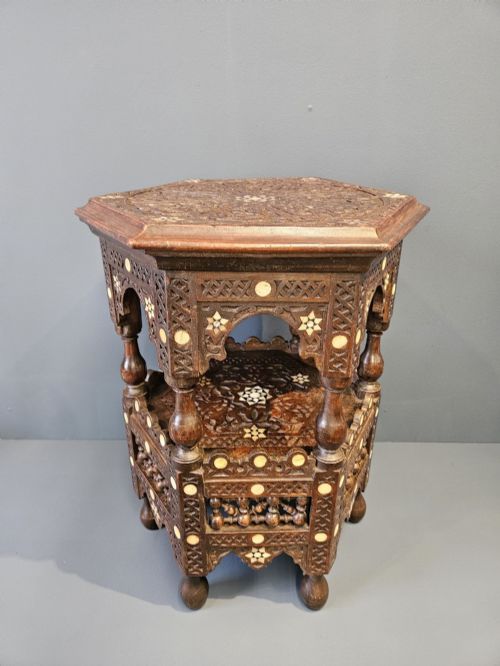
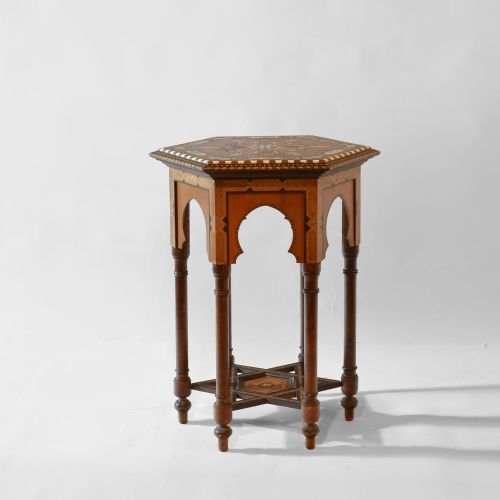
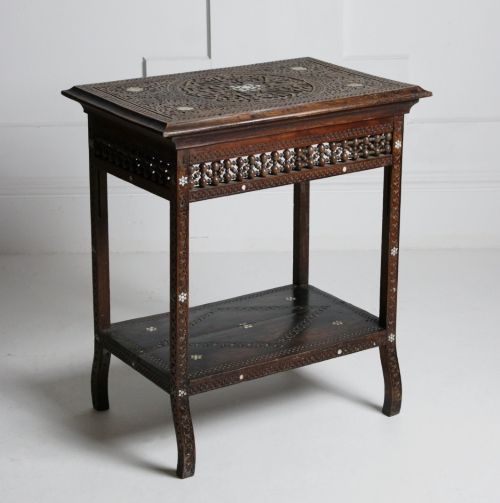
A syrian wood table brings intricate geometric marquetry and rich eastern craftsmanship into a room.
Syrian Wood Table
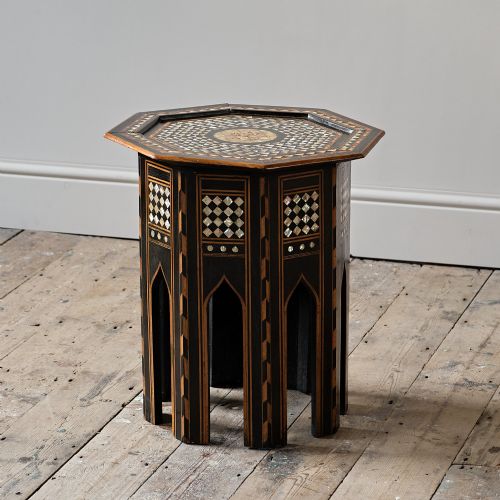
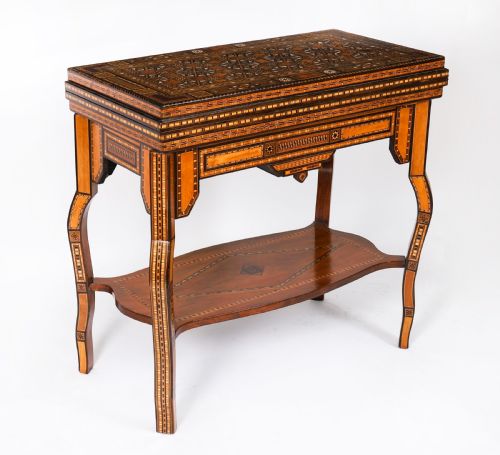
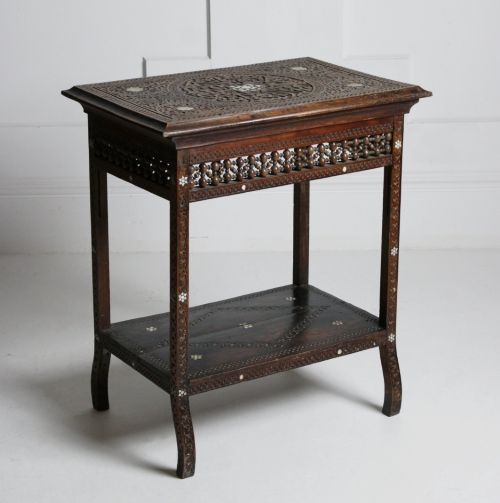
A syrian wood table encompasses low stools, two tier side tables, octagonal and hexagonal lamp tables, and multi-functional games tables designed for cards, chess, and backgammon. These pieces emerge primarily from the nineteenth century, including specific dates across the eighteen-eighties, eighteen-nineties, and early nineteen-hundreds, alongside Victorian and twentieth-century examples.
The aesthetic bridges Syrian, Ottoman, and Moorish revival styles, often categorised under Middle Eastern or Islamic design traditions. Buyers on this page will most frequently encounter octagonal and hexagonal occasional tables, frequently featuring intricate multi-game surfaces or cupboard compartments.
Geographic origins span Damascus and wider North African or Middle Eastern workshops, occasionally bearing attributions to British retailers such as Liberty and Co who imported these designs during the late nineteenth century.
How they were made
Carpenters utilised a foundation of hardwood, walnut, fruitwood, and ebonised wood to construct the rigid frames of these tables. Surfaces were then painstakingly adorned through intricate inlay work.
Craftsmen embedded delicate pieces of bone and mother-of-pearl into the timber base to create geometric mosaic patterns. Hand carving further accentuated the structural edges and panels of these occasional and games tables.
Syrian Wood Table Retail Price Guide 2026
Typical asking prices for syrian wood table among the pieces listed under this phrase on Sellingantiques today, from the lower quarter to the upper quarter. They describe what is for sale here now, not the wider market.
Some nineteenth-century tables hide multi-game boards beneath folding tops, proving Victorians took their parlour gaming rather seriously.
What varies in quality
The distinction between tiers of quality rests in the density and precision of the geometric inlay work. Finer examples display tightly fitted tessellations of mother-of-pearl and bone with minimal filler, whereas simpler versions rely more heavily on plain carved wooden surfaces.
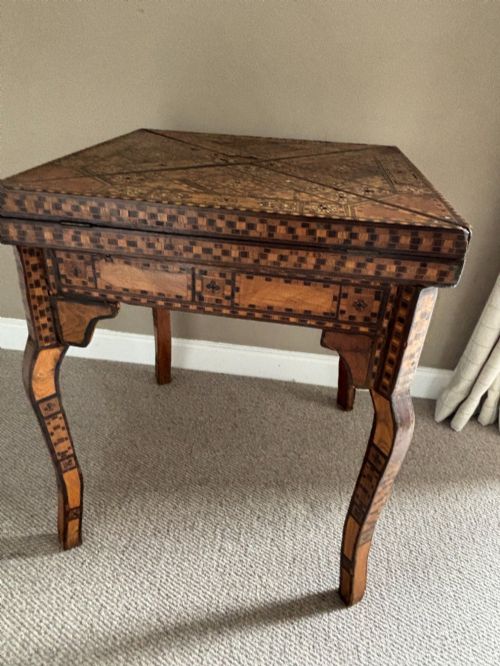
Structural complexity also separates standard occasional tables from elaborate multifunctional pieces. Folding envelope tops, integrated cupboards, and multi-game boards designed for chess, cards, and backgammon demand superior carpentry to maintain alignment over decades.
Liberty and Co
The Syrian Wood Table Glossary
- Marquetry
- Decorative woodwork where small pieces of material are fitted into a veneer to form geometric patterns. This technique defines the intricate surface designs of Syrian tables.
- Mother-of-pearl
- The iridescent inner layer of mollusc shells used extensively for inlay. Craftsmen shaped this material into delicate stars and polygons.
- Octagonal
- Having eight sides. Many surviving occasional and side tables utilise this characteristic geometric footprint.
- Moorish Revival
- An architectural and decorative style popular in the nineteenth century. It reinterprets traditional Islamic design motifs for Western interiors.
- Envelope games table
- A square table with a top composed of four triangular flaps that fold open diagonally. This mechanism reveals a baize-lined playing surface.
Syrian Wood Table: Frequently Asked Questions
What is a syrian wood table?
A syrian wood table is an intricately carved and inlaid piece of furniture originating from the nineteenth and early twentieth centuries. These works incorporate regional Middle Eastern and Moorish design traditions.
They typically take the form of hexagonal or octagonal occasional tables, side pieces, and multi-game tables featuring detailed bone and mother-of-pearl mosaics.
How were these tables used?
Original households utilised these furnishings as display surfaces for lamps, decorative objects, and occasional tea service. Many examples served as versatile social hubs.
Complex pieces integrated folding envelope tops and interior compartments specifically built to house accessories for chess, backgammon, and card games.
How do I style a syrian wood table?
The rich tones of walnut and fruitwood combined with luminous mother-of-pearl inlay allow these tables to anchor both traditional and contemporary interiors. Their compact footprints suit placement beside seating.
Allow the patterned surface to remain largely unobstructed to showcase the geometric marquetry work without visual clutter.
How do I identify the period?
Dating relies on timber selection, construction methods, and stylistic crossover with Victorian and Moorish revival aesthetics of the late nineteenth century. Eighteenth-century influences diminished as mass production emerged.
Documentation linking specific pieces to retailers like Liberty and Co helps narrow down manufacturing eras around the eighteen-nineties.