






Syrian Octagonal Table
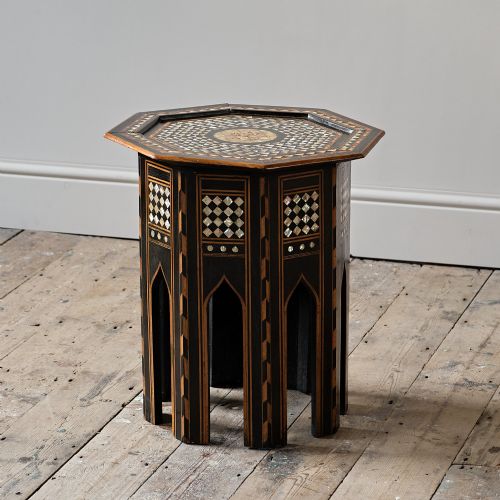
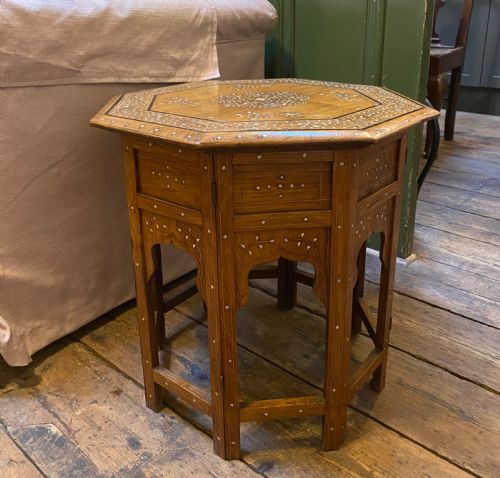
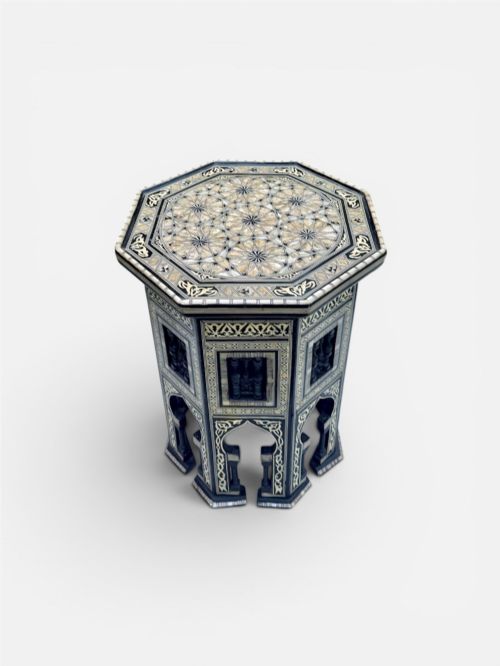
A syrian octagonal table brings intricate geometric marquetry and eight-sided geometry into a room, offering a functional surface steeped in historic craft.
Syrian Octagonal Table
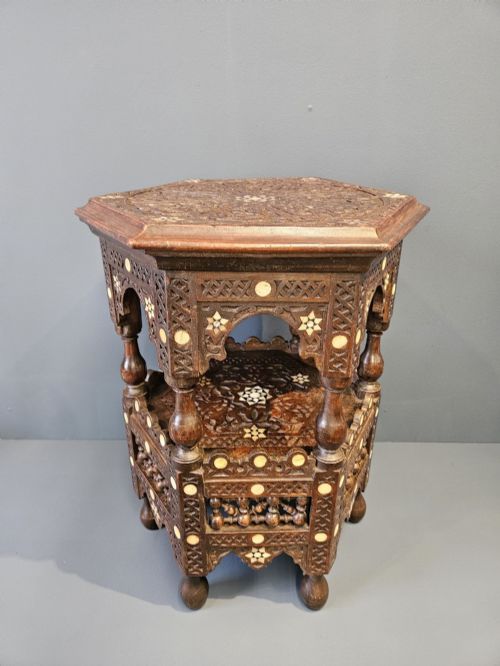
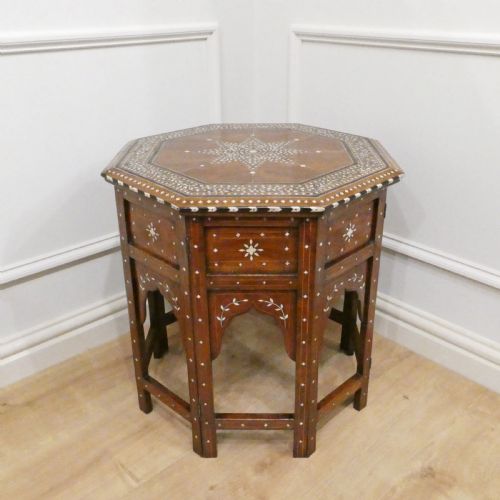
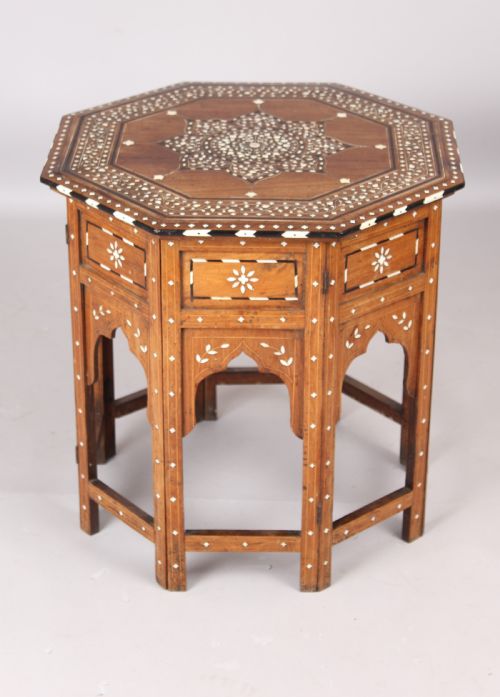
A syrian octagonal table is typically found in forms such as side tables, occasional tables, lamp tables, and folding Damascus tables. These pieces serve as striking centre tables or accent furniture within domestic interiors.
The selections span the nineteenth century, including Victorian examples alongside pieces dated around 1880, 1890, 1910, and 1920. Styles often embrace Moorish Revival, Anglo-Indian, Ottoman, and Islamic aesthetics.
Buyers most frequently encounter side tables and occasional tables featuring distinctive eight-sided tops. These items bridge regional craftsmanship and European interior tastes of the late nineteenth and early twentieth centuries.
How a syrian octagonal table was made
Wood serves as the primary structural body, utilising hardwoods such as walnut, rosewood, and ebonised wood alongside general wood substrates. Artisans shape these timbers into folding frames and rigid octagonal surfaces.
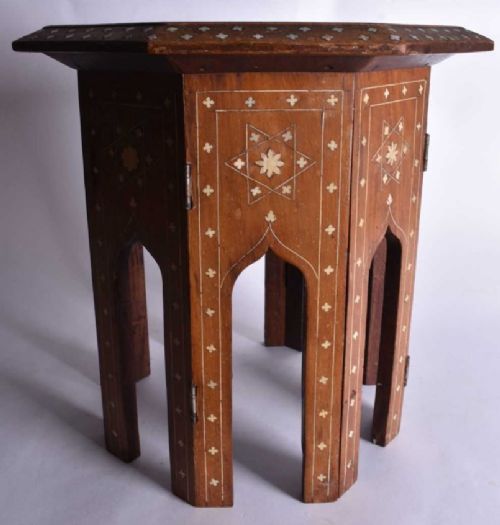
Surface decoration relies heavily on meticulous inlay work utilising bone and mother-of-pearl. Carving techniques further define the aesthetic, combining geometric motifs with traditional Moorish and Islamic carving patterns.
Syrian Octagonal Table Retail Price Guide 2026
Typical asking prices for syrian octagonal table among the pieces listed under this phrase on Sellingantiques today, from the lower quarter to the upper quarter. They describe what is for sale here now, not the wider market.
Some nineteenth-century Damascus tables feature clever folding wooden bases that collapse flat like a puzzle without using metal hinges.
What varies in quality
The precision and density of the mother-of-pearl and bone inlay distinguish superior examples from simpler ones. Tightly fitted geometric tessellation requires advanced skill compared to sparse or loosely arranged surface decoration.
The depth and crispness of the carved woodwork dictate the overall refinement of the piece. Well-defined relief carving maintains sharp edges and intricate detail across the octagonal top and supporting legs.
Liberty & Co.
The Syrian Octagonal Table Glossary
- Octagonal
- Having eight sides and eight angles. This geometry defines the characteristic top shape of these tables.
- Mother-of-Pearl
- The iridescent inner layer of mollusc shells. Artisans cut this material into tiny geometric slivers for tabletop inlay.
- Moorish Revival
- An architectural and decorative style popular in the nineteenth century. It borrows elements from North African and Spanish Islamic design.
- Damascus Table
- A folding occasional table originating from Syria. These items utilise intricate mosaic woodwork that collapses for easy storage.
- Marquetry
- The art of applying pieces of veneer to a structure to form decorative patterns. This technique creates the complex geometric surfaces seen on these tables.
Syrian Octagonal Table: Frequently Asked Questions
What is a syrian octagonal table used for?
These pieces function primarily as side tables, lamp tables, or occasional tables within a living space.
Their decorative eight-sided tops provide a compact surface for lamps, books, or decorative objects while adding historic visual interest.
How do you style a syrian octagonal table?
The rich inlay of mother-of-pearl and bone pairs well with both traditional and eclectic modern interiors.
Allowing the table to stand as a focal centre table highlights its complex geometric marquetry and carved woodwork.
How do you date a syrian octagonal table?
Dating relies on examining the wood species, construction methods, and stylistic influences such as Moorish Revival or Ottoman designs.
Many surviving examples date from the late nineteenth century through to the early twentieth century.
Are all octagonal tables from Syria?
While many originate from Damascus and the wider region, similar forms also emerged from Hoshiarpur and other Anglo-Indian workshops.
Makers frequently adapted regional inlay techniques for European markets, resulting in overlapping styles like Moorish Revival and Islamic Revival.