





Syrian Inlay Coffee Table
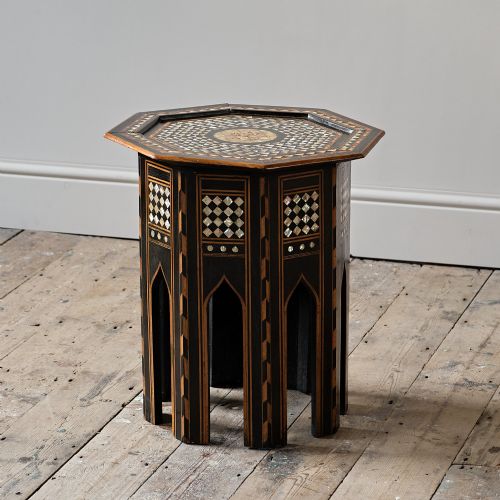
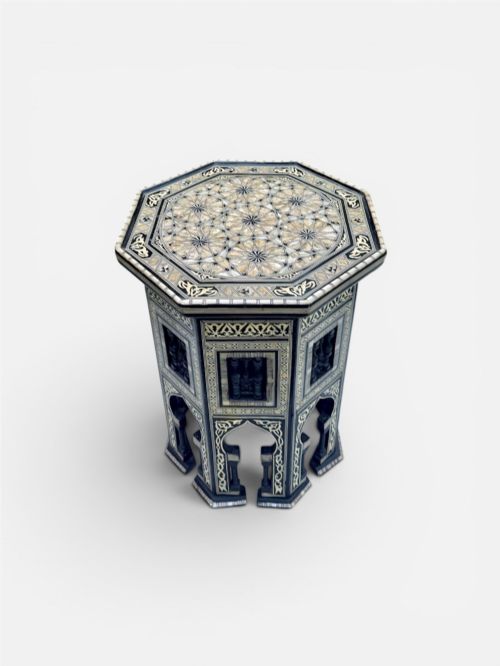
A syrian inlay coffee table brings intricate geometric pattern and lustrous shell into a room as an instant focal point.
Syrian Inlay Coffee Table
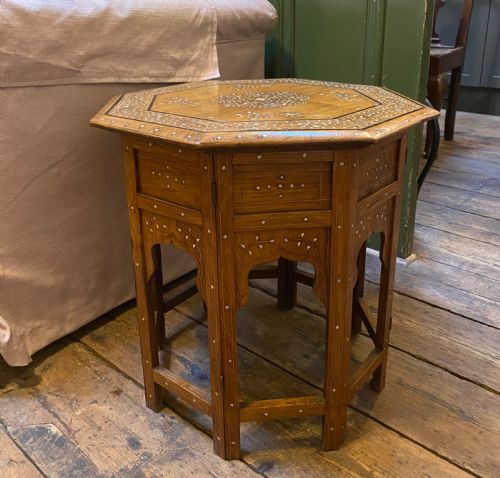
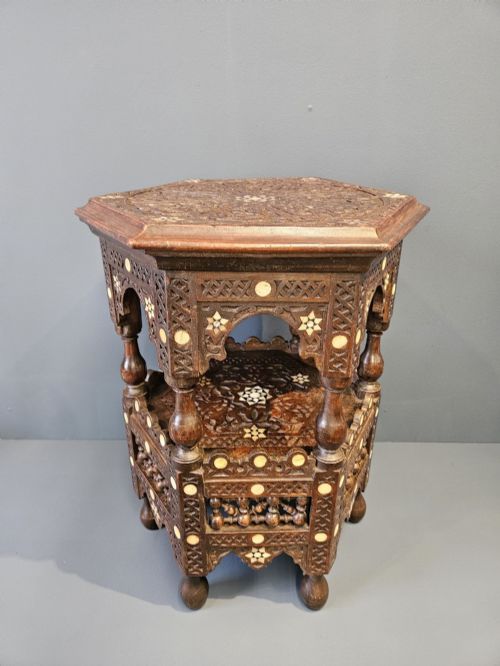
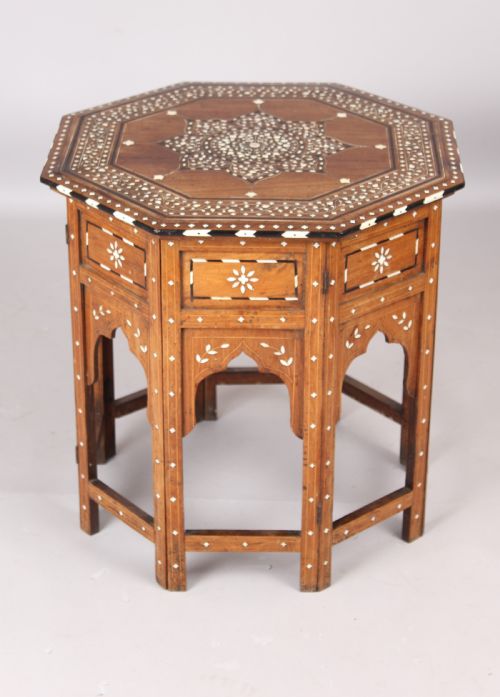
A syrian inlay coffee table takes the form of an octagonal, hexagonal, or pedestal side table, often serving as an occasional or centre table in modern interiors. When searching for a syrian inlay coffee table, buyers encounter pieces dating from the Victorian era up to the early twentieth century, reflecting styles such as Moorish Revival, Ottoman, and Anglo-Indian.
The most common formats on this page are octagonal occasional tables and folding Damascus tables, which showcase traditional Middle Eastern and North African woodworking traditions. These low-profile tables function naturally as coffee tables, bringing historic craftsmanship and rich geometric design into contemporary living spaces.
How they were made
These tables are constructed from hardwoods such as walnut, rosewood, and ebonised wood, providing a dark, stable foundation for complex surface decoration. Artisans then meticulously inset intricate pieces of mother-of-pearl and bone into the wooden frames to create striking geometric patterns.
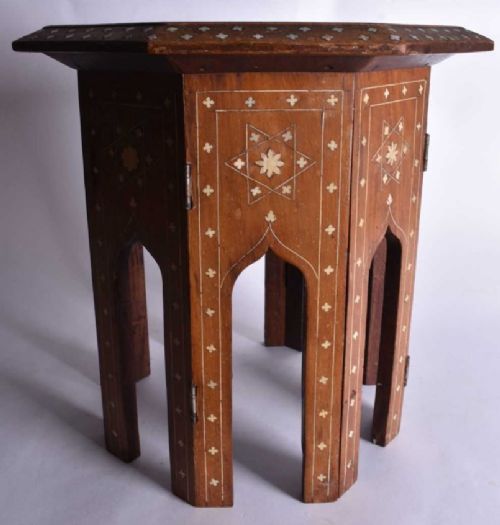
Carving forms an essential part of the technique, with wooden surfaces shaped into deep relief alongside the inlaid mosaic work. Folding frames and multi-sided structures demonstrate precise joinery designed to balance decorative richness with practical utility.
Syrian Inlay Coffee Table Retail Price Guide 2026
Typical asking prices for syrian inlay coffee table among the pieces listed under this phrase on Sellingantiques today, from the lower quarter to the upper quarter. They describe what is for sale here now, not the wider market.
Several tables feature ingenious folding bases, designed so nineteenth-century travellers could pack up their tea table and take it on the road.
What varies in quality
The distinction between standard examples and the finest pieces lies in the density and precision of the mosaic inlay. Superior tables display tightly fitted mother-of-pearl and bone with minimal filler, whereas simpler versions rely on broader wooden expanses with sparse decoration.
Depth of carving and the complexity of the geometric lattice work also separate workshop output. Pieces attributed to specific retail houses or distinct regional traditions often reveal a higher grade of structural carpentry and more ambitious surface design.
Liberty & Co
The Syrian Inlay Coffee Table Glossary
- Moorish Revival
- An architectural and decorative style popular in the nineteenth century that reinterpreted Islamic design motifs from Spain and North Africa. It heavily influenced furniture imported into Britain during the Victorian period.
- Mother-of-Pearl
- The iridescent inner layer of certain mollusc shells used extensively for decorative inlays. It reflects light across shifting tones of silver, pink, and green.
- Octagonal
- Having eight sides and eight angles. This geometric form is traditional for Middle Eastern occasional tables and allows for complex repeating patterns around the perimeter.
- Damascus Table
- A folding occasional table originating from Syria, characterised by intricate mosaic inlay and collapsible wooden bases. These pieces were highly popular imports in the early twentieth century.
- Hoshiarpur
- A region in India known for intricate wood carving and inlay work using bone and shesham wood. Tables from this tradition were widely retailed in Britain alongside Middle Eastern imports.
Syrian Inlay Coffee Table: Frequently Asked Questions
What is a syrian inlay coffee table?
A syrian inlay coffee table is typically a nineteenth or early twentieth-century occasional table featuring intricate geometric patterns formed from mother-of-pearl and bone.
These pieces were originally produced in the Middle East, North Africa, and British India, then imported by prominent London retailers for Victorian and Edwardian homes.
How were these tables used originally?
In period interiors, these tables functioned as occasional furniture for holding lamps, decorative objects, or serving tea.
Today, their lower heights and generous top surfaces make them well-suited for use as characterful coffee tables in sitting rooms.
How do I care for inlaid wood?
Inlaid surfaces require gentle dusting with a dry microfibre cloth and protection from direct sunlight and excessive heat.
Avoid using liquid polishes or harsh chemical cleaners, as moisture can loosen the delicate mother-of-pearl and bone elements set into the wood.
How do I distinguish regional styles?
Regional styles vary through the combination of woods and specific inlay motifs, ranging from Moorish geometric patterns to Anglo-Indian carved foliage.
Cross-referencing construction methods and timber types helps identify whether a piece originates from Damascus, North Africa, or workshops in India.