



Syrian Coffee Table
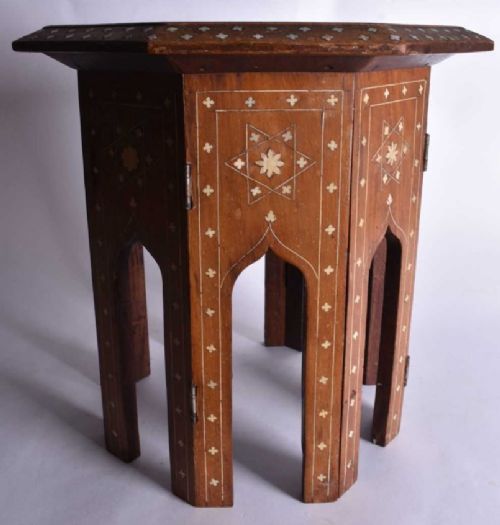
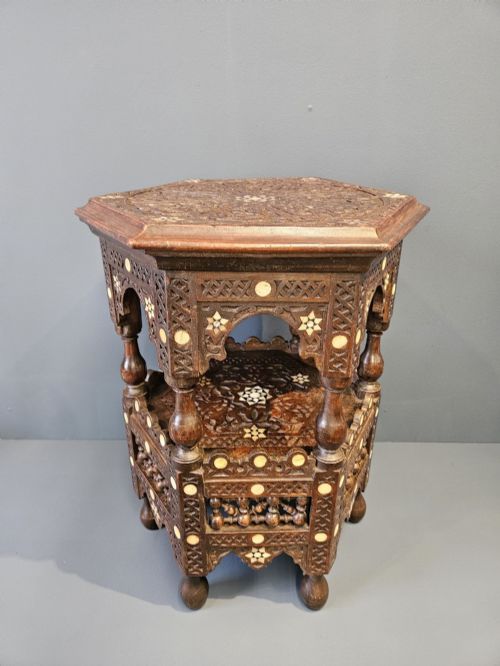
A syrian coffee table brings intricate geometric marquetry and mother-of-pearl into a room through Moorish Revival and Ottoman forms.
Syrian Coffee Table
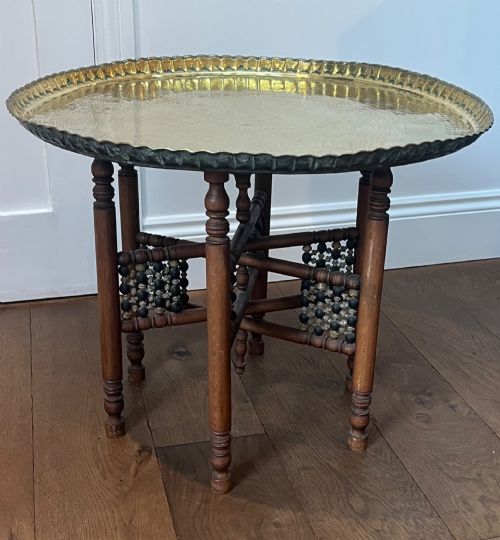
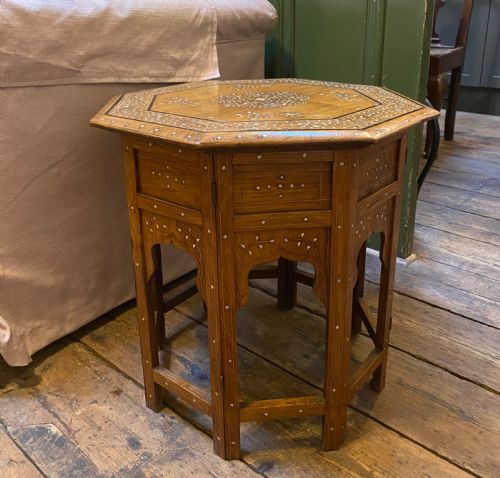
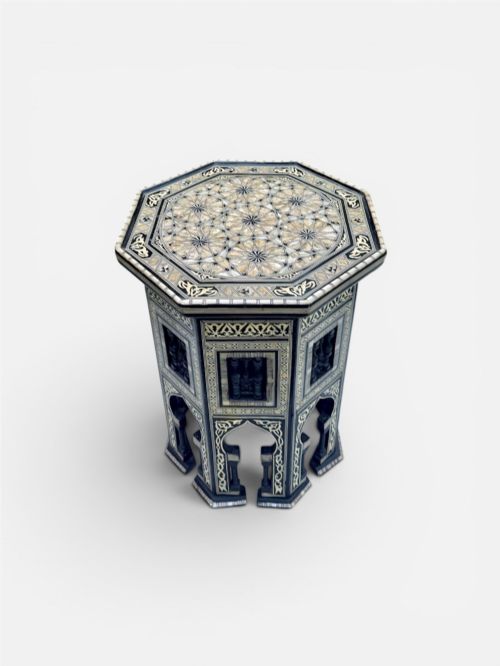
A syrian coffee table in this collection typically takes an octagonal or hexagonal shape, often designed with folding bases or low proportions suited to occasional use. These pieces emerge from the late nineteenth and early twentieth centuries, spanning the Victorian era through the 1920s.
The aesthetic bridges British retailers like Liberty & Co. with Middle Eastern and North African craftsmanship, producing distinctive occasional and lamp tables. Buyers encounter forms ranging from Damascus tables to Hoshiarpur and North African centre pieces.
How they were made
Construction relies heavily on dense hardwoods and walnut, frequently ebonised to provide a dark, contrasting background for intricate decorative work. Artisans built folding and rigid frames using traditional joinery suited to transport and domestic placement.
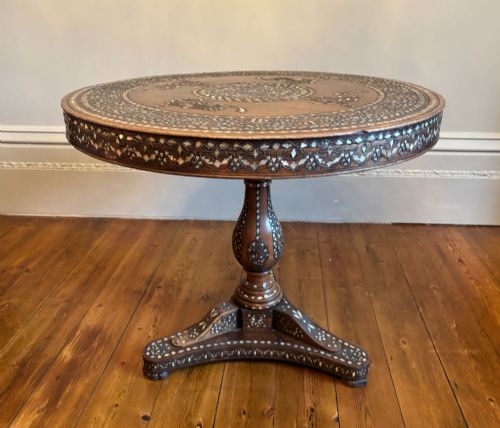
Surface ornamentation is defined by extensive inlay work utilising mother-of-pearl, bone, and bone inlay arranged in geometric mosaic patterns. Carved wooden elements intersect with these polished shell and bone panels to create textured, multi-layered surfaces across the top and sides.
Syrian Coffee Table Retail Price Guide 2026
Typical asking prices for syrian coffee table among the pieces listed under this phrase on Sellingantiques today, from the lower quarter to the upper quarter. They describe what is for sale here now, not the wider market.
The site listings feature pieces spanning from the 1880s to the 1920s, predominantly utilising walnut, ebonised wood, and mother-of-pearl.
What varies in quality
Quality rests in the precision of the geometric tessellation and the density of the mother-of-pearl and bone inlay across the panels. Finer examples maintain tighter joints in the intricate lattice work and exhibit minimal shrinkage in the timber base.
The depth and crispness of the carved woodwork distinguish superior pieces from simpler production. Retained original surface finishes and intact, matching inlay segments elevate the standing of an individual table.
Liberty & Co.
The Syrian Coffee Table Glossary
- Moorish Revival
- An architectural and decorative style popular in the nineteenth century that reinterprets traditional Islamic design elements from North Africa and the Iberian Peninsula. It heavily influences the geometric patterns seen on these tables.
- Mother-of-Pearl
- An iridescent internal layer of shells found in certain molluscs, used by artisans to create shimmering inlay segments. Pieces are meticulously cut and fitted into wooden channels.
- Octagonal
- Having eight sides and eight angles, forming the characteristic geometric footprint for many tables in this category. This shape allows for symmetrical arrangement of inlaid mosaic motifs.
- Damascus Table
- A piece associated with woodworking traditions from Syria, typically characterised by dense geometric inlay and folding wooden frames. These items often feature multi-sided tops designed for versatility.
Syrian Coffee Table: Frequently Asked Questions
How were these tables used originally?
These low surfaces functioned primarily as occasional tables, lamp stands, or serving pieces within late nineteenth-century drawing rooms and reception spaces. Their portable nature and folding frames allowed them to be moved easily around the home.
Over time, British taste embraced these imported forms for interior displays, pairing them with eclectic furnishings of the Victorian and Edwardian periods.
How do I care for inlaid wood?
Maintenance requires keeping the timber and shell away from direct heat sources and extreme humidity fluctuations to prevent the wood from warping. Gentle dusting with a dry, soft cloth preserves the polished surface without moisture damage.
Applying a neutral wax occasionally helps nourish the hardwood base, while avoiding commercial chemical polishes protects the delicate bone and mother-of-pearl segments.
How do I distinguish periods?
Dating relies on observing the framing construction, the specific timber species used, and the style of geometric mosaic work applied to the surface. Earlier nineteenth-century examples often display denser, finer bone and shell integration.
Later pieces from the early twentieth century may show broader joinery techniques and simplified patterns associated with mass production and retail demand.
Can these tables hold heavy lamps?
Most of these occasional and side tables are built for decorative display, light illumination, or holding small objects rather than supporting heavy weights. The folding bases and intricate lattice structures are engineered for stability under moderate loads.
Placing substantial items on them risks straining the joints where the inlaid panels meet the main structural frame.