

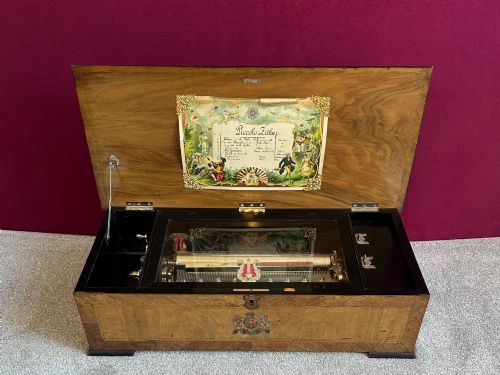





Swiss Mechanical Music Box
A swiss mechanical music box brings intricate nineteenth century machinery and cabinet work into the home, offering tuned melodies through pinned cylinders and steel combs.
Swiss Mechanical Music Box
A swiss mechanical music box is a device designed to play pre-set tunes automatically using a revolving brass cylinder and a tuned steel comb. You will most frequently encounter nineteenth century examples, particularly Victorian pieces dating from the eighteen sixties to the eighteen eighties, housed in fitted wooden cases.
The selection ranges from simple cylinder boxes to more elaborate setups featuring multiple airs, bells in view, and even automata or singing bird mechanisms. Alongside standard rectangular boxes, the listings include unusual forms such as musical chairs and silver enamel singing bird boxes originating from the same European traditions.
How they were made
Makers constructed the cases from timbers like rosewood, walnut, and ebonised wood, frequently embellishing the lids with marquetry inlay and boxwood details. Inside, the working parts rely on precision components made from brass and steel, driven by spring motors that turn the pinned cylinder against the tuned teeth of the comb.
Swiss Mechanical Music Box Retail Price Guide 2026
Typical asking prices for swiss mechanical music box among the pieces listed under this phrase on Sellingantiques today, from the lower quarter to the upper quarter. They describe what is for sale here now, not the wider market.
Some musical boxes double as seating, hiding complex brass cylinders and steel combs beneath an inlaid wooden chair seat.
What varies in quality
Quality in these instruments depends upon the precision of the musical arrangement, the complexity of the cylinder pins, and the reputation of the maker. Master workshops produced movements capable of playing a greater number of airs with richer tonal resonance and cleaner mechanics.
The standard of the exterior cabinet work also distinguishes pieces, with finely figured veneers and intricate marquetry inlay elevating the overall presentation. Preserved original labels, fully restored works, and signed mechanisms by notable makers mark the upper tier of the range.
Langdorff & Fils·B A Bremond·Nicole Freres·LeCoultre
The Swiss Mechanical Music Box Glossary
- Cylinder
- The rotating brass barrel pinned with tiny projections that pluck the teeth of the steel comb to create the tune. Multiple pins allow a single cylinder to play several different musical pieces.
- Comb
- The flat piece of tuned steel with multiple individual teeth that vibrate when struck by the cylinder pins. Each tooth corresponds to a specific musical note.
- Air
- A single tune or musical selection played by the mechanical movement. Boxes are often described by the total number of airs they can perform.
- Marquetry
- The art of applying pieces of veneer to a wooden structure to form decorative patterns and pictures. It frequently decorates the lids of rosewood and walnut cases.
- Automaton
- A mechanical figure or moving part integrated into the box to provide visual entertainment alongside the music. These elements add considerable complexity to the mechanism.
Swiss Mechanical Music Box: Frequently Asked Questions
How do you wind a cylinder music box?
Most pieces use either a built-in winding lever or a separate key inserted into the side or top of the case. Turning the mechanism winds the mainspring that powers the cylinder.
Care should be taken not to overwind the spring, stopping as soon as firm resistance is felt to protect the internal brass gearing.
What is an air on a music box?
An air refers to a distinct musical tune programmed onto the pinned brass cylinder. As the cylinder shifts laterally, a different set of pins engages the steel comb.
Boxes with a higher count of airs offer a more varied repertoire before the sequence repeats itself.
Where were these music boxes made?
The majority of these mechanical instruments were produced in Switzerland during the nineteenth century, particularly in regions renowned for precision metalwork and watchmaking. Swiss makers exported their work globally, mounted in decorative wooden cases.
Cabinet timbers commonly included walnut and rosewood, often enhanced with marquetry inlay.
How should I care for a mechanical music box?
Keep the instrument in a stable environment away from direct sunlight, excessive moisture, and rapid temperature changes that can affect the wooden case and internal glues. Allow the mechanism to run down fully when not in use rather than leaving the spring under permanent tension.
Internal cleaning and adjustments to the brass and steel works should be left to experienced restoration specialists.