

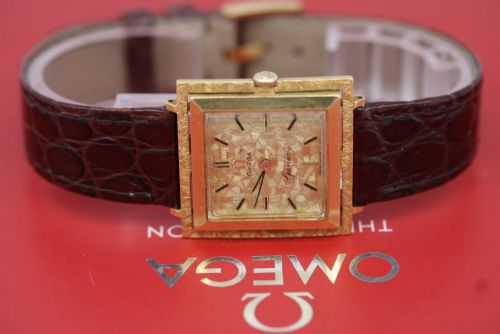
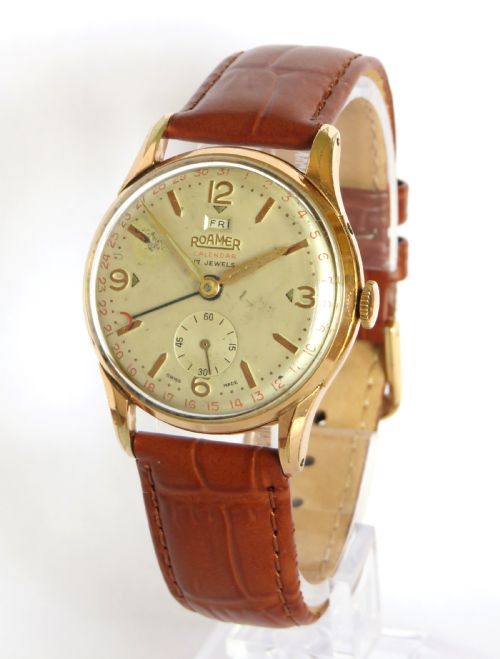
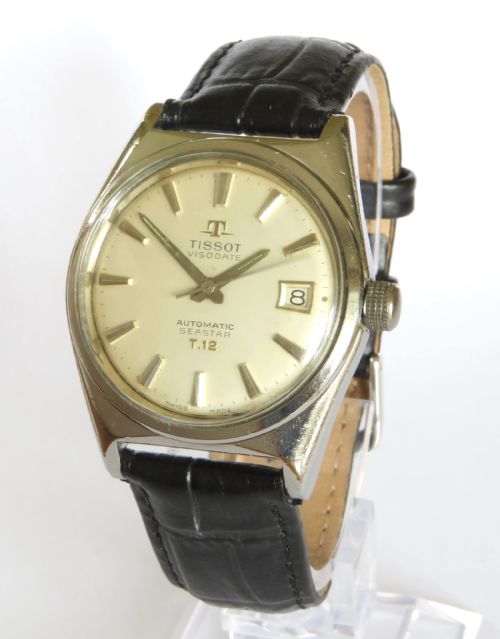
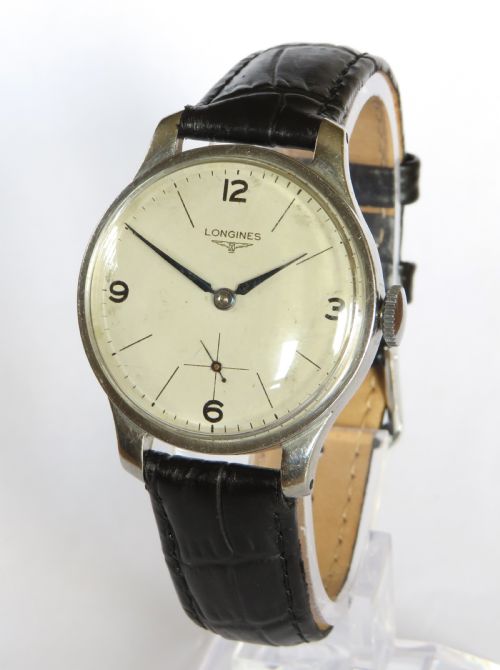
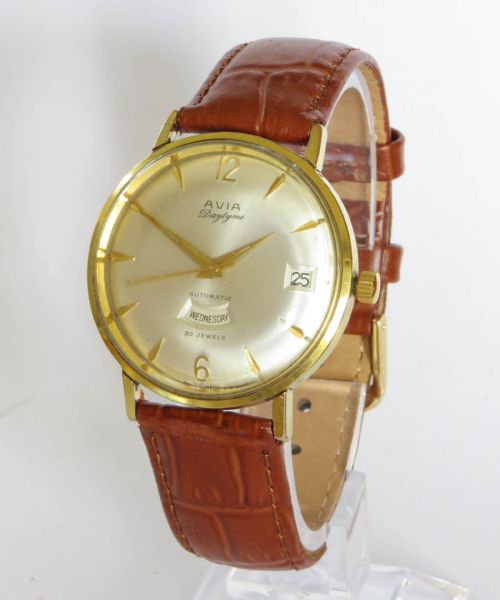
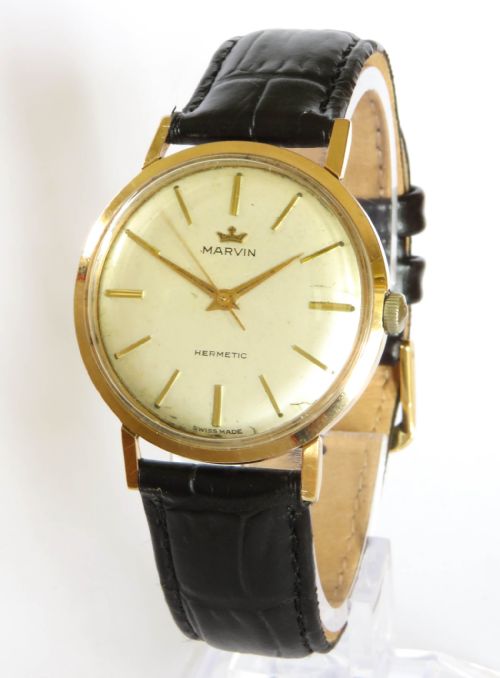


Swiss Made Wrist Watch
A swiss made wrist watch brings precision timekeeping and enduring style to the wrist, spanning eras from the early twentieth century through the 1960s.
Swiss Made Wrist Watch
A swiss made wrist watch represents men's horology, appearing frequently as gents' pieces across this selection. Buyers find wristwatches originating from distinct decades, including the 1920s, 1940s, 1950s, and 1960s. Styles reflect these periods, encompassing Mid-Century Modern, 1940s vintage, and Second World War military designs.
The assortment relies on wristwatches tailored for daily wear or specific utility, such as military service and calendar tracking. Examples range from standard dress pieces to robust chronographs and larger jumbo formats. Every item bears the Swiss designation, marking a heritage of reliable movement construction.
How They Were Made
Cases combine metals like stainless steel, chrome, gold plate, gold plated metal, and solid 9ct gold, paired with glass or acrylic crystals. Dials and movements sit within these protective housings, engineered to endure decades of mechanical operation.
Straps utilise leather to secure the watch firmly to the wrist. Manufacturing techniques from the early twentieth century through the 1960s focus on mechanical dependability, manual winding, and automatic mechanisms.
Swiss Made Wrist Watch Retail Price Guide 2026
Typical asking prices for swiss made wrist watch among the pieces listed under this phrase on Sellingantiques today, from the lower quarter to the upper quarter. They describe what is for sale here now, not the wider market.
Listings feature four distinct decades: the 1920s, 1940s, 1950s, and 1960s.
What Varies in Quality
The grade of materials shapes the distinction between everyday models and premier examples, with solid gold cases sitting above gold plate and base metals. The complexity of the movement, such as chronograph functions, automatic winding, or specialised military specifications, elevates the execution.
Preservation of original components and dial condition define the character of each piece. Retaining factory finishes and authentic parts distinguishes standard production runs from superior surviving examples.
Eterna Matic·Roamer·Avia·Marvin Hermetic·Tissot·Longines·Rotary·Ensign·Lanco Sport·Enicar·Eterna·Sperina·Felca·Omega·West End Watch Co·Garrard·Mappin·Timor
The Swiss Made Wrist Watch Glossary
- Automatic
- A self-winding mechanical movement that uses the natural motion of the wearer's wrist to power the watch. This mechanism removes the need for daily manual winding.
- Chronograph
- A watch equipped with a display function for measuring elapsed time, operating independently of the time-of-day clockwork. These complications require intricate gear assemblies.
- Acrylic
- A lightweight, transparent plastic material utilised for watch crystals prior to the widespread adoption of synthetic sapphire. It offers flexibility and can be polished if scratched.
- Gold Plate
- A thin layer of gold applied to the outer surface of a base metal case. This technique provides the appearance of solid gold at a different tier of manufacture.
- Military
- Timepieces commissioned for armed forces service, built to strict utility standards. These often feature specific government or service markings on the case back.
Swiss Made Wrist Watch: Frequently Asked Questions
What is a swiss made wrist watch?
A swiss made wrist watch is a timepiece manufactured and assembled within Switzerland, adhering to traditional watchmaking standards.
These pieces span various decades, offering mechanical movements and distinctive period styling.
How do I wear a vintage watch?
Wearing a vintage watch involves pairing its size and style with your daily attire, often using leather straps for comfort.
Care should be taken around water and impact, as older pieces lack modern sealing technology.
How do I wind an automatic watch?
An automatic watch winds itself through the natural movement of your arm during daily wear.
If it has stopped completely, a few manual turns of the crown will get the movement started again.
How do I identify the period of a watch?
The period of a watch is identified through design characteristics, dial typography, case materials, and movement signatures.
Styles from the 1940s and 1960s carry distinct aesthetic traits typical of those decades.