

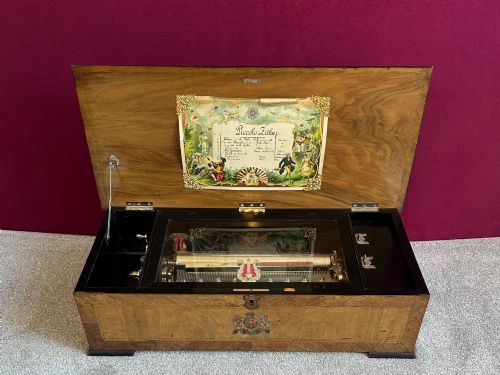





Swiss Cylinder Box
A swiss cylinder box brings mechanical melody into the parlour, driven by pinned brass barrels and tuned steel combs.
Swiss Cylinder Box
A swiss cylinder box is an automated musical instrument housed in a wooden case, designed to play a set programme of tunes through a revolving metal cylinder. The pieces encountered on this page belong predominantly to the Victorian period, with examples spanning from the mid nineteenth century through to Edwardian times.
Formats range from simple wooden cases playing a modest number of airs to large, elaborate cabinets capable of twelve or more tunes. Rosewood, walnut and ebonised wood dominate the exterior construction, frequently embellished with marquetry inlay.
Materials and construction
The casing relies on timber frames of rosewood, walnut, boxwood and ebonised wood, joined to create a sturdy acoustic chamber that enhances the resonance of the mechanism. Marquetry inlay decorates the lids and sides of finer examples, adding visual intricacy to the exterior.
Internal mechanics depend entirely on brass and steel, combining pinned brass cylinders with precisely tuned steel combs that vibrate as the pins strike them. Additional components such as glass dust covers and cast brass levers control the operation and protect the delicate teeth of the comb.
Swiss Cylinder Box Retail Price Guide 2026
Typical asking prices for swiss cylinder box among the pieces listed under this phrase on Sellingantiques today, from the lower quarter to the upper quarter. They describe what is for sale here now, not the wider market.
Some cylinders conceal tiny hidden pins that orchestrate entire waltzes while invisible steel teeth secretly pluck out the rhythm.
Distinguishing quality
The acoustic output dictates the primary tier of distinction, where a clean, rich tone and accurate pitch separate superior mechanisms from those with muted or uneven sound. The number of airs played and the complexity of the arrangement, such as the inclusion of bells or mandolin effects, elevate the status of the piece.
Cabinetwork craftsmanship forms the secondary measure, marked by the depth of the timber grain, precision of the marquetry inlay and overall preservation of the veneered surfaces. Maker reputation also influences standing, with renowned workshops achieving greater recognition for their engineering precision.
Langdorff And Fils·Nicole Freres·B A Bremond·LeCoultre
The Swiss Cylinder Box Glossary
- Cylinder
- The rotating brass barrel set with tiny pins that pluck the teeth of the steel comb to produce melody.
- Comb
- The flat piece of tuned steel with multiple teeth that vibrate when struck by the pins on the revolving cylinder.
- Air
- A single tune or musical piece recorded onto the barrel for playback.
- Marquetry
- Decorative inlay work using various coloured woods to form geometric or floral patterns on the exterior case.
- Mandolin
- An arrangement of grouped steel teeth that creates a tremolo effect mimicking a plucked string instrument.
Swiss Cylinder Box: Frequently Asked Questions
How do I operate a swiss cylinder box?
Wind the spring mechanism carefully using the attached key or hand crank, then release the stop lever to allow the cylinder to rotate and play the pinned tunes.
Ensure the mechanism is placed on a level surface and avoid forcing any levers to prevent damage to the delicate brass and steel components.
How many tunes does a swiss cylinder box play?
The number of airs varies depending on the size of the cylinder, with common configurations ranging from six to twelve distinct musical pieces.
Larger cylinders accommodate longer or multiple tunes, shifting slightly after each rotation to sequence through the entire pinned programme.
How should I care for the wooden case?
Maintain the rosewood or walnut exterior by keeping it away from direct sunlight and sudden temperature fluctuations that can cause the timber or veneer to warp and crack.
Clean the surface gently with a dry, soft cloth, avoiding harsh polishes or moisture that might seep into the marquetry inlay or the internal mechanism.
How can I tell the age of the box?
Examine the style of the wooden case, the complexity of the marquetry and any signatures stamped onto the brass bedplate or tune sheet to determine the manufacturing era.
Most surviving examples date from the Victorian and Edwardian periods, typically reflecting the design tastes and mechanical advancements of the late nineteenth century.