


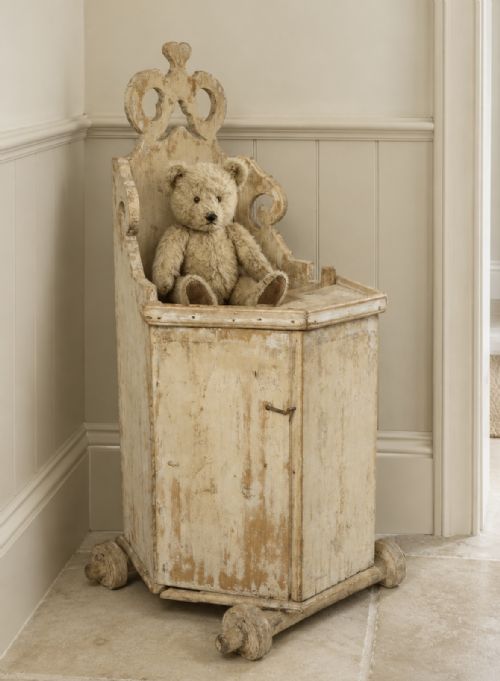


Swedish Painted Chair
A Swedish painted chair brings clean northern light and functional heritage into a room, offering both sculptural presence and everyday seating.
Swedish Painted Chair
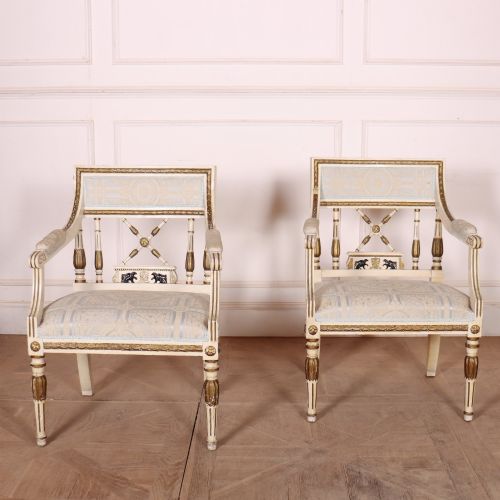
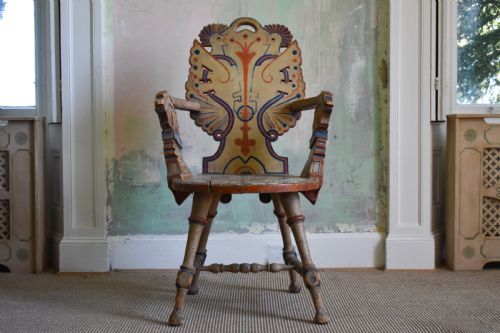
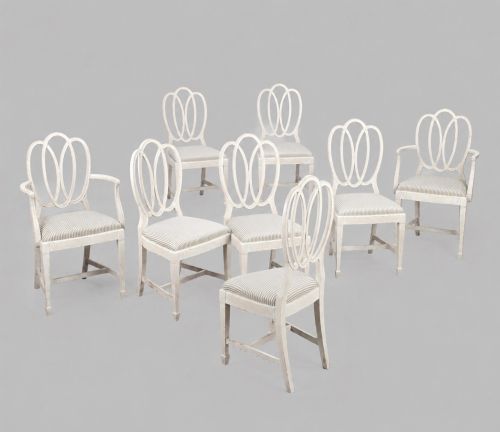
A swedish painted chair encompasses everything from formal dining sets and elegant armchairs to rustic children's seating and rocking chairs. Buyers searching this phrase encounter pieces ranging from ornate Gustavian style designs to simpler folk art and country forms.
The selections recorded here lean heavily toward nineteenth-century origins alongside specific revival pieces from around nineteen-twenty. Dining chairs appear in sets of varying sizes, while armchairs and rocking chairs survive as individual statement pieces.
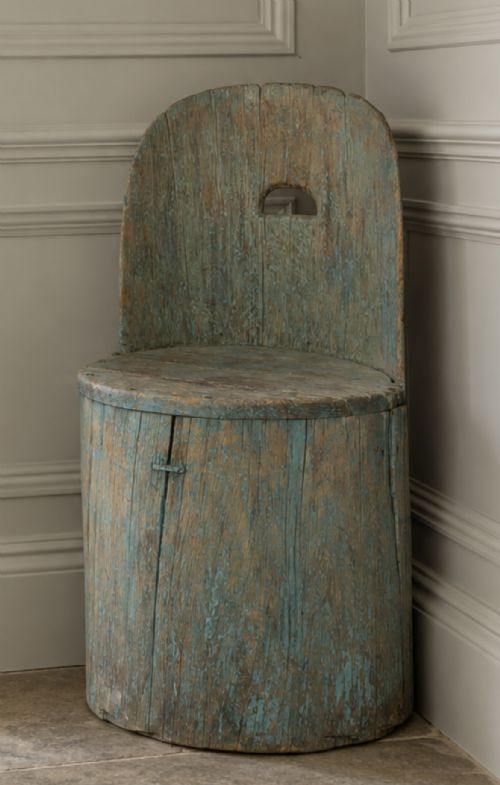
Forms span from classic turned spindle chairs and bobbin throne armchairs to dug out seats and highchairs. Each type displays the distinct aesthetic evolution of Scandinavian woodworking traditions across different decades.
Materials and construction methods
Makers relied primarily on pine and birch as the core woods for construction, utilising local timber to build durable frames. These wooden structures were then coated in paint, which frequently survives as original layers applied generations ago.
Surface treatments range from solid paint applications to giltwood accents on more formal revival pieces. Upholstery utilises fabric and textile elements to soften the wooden seats of armchairs and dining chairs.
Swedish Painted Chair Retail Price Guide 2026
Typical asking prices for swedish painted chair among the pieces listed under this phrase on Sellingantiques today, from the lower quarter to the upper quarter. They describe what is for sale here now, not the wider market.
Someone carved a solid log into a seat, creating a heavy wooden throne that outlasted empires.
Distinguishing quality across examples
Quality rests heavily on the integrity of the original paint surface and the precision of the underlying woodwork. Untouched historical pigment holds greater character than later repainting efforts, preserving the authentic visual age of the timber.
Proportion and stylistic coherence separate standard country iterations from refined court-influenced styles like Gustavian or Swedish Empire. The crispness of turned details and the sturdy joinery of frames indicate the maker's original skill.
The Swedish Painted Chair Glossary
- Gustavian
- The Swedish neoclassical style spanning the late eighteenth and early nineteenth centuries, characterised by restrained symmetry, fluted legs, and pale painted finishes.
- Bobbin
- A style of turned furniture decoration where the wood is shaped to resemble a series of threaded spools or bobbins joined end to end.
- Giltwood
- Wood that has been treated with a thin layer of gold leaf or gold paint to highlight carved decorative details.
- Turned
- Wood shaped by being rotated on a lathe to create cylindrical, spindle, or decorative leg and arm components.
- Dug out
- A primitive form of seating constructed by hollowing out a single solid block of timber to form the seat and back.
Swedish Painted Chair: Frequently Asked Questions
How do I clean a painted finish?
Dust surfaces gently with a dry, soft cloth to prevent accumulation of grit without harming the underlying paint layer.
Avoid liquid cleaners and harsh chemicals entirely, as historical paints can react poorly to moisture and modern detergents.
Are these chairs suitable for daily dining use?
Most nineteenth-century and early twentieth-century dining chairs remain structurally sound for regular sitting if joints are stable and secure.
Heavier use suits sturdy pine frames, while delicate decorative armchairs function better as occasional or accent seating.
What defines Gustavian style chairs?
Gustavian design borrows heavily from French neoclassical lines but simplifies them through a distinctly Swedish lens of pale paint and modest proportion.
These pieces typically feature straight tapered legs, subtle carved medallions, and rectangular or oval backs.
Does original paint matter for value?
Surviving original paint layers preserve the true historical character of the piece and provide a tangible link to its period of creation.
Later surface coats conceal the natural ageing of the timber and pigment underneath, altering the visual texture of the object.