

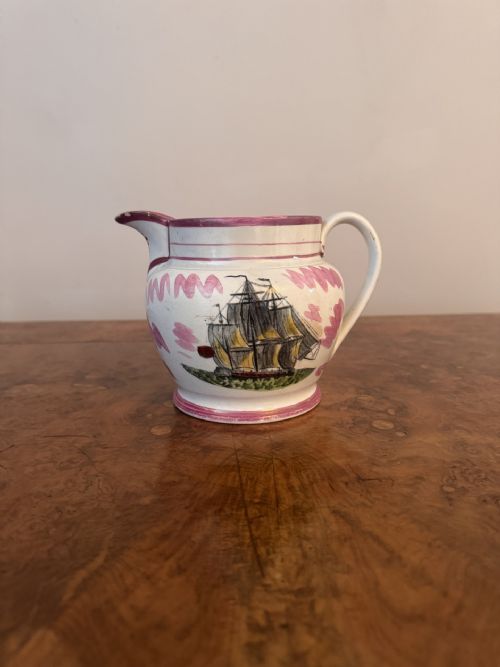


Sunderland Pink Lustre Jug
Sunderland pink lustre jug examples bring bold metallic glazes and detailed transfer prints straight into your hands.
Sunderland Pink Lustre Jug
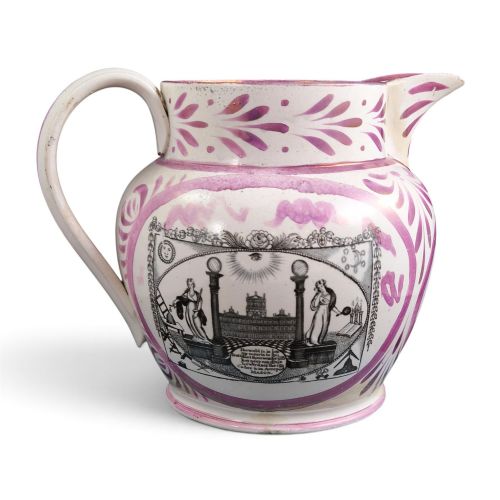
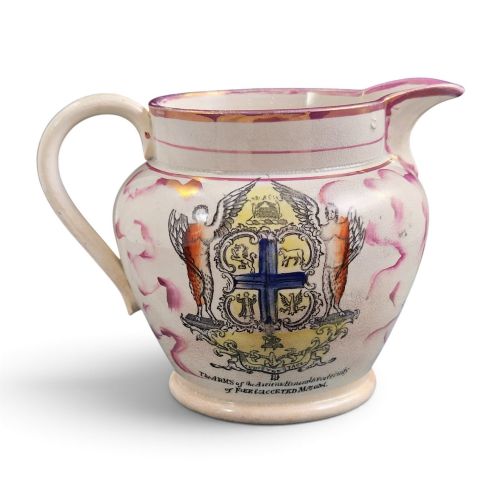
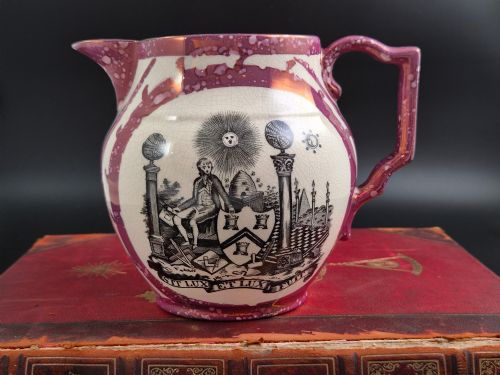
A sunderland pink lustre jug is a striking ceramic piece originating from the nineteenth century, often showcasing distinct pink metallic glazes. These vessels frequently feature printed panels depicting maritime themes, clipper ships, or Masonic symbols.
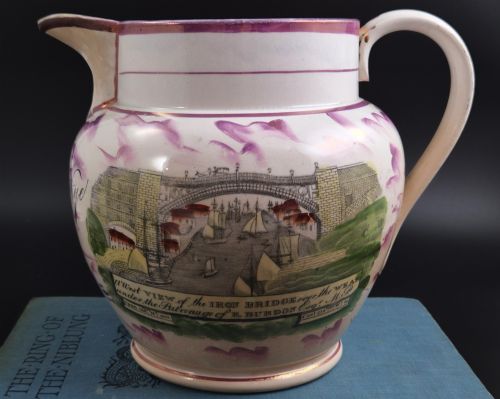
Most pieces encountered on this page date from the Georgian and Victorian eras, spanning roughly from 1800 to 1860. Common forms include large decorative pitchers adorned with poetic verses or local landmarks like the Iron Bridge over the Wear.
Makers often utilised creamware or pearlware bodies to provide a bright foundation for the characteristic splash lustre finish. Collectors frequently find named and dated examples alongside unsigned commemorative jugs.
How They Were Made
Potters shaped these earthenware and pearlware vessels before applying transfer-printed designs in black or sepia. Artisans then hand-coloured certain details using bright enamel paints over the glaze.
The signature pink lustre effect relied on a metallic oxide wash, often applied in a mottled or splash technique. Firing in the kiln caused the solution to reduce and shimmer with an iridescent metallic sheen.
Sunderland Pink Lustre Jug Retail Price Guide 2026
Typical asking prices for sunderland pink lustre jug among the pieces listed under this phrase on Sellingantiques today, from the lower quarter to the upper quarter. They describe what is for sale here now, not the wider market.
Early nineteenth-century potters captured everything from clipper ships to bare-knuckle boxing matches on the side of a humble jug.
What Varies in Quality
The richness and coverage of the pink splash lustre glaze vary significantly across pieces. A deep, vibrant metallic shimmer across a well-preserved pearlware body represents the higher end of the range.
Garrison Pottery
The Sunderland Pink Lustre Jug Glossary
- Pearlware
- A refined earthenware body developed in the late eighteenth century featuring a subtle bluish glaze that pooled in recesses. It provided a whiter surface than traditional creamware to mimic Chinese porcelain.
- Lustre Glaze
- A metallic film applied over fired ceramics to create a reflective, iridescent surface. Artisans achieved the pink variety using compounds of gold or other metallic oxides.
- Transfer Printing
- A method of decorating ceramics by engraving a design on a copper plate, pulling it on tissue paper, and pressing it onto the biscuit ware. This technique allowed intricate maritime scenes to be reproduced consistently.
- Splash Lustre
- A specific application style where the metallic solution is flicked or splattered onto the background to create a mottled, marbled effect. It remains a hallmark of regional nineteenth-century pottery.
- Earthenware
- A porous, opaque ceramic fired at lower temperatures than stoneware or porcelain. It serves as the standard body for nearly all nineteenth-century lustre jugs.
Sunderland Pink Lustre Jug: Frequently Asked Questions
What themes appear on these jugs?
Designs frequently incorporate maritime subjects, tall clipper ships, and detailed depictions of the Iron Bridge over the Wear. Masonic symbols, poetic panels, and commemorative boxing scenes also appear regularly.
Potters selected these popular motifs to appeal to sailors, tradesmen, and local communities during the Georgian and Victorian periods.
How do I identify the period?
Pieces span the nineteenth century, with earlier examples from around 1800 often utilising pearlware bodies and delicate transfer prints. Mid-century Victorian specimens tend to feature bolder splash lustre effects and distinct commemorative dates.
Examining the ceramic body beneath the glaze helps distinguish the transitional pearlware of the early decades from later nineteenth-century earthenware.
How were these jugs used?
While many served functional roles in homes and public houses for pouring liquids, larger decorated examples frequently acted as display pieces or commemorative objects. Their bold designs made them focal points in maritime households.
Named and dated vessels often marked specific personal milestones, lodge memberships, or local events rather than everyday kitchen service.
How do I care for lustre?
Display these ceramic pieces away from direct sunlight and areas prone to heavy temperature fluctuations to protect the enamel colours and metallic surface. Gentle dusting with a dry cloth is generally sufficient for maintenance.
Avoid washing them in dishwashers or submerging them in water, as the historical glaze and overglaze enamels remain sensitive to harsh cleaning methods.