


Sultanabad Wool Rug
Sultanabad wool rug selections bring grand Persian artistry into a room, offering large-scale floral patterns and muted palettes that suit traditional and contemporary spaces alike.
Sultanabad Wool Rug
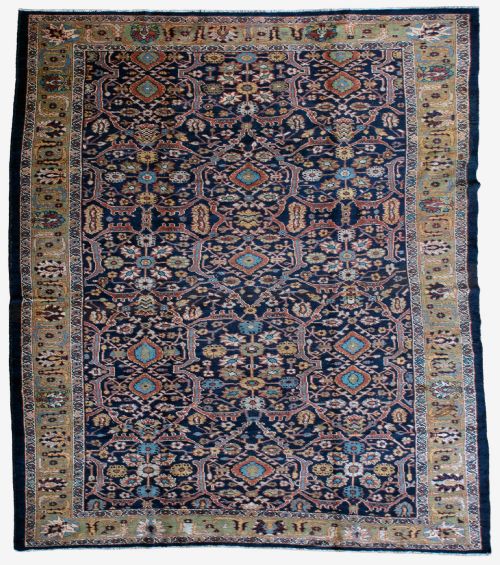
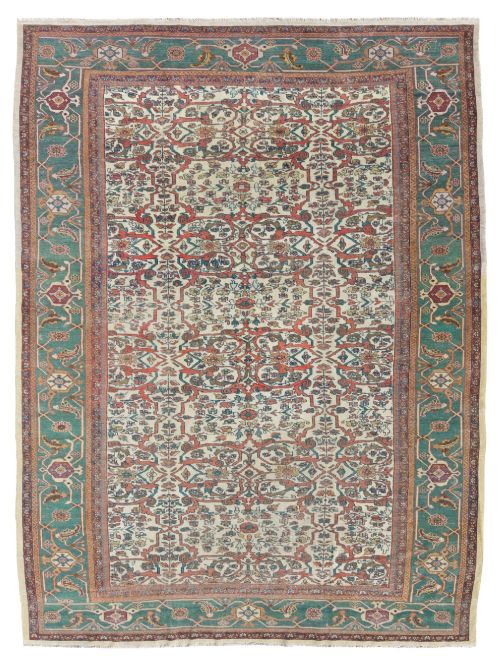
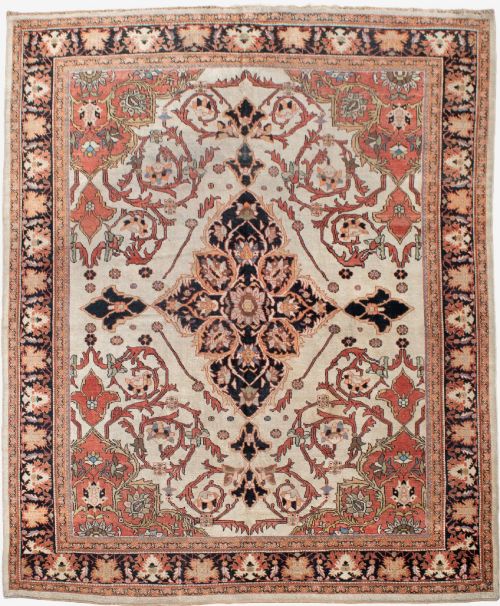
A sultanabad wool rug represents a tradition of Persian weaving originating from the West Persia region during the late nineteenth and early twentieth centuries. These large floor coverings encompass styles often designated as Sultanabad, Mahal, and Ziegler, reflecting commercial production geared towards Western tastes of the period.
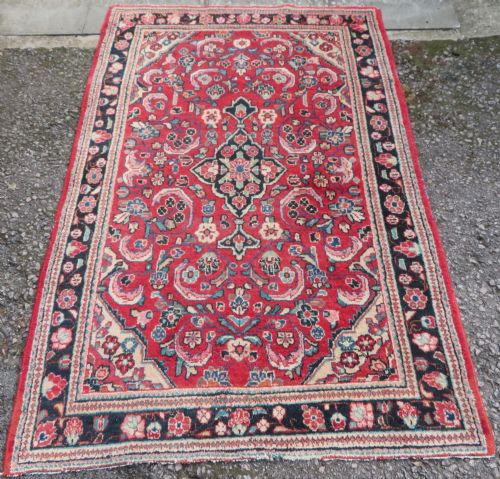
Buyers encounter substantial room-size carpets alongside smaller area rugs in various rectangular proportions. The designs frequently feature expansive botanical motifs and scrolling vines arranged with considerable open space.
Dating across these pieces spans from the eighteen-seventies through to the nineteen-thirties, with the eighteen-nineties particularly well represented. The visual language relies heavily on Persian traditional design adapted through regional workshops.
Materials and Construction
These carpets are constructed using wool for the pile, providing resilience and a soft underfoot texture, supported by cotton foundations that lend structural stability. The combination of wool and cotton allows the heavy floor coverings to maintain their shape over decades of use.
Weavers in the Sultanabad region utilised hand-knotting techniques traditional to West Persia, securing the pile to the cotton warp and weft threads. Natural dye sources produced the characteristic softer hues and muted tones associated with the commercial output of the era.
Sultanabad Wool Rug Retail Price Guide 2026
Typical asking prices for sultanabad wool rug among the pieces listed under this phrase on Sellingantiques today, from the lower quarter to the upper quarter. They describe what is for sale here now, not the wider market.
Assessing Quality
Quality in these textiles depends heavily on the fineness of the knotting and the precision with which the grand floral motifs are executed across the field. Finer weaves allow for sharper definition in the scrolling vine patterns and greater durability in high-traffic areas.
The nuance and depth of the colour palette also distinguish finer examples, where natural dyes have aged gracefully to create harmonious secondary tones. Uniformity in the wool pile and integrity within the cotton foundation structures further separate standard commercial output from exceptional commissions.
Ziegler and Co
The Sultanabad Wool Rug Glossary
- Sultanabad
- A classification of Persian rug originating from the town of the same name in West Persia, known for large-scale patterns. These pieces were largely produced for the Western market during the late nineteenth century.
- Mahal
- A term often used interchangeably with Sultanabad to describe rugs and carpets woven in the surrounding villages of the region. They typically exhibit slightly more relaxed village interpretations of formal town designs.
- Ziegler
- A designation originating from the Manchester-based firm Ziegler and Co, which commissioned carpets in Persia to suit European decorative tastes. These pieces often feature muted colourways and spacious floral compositions.
- Pile
- The vertical or diagonal loops of wool yarn that form the usable surface of the rug. In these antiques, the wool pile provides both the tactile comfort and the visual depth of the design.
- Warp
- The stationary vertical cotton threads stretched tightly on the loom before knotting begins. The fringe of the rug is typically a continuation of these warp threads.
Sultanabad Wool Rug: Frequently Asked Questions
What is a sultanabad wool rug?
A sultanabad wool rug is a hand-knotted antique floor covering originating from West Persia, produced primarily between the late nineteenth century and the early twentieth century. These pieces are celebrated for their oversized botanical designs and soft, muted colour palettes.
Created to satisfy international demand, they bridge traditional Persian motifs with Western interior aesthetics, making them enduringly popular for contemporary living spaces.
How do I style a sultanabad wool rug?
These rugs anchor a room effectively due to their generous proportions and large-scale patterns, pairing well with both period furniture and modern minimalist interiors. Placing one in a living room or dining area allows the spacious floral designs to remain visible.
Because the muted tones and vegetable dyes blend easily with diverse colour schemes, they integrate smoothly into high-traffic rooms without overwhelming the surrounding decor.
How do I tell a Sultanabad from a Mahal?
Sultanabad and Mahal rugs both originate from the same West Persia region and share similar materials, but Mahal rugs often display slightly more casual village interpretations of design. Sultanabad carpets frequently lean towards grander, more formal compositions tailored for export.
In practice, makers and merchants often used the terms interchangeably during the nineteenth century due to the overlapping production methods across the region's workshops.
What materials are used in these rugs?
The construction relies entirely on a wool pile knotted onto a foundational grid of cotton warp and weft threads. This combination ensures the heavy textile remains structurally stable while offering a durable, soft surface underfoot.
The quality of the wool and the preparation of the natural dyes directly influence how the pile ages and retains its subtle colour variations over the decades.