
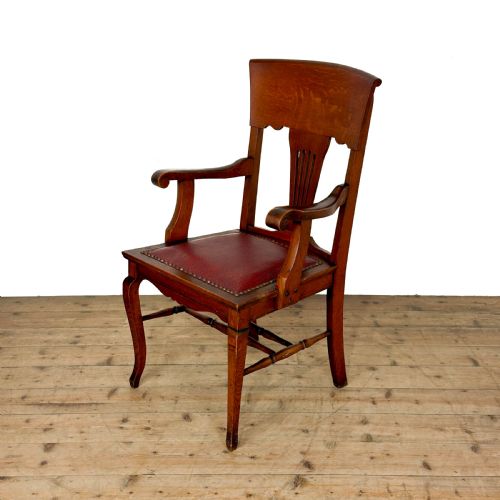


Studded Red Leather Chair
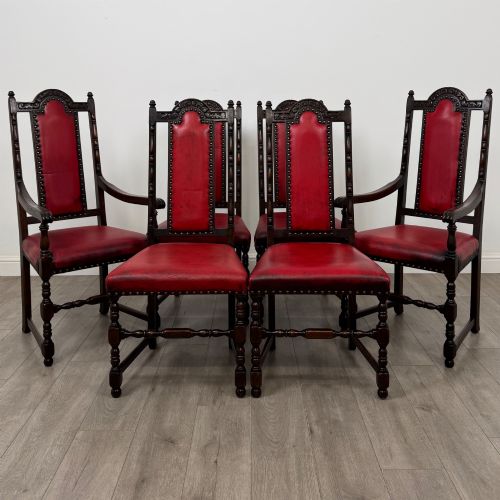
A studded red leather chair brings colour and rich texture to a room, offering robust support for the study or dining table.
Studded Red Leather Chair
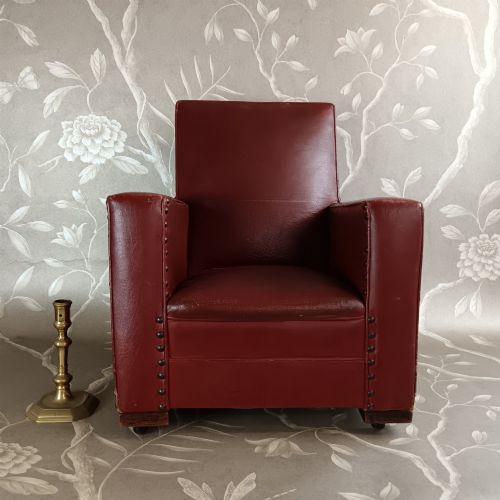
When you search for a studded red leather chair, you encounter a wide variety of seating forms spanning several centuries of British and European design. These pieces range from substantial library and desk armchairs to sets of dining chairs and compact reading chairs.
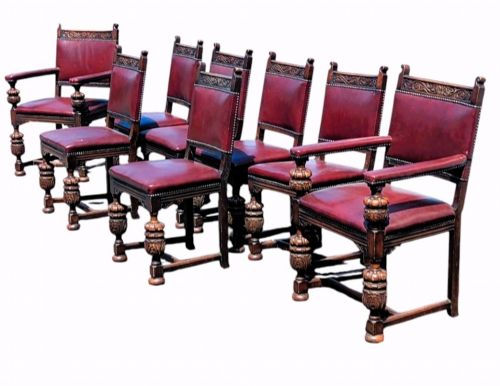
The versions you are most likely to meet on this page date from the Victorian, Edwardian, and 1930s periods, often fashioned in oak, mahogany, or walnut with distinctive brass studding along the upholstery seams.
How they were made
Maker's workshops built the frames using sturdy timbers such as oak, mahogany, and walnut, employing traditional joinery techniques to ensure lasting strength. Craftsmen then upholstered the seats and backs in leather, securing the edges by hand with individual brass studs.
Wood elements were frequently polished or carved to highlight the natural grain, while swivel and tilt mechanisms appeared in later desk chairs from the Edwardian era and the 1930s.
Listings span from the 18th century through the 1930s, featuring oak, mahogany, walnut, and iron frameworks.
What varies in quality
The distinction between ordinary and exceptional pieces lies in the selection of materials and the integrity of the frame construction. Heavier timbers, finer hand-carving, and well-preserved leather distinguish the higher tier of seating.
Subtleties in the brass studding work and the proportion of the upholstered arms indicate the level of care invested by the original workshop.
Kendrick and Jefferson
The Studded Red Leather Chair Glossary
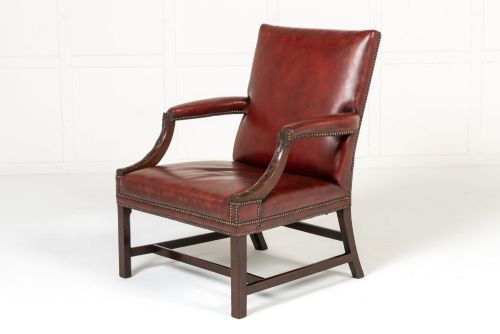
- Gainsborough chair
- A wide, upholstered armchair with open padded arms, designed in the eighteenth century and frequently reproduced in later periods. It provides a comfortable seat for a desk or library.
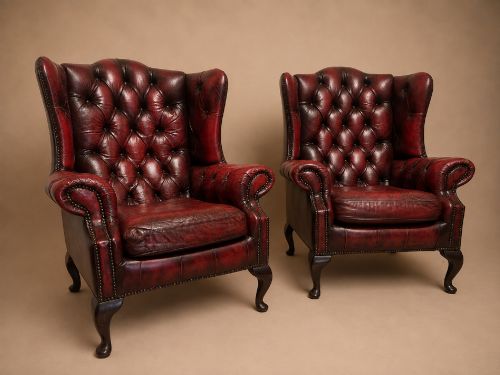
- Wingback armchair
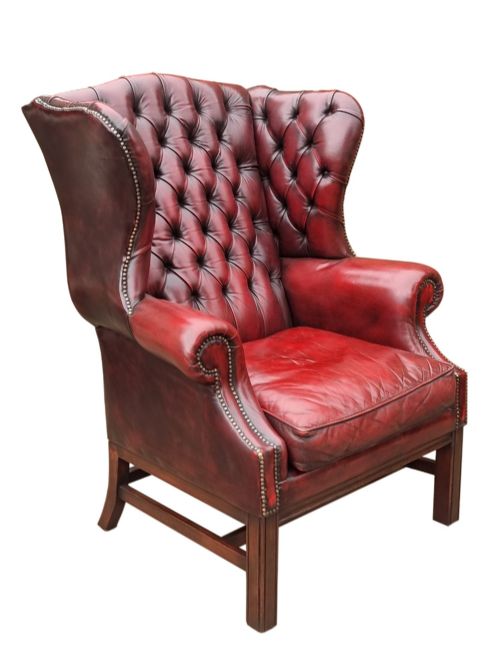
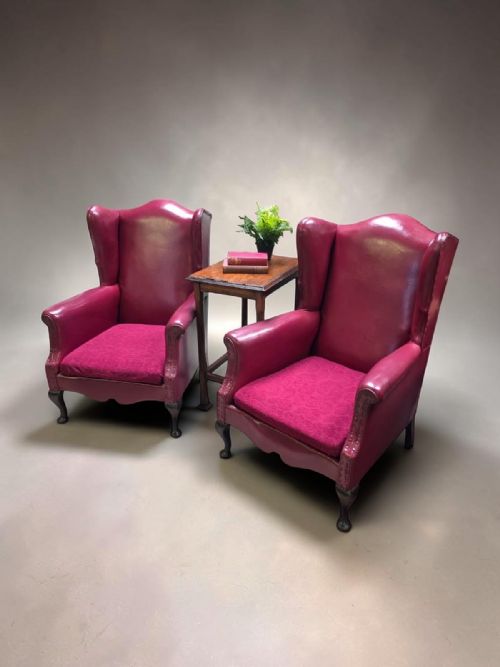
- A high-backed seat featuring upholstered wings designed to shield the occupant from drafts. This form appears across Victorian and 1930s listings.
- Cockfighting chair
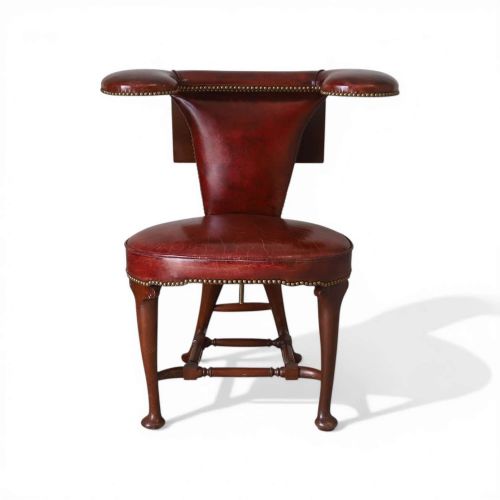
- A low, specialised seat originally designed for viewing spectator sports, typically featuring an adjustable reading rest on the back. Examples are found in nineteenth-century oak and red leather.
- Swivel and tilt chair
- An office or desk seat fitted with a mechanical base allowing rotation and backward movement. These emerge in Edwardian and early twentieth-century designs.
- Tub back armchair
- A rounded seat where the back and arms form a single continuous curved rail. This style is often seen in Edwardian leather upholstery.
Studded Red Leather Chair: Frequently Asked Questions
How do I care for antique leather?
Keep the leather clean with a soft, dry cloth and avoid placing the chair near direct heat sources or strong sunlight, which can dry out the material.
Applying a specialist leather conditioner periodically helps maintain suppleness and preserves the rich red tone over time.
Were these chairs used at desks?
Many of the pieces listed, including swivel desk chairs and library armchairs, were specifically engineered for workspace use. Their robust frames and supportive armrests accommodated long hours of reading or writing.
Other variations, such as dining chairs and Gainsborough chairs, served multiple domestic purposes from the dining room to the study.
What is the difference between Victorian and Edwardian styles?
Victorian seating tends to feature heavier proportions, darker polished woods, and deep carving. Upholstery is often substantial and dark in hue.
Edwardian designs frequently adopt lighter woods like oak and mahogany, sometimes reviving earlier eighteenth-century styles with simpler, more refined silhouettes.
How are brass studs attached?
Individual brass nails are driven by hand along the edges of the leather upholstery to secure the hide tightly to the wooden frame. This technique prevents fraying and provides a decorative border.
On older pieces, the spacing and patina of these studs help indicate the period of manufacture.