


Traditional Red Arm Chair
A traditional red arm chair brings deep colour and centuries of seating comfort into a room through rich upholstery and timber frames.
Traditional Red Arm Chair
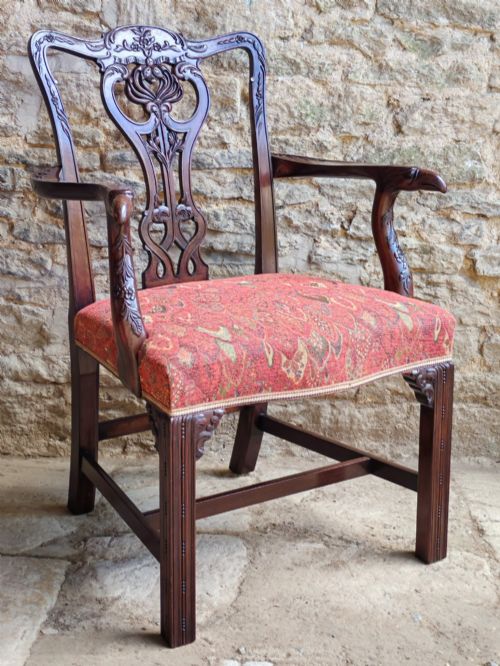
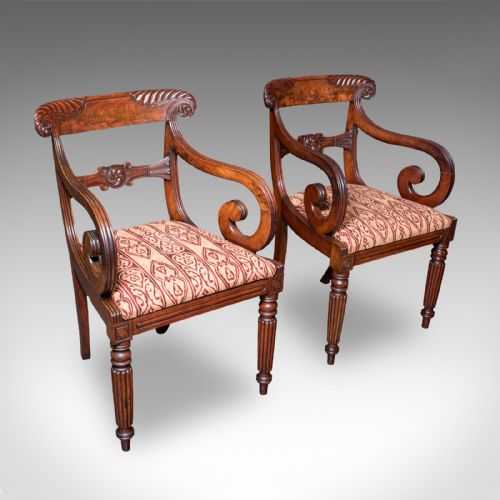
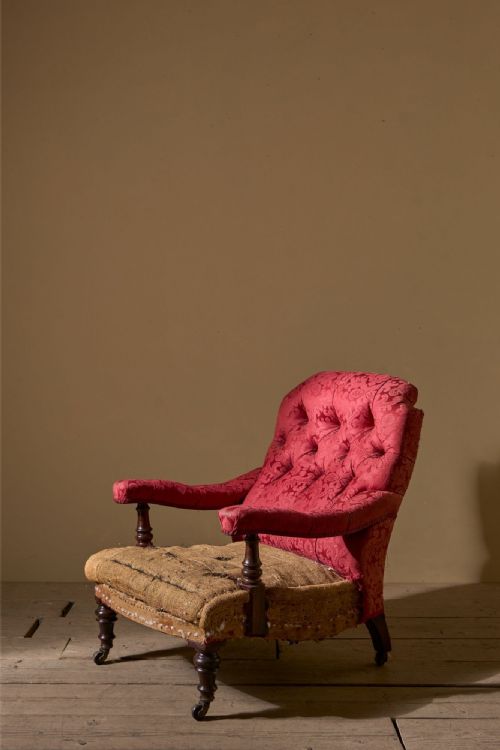
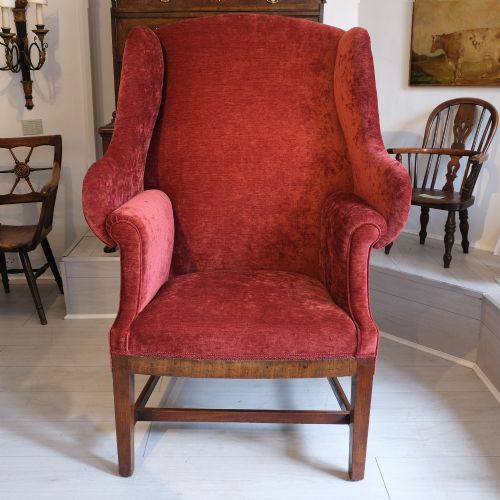
A traditional red arm chair encompasses varied seating forms from the Georgian, Victorian, and Regency periods, including wingbacks, library chairs, and library armchairs. These pieces span the eighteenth, nineteenth, and early twentieth centuries, reflecting diverse historical styles from Chippendale Revival to French Provincial.
Buyers seeking a traditional red arm chair will most frequently encounter nineteenth-century mahogany frames paired with red velvet, cotton, damask, leather, or kilim upholstery. The selection ranges from generous open armchairs and desk chairs to substantial wing armchairs upholstered in deep crimson and scarlet tones.
How they were made
Construction relies upon solid timbers such as mahogany and general wood, shaped into scroll arms, carved frames, and supportive legs often accented with brass castors. Traditional upholstery methods utilise durable internal padding finished with high-end textile coverings.
Surface finishes include polished mahogany and occasionally Chinese lacquer, complementing tactile outer fabrics like velvet, damask, and woven cotton. Brass detailing and intricate needlework often complete the decorative execution of these seating forms.
One exceptional barber's chair from the nineteen-thirties sneaks into the collection, proving that traditional red seating knows how to multitask.
What varies in quality
The standard of a traditional red arm chair rests upon the integrity of its timber frame and the historical accuracy of its upholstery materials. Pieces utilising dense mahogany and traditional stuffing techniques maintain structural rigidity and aesthetic depth far better than lesser examples.
Design nuance and period characteristics distinctly separate finer pieces from standard alternatives, notably through hand-carved details and balanced proportions. The pedigree of the workshop and the richness of the selected red textile further define the upper tier of the range.
Howard and Sons
The Traditional Red Arm Chair Glossary
- Bergere
- An enclosed upholstered armchair with wooden framing exposed around the sides and back. This French-influenced style often incorporates cane work or tight fabric panels.
- Wingback
- An armchair featuring side panels attached to the arms and framing the back to block drafts. Early examples were designed to retain heat from an open fireplace.
- Carver
- An armchair designed for the head of a dining table, traditionally matching a set of smaller single chairs. These pieces feature structural armrests to accommodate formal dining.
- Damask
- A reversible figured fabric traditionally woven on a jacquard loom with intricate patterns. It provides a subtle sheen and durable texture well-suited to formal period upholstery.
- Kilim
- A flatwoven textile originating from the Middle East and Central Asia. When utilised on period armchairs, it introduces geometric patterns and robust tactile qualities.
Traditional Red Arm Chair: Frequently Asked Questions
How do I date a red armchair?
Dating involves examining the timber species, structural joinery, and stylistic details such as scroll arms or cabriole legs characteristic of Georgian or Victorian eras.
Upholstery fabrics and underlying webbing also offer clues, though many antique frames have been re-covered in red textiles during later restorations.
Where were these chairs used?
Original locations included formal drawing rooms, libraries, country house morning rooms, and executive studies where comfortable seating was paramount.
Winged models specifically served to protect sitters from cold draughts near large fireplaces in grand domestic interiors.
How do I clean velvet upholstery?
Velvet requires gentle brushing with the nap to remove surface dust and prevent the pile from crushing over time.
Professional specialist cleaning is recommended for deeper stains to preserve the rich red dye and delicate structure of antique textiles.