
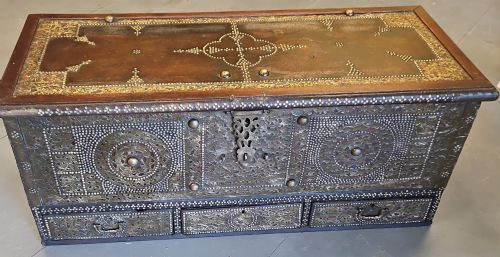


Studded Brass Teak Box
These studded brass teak box pieces are substantial storage trunks offering robust craftsmanship and distinctive metalwork that collectors prize for utility and decorative presence.
Studded Brass Teak Box
When you search for a studded brass teak box, you encounter substantial storage trunks and chests originating from nineteenth-century contexts such as Zanzibar, Anglo-Indian workshops, and colonial outposts. These pieces serve as functional furniture designed for travel and household storage, combining deep timber frames with protective metal fittings.
The versions most likely to appear on this page include Zanzibar chests, Indian trunks, and Anglo-Indian coffers dating predominantly from the Victorian period around eighteen-fifty to eighteen-ninety, alongside occasional twentieth-century blanket boxes. They manifest primarily as trunks and coffers built for carriage or maritime journeys, retaining their original character through generations of use.
How they were made
Maker-joiners constructed these storage chests using dense tropical timber, predominantly teak and assorted hardwoods, selected for durability against humidity and wear. They framed the boxes with sturdy panels joined to withstand heavy travel and domestic storage demands.
Artisans reinforced the wooden carcasses with iron and applied elaborate brass studding across the exterior surfaces, often incorporating copper details for structural strength and visual contrast. These metal strapwork designs and individual studs secure the corners and lids while creating geometric patterns unique to each regional workshop.
The listings on this site span Victorian, nineteenth-century, and early twentieth-century periods, showcasing teak, hardwood, brass, iron, and copper materials.
What varies in quality
The refinement of the brass and iron decorative mountings distinguishes finer examples from simpler utility boxes, as intricate chased strapwork requires advanced metalworking skill. Dense, heavy teak framing provides structural integrity that lighter secondary hardwoods lack over decades of daily handling.
Intact regional characteristics, such as original carriage handles and traditional locking mechanisms, elevate the standing of a trunk compared to pieces stripped of their original hardware or altered during later repairs.
The Studded Brass Teak Box Glossary
- Zanzibar chest
- A heavy timber storage trunk featuring elaborate brass studding and strapwork, traditionally associated with East African trade routes and Indian craftsmanship. These chests often include internal till compartments for valuables.
- Anglo-Indian
- A stylistic descriptor for furniture produced in India during British colonial rule, combining European furniture forms with local woodcarving and metalworking traditions. Such pieces bridge diverse cultural design elements.
- Coffer
- A chest used for holding valuables or textiles, typically distinguished by a heavy lid and robust wooden construction reinforced with metal bands. They function as both seating and secure storage.
- Hardwood
- Dense timber derived from broad-leaved trees, including teak, which resists warping and provides the primary structural material for these colonial trunks. Its weight contributes to the overall durability of the piece.
- Carriage trunk
- A portable storage box designed for transport on vehicles or ships during the nineteenth century, featuring sturdy handles and reinforced corners to endure transit. These items prioritise portability alongside secure containment.
Studded Brass Teak Box: Frequently Asked Questions
What is a studded brass teak box?
A studded brass teak box is a nineteenth-century storage trunk or chest constructed from durable timber and reinforced with decorative metalwork and brass studs. These pieces originated in trade centres like Zanzibar and Anglo-Indian workshops.
They served travellers and households as secure containers for textiles and valuables, functioning as portable furniture during the Victorian era.
How were these chests used?
Owners utilised these trunks for long-distance travel on ships and carriages, storing personal belongings, clothing, and valuables securely inside the heavy wooden carcass. The robust construction protected contents from moisture and rough handling.
In domestic settings, they transitioned into stationary storage chests, blanket boxes, or decorative furniture pieces within the home.
How do I live with a trunk?
You can integrate a trunk into a modern living space as a coffee table, end-of-bed storage chest, or a prominent hallway feature. The flat lid accommodates books or lamps while the interior holds spare linens.
Position the piece away from direct heat sources to protect the historic teak timber and maintain the stability of the brass studding.
How do I identify a Victorian piece?
Victorian examples display nineteenth-century construction methods, including hand-forged iron elements, dense teak timbers, and traditional regional brasswork patterns. Date indicators often align with manufacturing practices from eighteen-fifty onwards.
Examine the interior joinery and metal fastenings for signs of period handcrafting rather than twentieth-century machine production.