
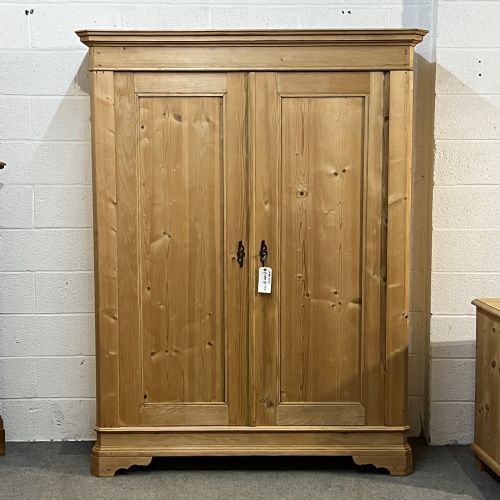
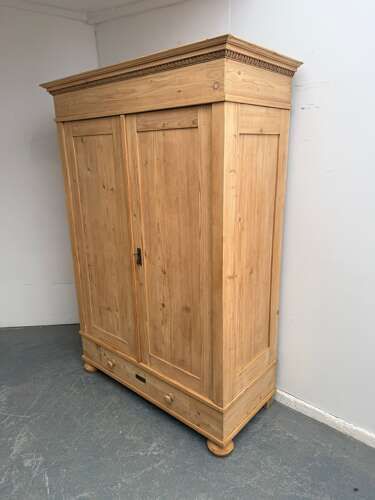
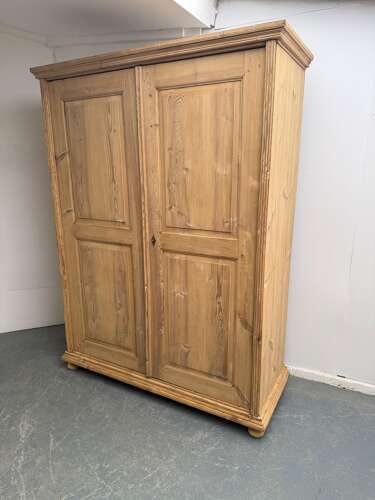
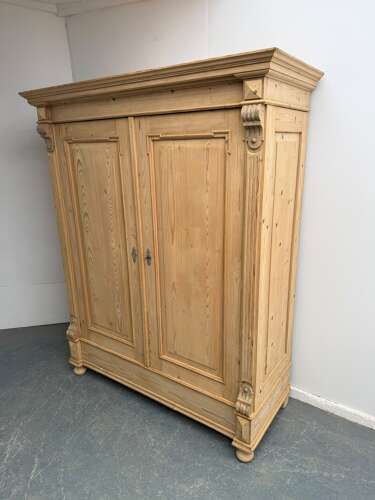
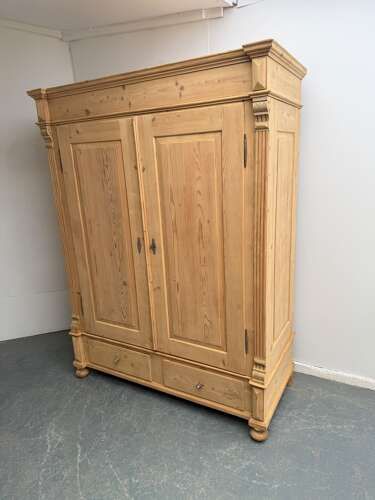
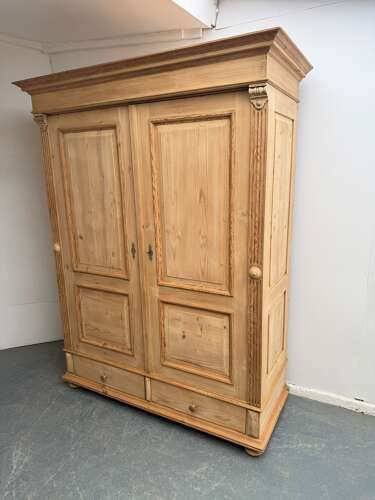
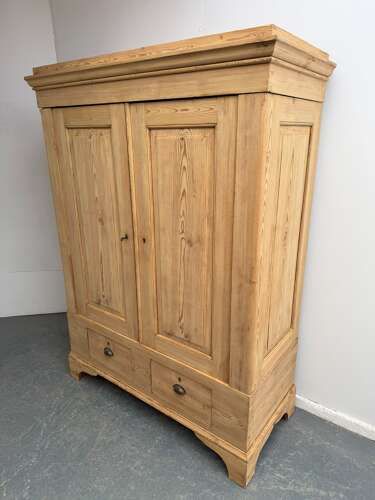
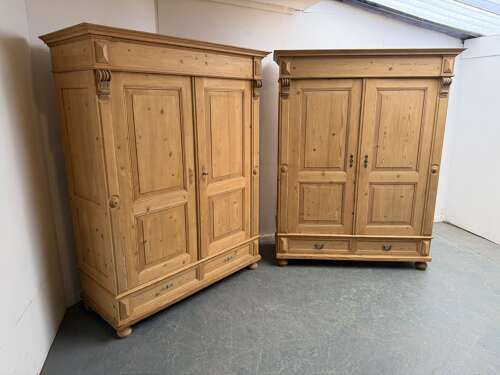
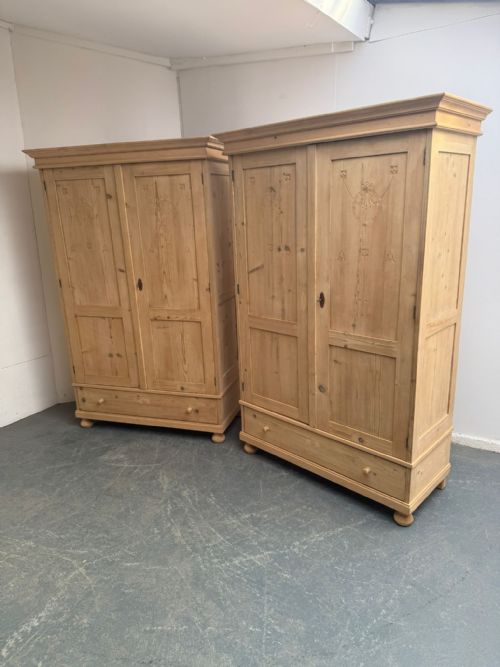
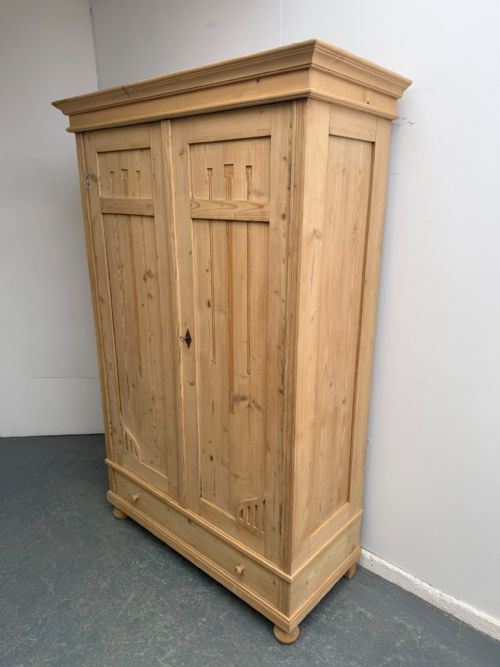
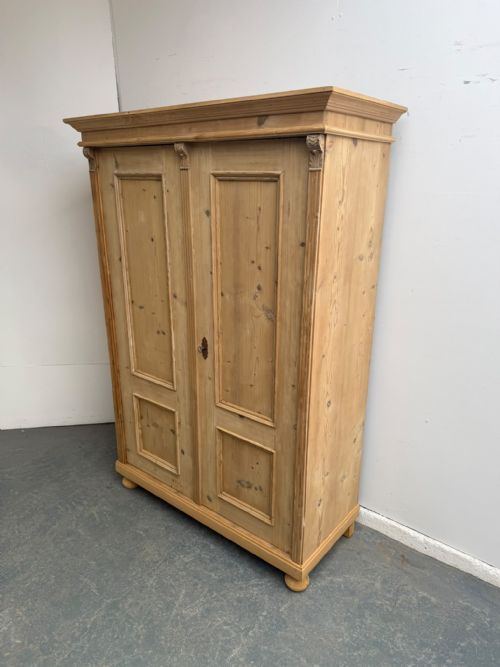
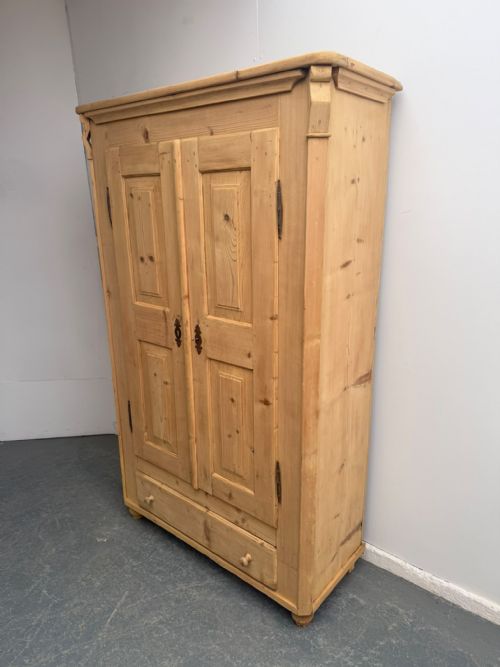

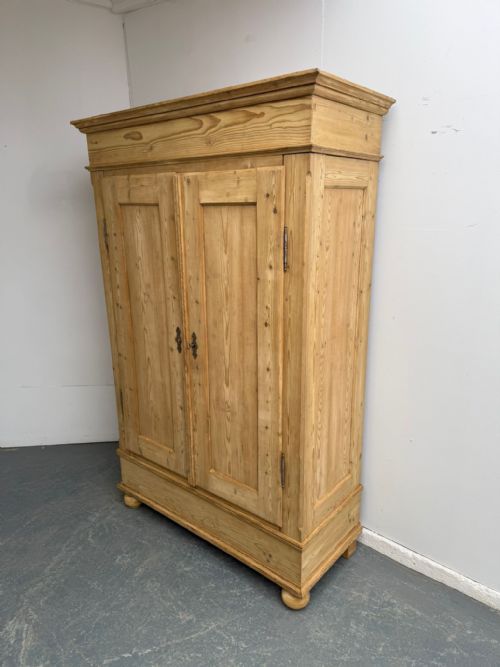


Stripped Pine Clothes Cupboard
A stripped pine clothes cupboard offers sturdy, honest storage with the warm grain and practical proportions collectors expect from period utility furniture.
Stripped Pine Clothes Cupboard
A stripped pine clothes cupboard is a substantial storage piece built to hold garments, appearing primarily across Victorian and Georgian eras alongside early twentieth-century examples. You will frequently encounter knockdown versions alongside single-piece and combination wardrobes featuring bottom drawers or mirrored doors.
These pieces range from tall, narrow hall cupboards to massive double-door wardrobes and low cottage formats. Regional styles include French Provincial and Arts & Crafts variations, demonstrating how domestic storage adapted to different domestic spaces.
Makers constructed these cupboards for everyday household use rather than formal display, resulting in utilitarian forms that suit modern interiors seeking practical timber storage. Their adaptable surfaces allow them to be finished with wax or paint depending on the interior scheme.
Materials and construction methods
Makers built these wardrobes predominantly using solid pine, supplemented by metal, iron, and brass for hinges, locks, and hanging hooks. Glass appears in specific pieces featuring mirrored doors, adding a functional reflective surface to the wardrobe front.
Many larger examples utilise a knockdown construction method, allowing the carcass to dismantle into manageable sections for transport and placement in smaller rooms. Joinery ranges from simple panelled doors to carved detailing and columned supports found in Arts & Crafts and Victorian designs.
Listings for stripped pine cupboards span the Georgian, Victorian, and Arts & Crafts periods, incorporating materials such as brass, iron, and glass.
Assessing quality and proportion
Quality rests heavily on the retention of original hardware, structural integrity, and the cleverness of the knockdown mechanism where present. Superior examples maintain balanced proportions, whether built as low cottage cupboards or tall narrow hall units.
The density and grain pattern of the pine timber itself dictates much of the visual weight, with well-chosen boards displaying consistent character after stripping. Better workshops incorporated thoughtful details such as bottom drawers, moulded cornices, or subtle carving without compromising the utilitarian purpose.
The Stripped Pine Clothes Cupboard Glossary
- Knockdown wardrobe
- A piece designed to be dismantled into flat sections using pegged or bolted joints for ease of transport. This construction allowed large furniture to be moved up narrow staircases in period homes.
- Combination wardrobe
- A storage unit that integrates hanging space alongside interior shelving or an external bottom drawer. This layout offered versatile domestic storage for both folded garments and hanging coats.
- Hall wardrobe
- A narrower or lower variant intended for entryways and smaller chambers rather than grand bedrooms. These pieces often accommodated coats and everyday outdoor apparel.
- French Provincial
- A regional style characterised by simpler rural craftsmanship and distinct proportioning adapted from continental traditions. Pieces in this style bring a lighter decorative touch to standard pine furniture.
Stripped Pine Clothes Cupboard: Frequently Asked Questions
How do I assemble a knockdown wardrobe?
Knockdown wardrobes utilise internal bolts, wedges, or slot-together joints designed to let the main panels separate for transport. Careful alignment of the panels ensures the structure squares correctly before tightening.
Securing the top cornice and base firmly anchors the side panels so the doors hang true and swing without binding against the frame.
What is the difference between Georgian and Victorian pine wardrobes?
Georgian examples tend to feature cleaner architectural lines, panelled doors, and lower cottage proportions suited to smaller rooms. They emphasise simple utility and straightforward timber construction.
Victorian pieces frequently introduce larger scales, mirrored glass doors, columned supports, and sophisticated knockdown mechanisms. They reflect an era of expanding domestic space and heavier bedroom furniture.
Can I paint a stripped pine cupboard?
Stripped pine surfaces accept paints readily, provided the timber is clean and free from residual wax or polish. Many period pieces were originally painted rather than left as bare wood.
Applying a primer suitable for softwood prevents resin bleed through topcoats and ensures an even, durable finish across panelled doors and mouldings.
How should I maintain a wax finish on pine?
Maintaining a waxed pine surface involves applying a quality beeswax paste periodically and buffing it with a soft cloth. This nourishes the dry timber and maintains a protective barrier against moisture.
Avoid placing these cupboards near direct heat sources or strong sunlight, which can dry out the pine and cause the joints or panels to shift.