


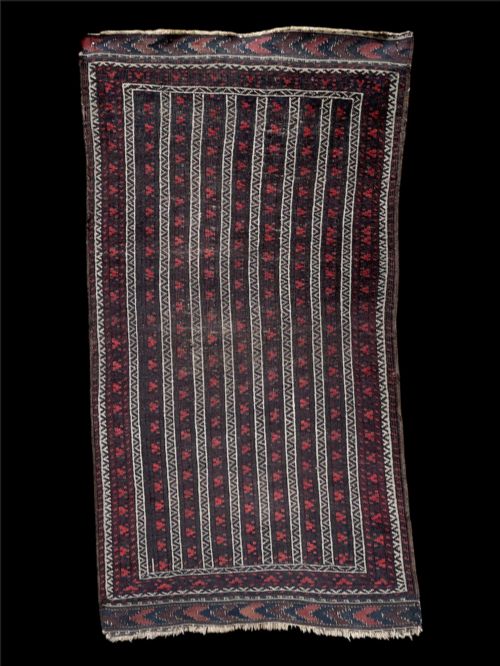


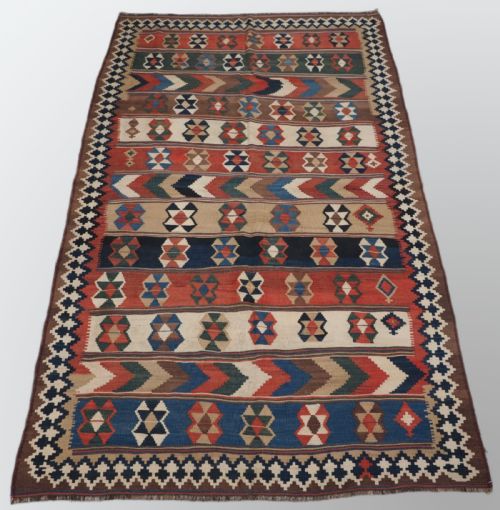
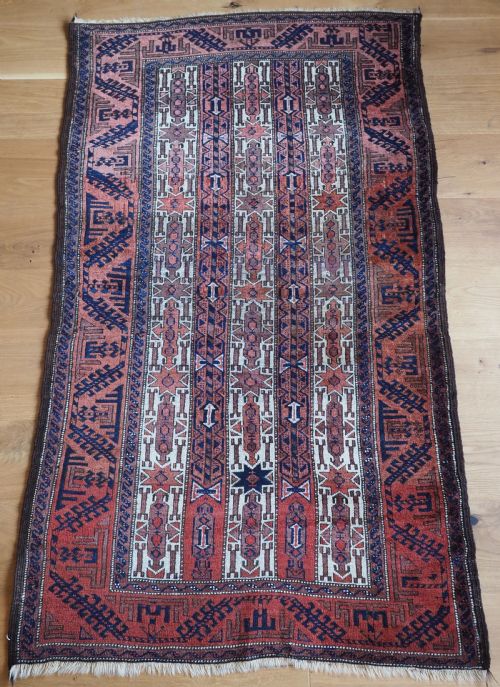


Striped Tribal Weaving
Striped tribal weaving brings together bold graphic lines and nomadic traditions, offering rich bands of pattern made for practical pastoral life.
Striped Tribal Weaving
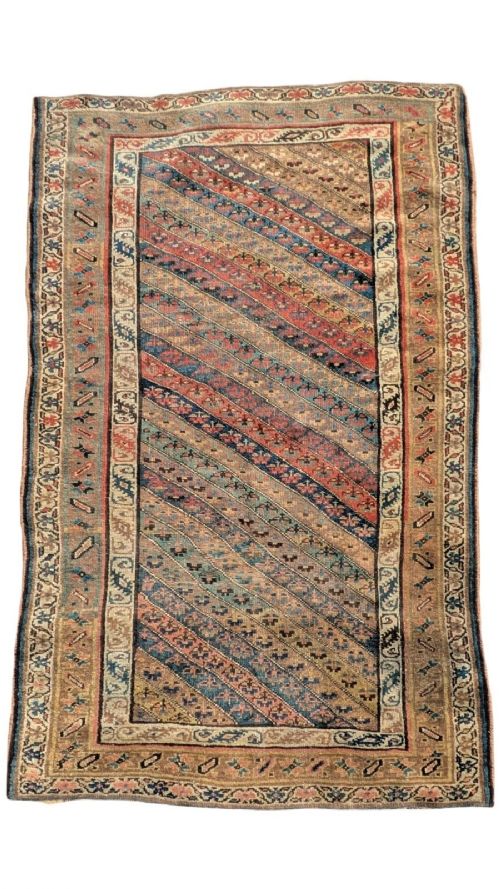
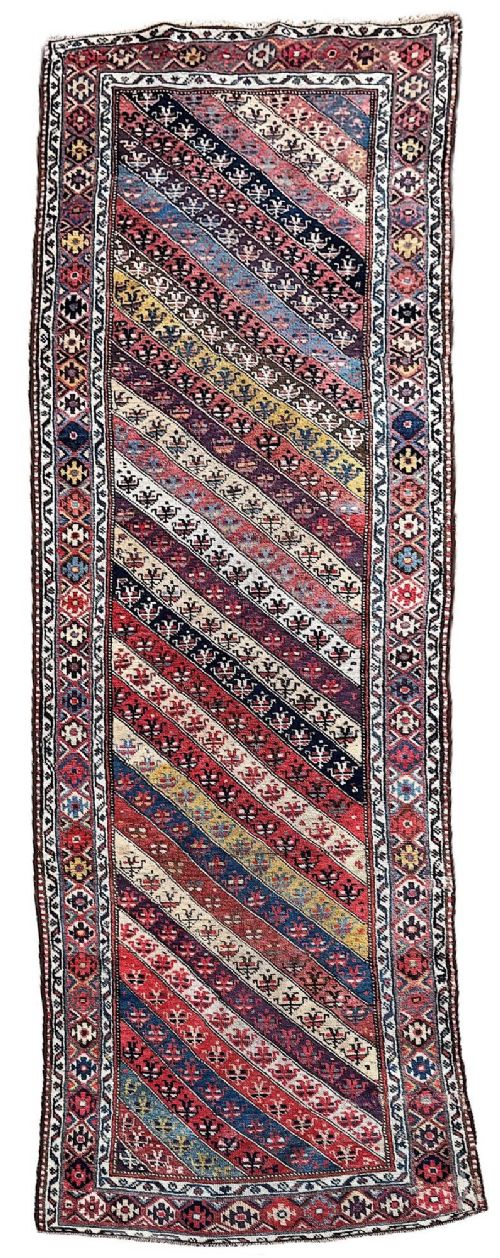
A buyer seeking striped tribal weaving encounters utility items made by nomadic and village groups across Persia, Central Asia, and the Caucasus. These textiles include flatweaves, runner rugs, horse covers, grain sacks, and storage bags originating from periods spanning the mid nineteenth century into the early twentieth century.
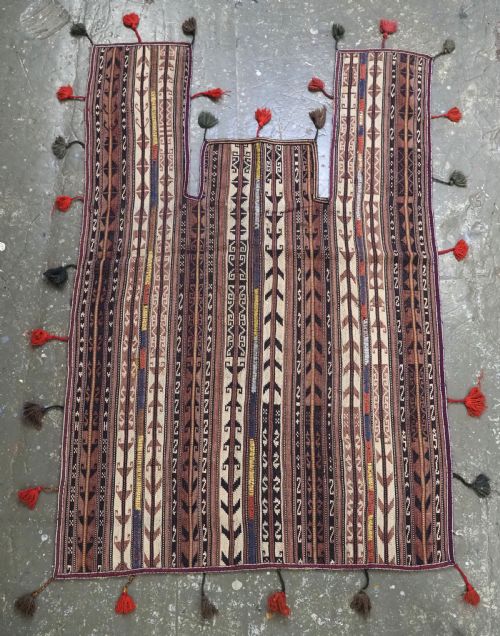
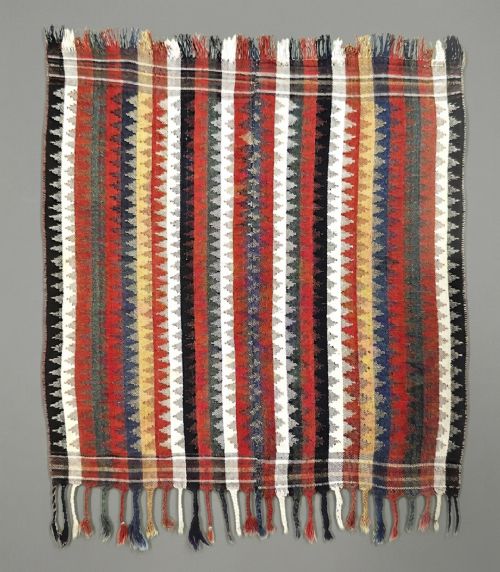
The most common formats on this page are banded kilims, flatwoven panels, and utilitarian containers such as wheat sacks and horse saddle bags. Pieces from Persian groups like the Qashqai, Bakhtiari, and Shahsavan, alongside Turkmen and Uzbek groups, dominate the selection.
Forms serve specific domestic or ceremonial functions within tribal life, ranging from floor spreads and dining kilims to wall hangings and animal trappings. Each piece reflects the particular weaving vocabulary of its region, translated into linear bands and geometric stripes.
Materials and construction
Weavers relied principally on wool, hand-spun wool, cotton, and occasionally silk or goat hair, working with natural dyes to create distinct chromatic contrasts. Wooden looms supported the creation of flatweaves, pile rugs, and composite structures like cicim weave.
Techniques varied from simple slit-tapestry flatweaving to intricate banded layouts and supplementary weft float work. Materials were gathered locally, yielding robust fabrics designed to withstand heavy daily use in tents and domestic settings.
Striped Tribal Weaving Retail Price Guide 2026
Typical asking prices for striped tribal weaving among the pieces listed under this phrase on Sellingantiques today, from the lower quarter to the upper quarter. They describe what is for sale here now, not the wider market.
Dated examples span from eighteen-fifty through nineteen-twenty, representing Persian, Caucasian, and Central Asian tribal traditions.
Factors that separate examples
Quality rests upon the fineness of the weave, the clarity and saturation of the natural dyes, and the integrity of the original structure. Tightly packed foundations and balanced proportions distinguish finer output from heavier utility work.
Survival of complete sets, original backs, and untouched edges elevates an example. The crispness of the graphic stripe layout and the complexity of the secondary borders also determine the standing of an individual piece within its type.
The Striped Tribal Weaving Glossary
- Kilim
- A flatwoven carpet or textile produced without pile by tightly interwining warp and weft strands.
- Sofreh
- A tribal dining kilim or spread used for preparing and serving bread or meals.
- Mafrash
- A large rectangular storage bag or chest face used for bedding and household goods in nomadic camps.
- Jajim
- A strong, decorative flatweave textile traditionally utilised as a floor spread, cover, or wall hanging.
- Cicim
- A supplementary weft-float technique that adds raised geometric patterns to the surface of a flatweave.
Striped Tribal Weaving: Frequently Asked Questions
What were these striped textiles used for?
Nomadic groups utilised these woven pieces for practical storage, animal trappings, bedding, and floor coverings inside tents. Grain sacks held provisions, while horse blankets served ceremonial or transport functions.
Larger flatweaves acted as dining spreads or general domestic coverings. Every item was constructed to endure the demands of a mobile pastoral lifestyle.
How do I care for a flatweave rug?
Gentle vacuuming without a rotating brush helps remove dust from the weave. Professional textile cleaning is advised when necessary.
Keeping pieces away from direct sunlight protects natural dyes from fading. Rotating the textile occasionally ensures even wear in high-traffic spots.
How can I tell different tribal groups apart?
Weaving structures, palette choices, and distinct band arrangements point to specific regions and tribes. Persian groups often employed varied wool preparations and specific grain sack formats.
Turkmen and Uzbek makers utilised characteristic geometric layouts and specialised face panels. Comparing motifs against known regional corpora clarifies origin.
Are these pieces made with natural dyes?
The period pieces on this page predate modern synthetic colourants, relying instead on traditional plant and mineral sources. These organic dyes produce rich, harmonious tones that age gracefully.
Subtle tonal variations within a single stripe often indicate batch differences in the dye vats. Such qualities signal authentic traditional production.