

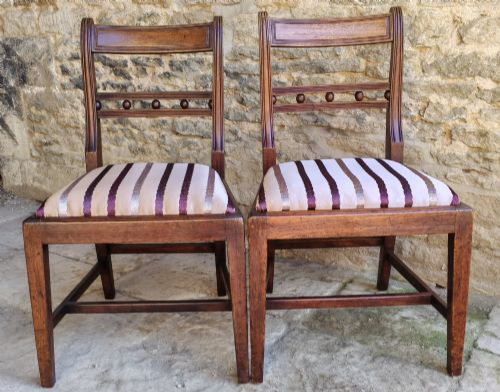
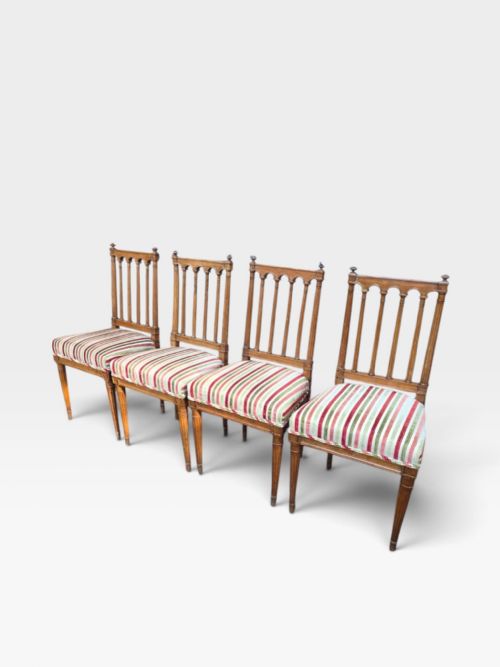
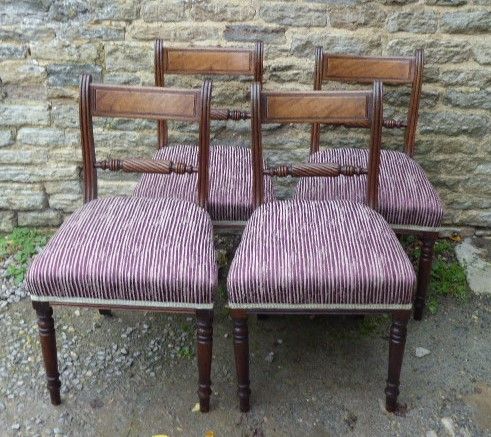
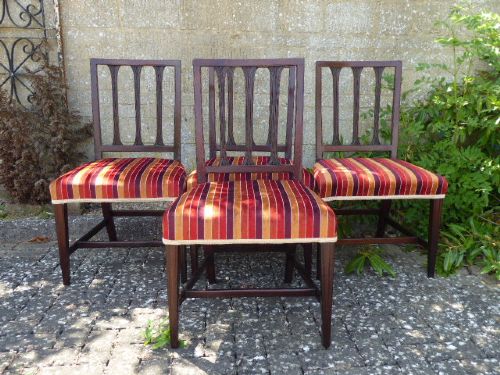
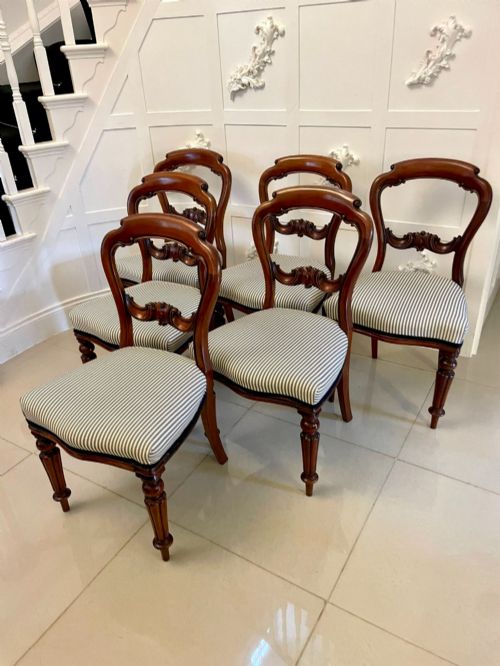
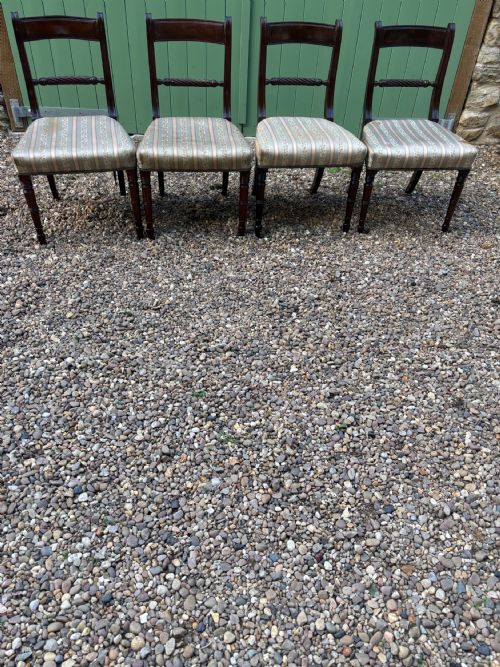
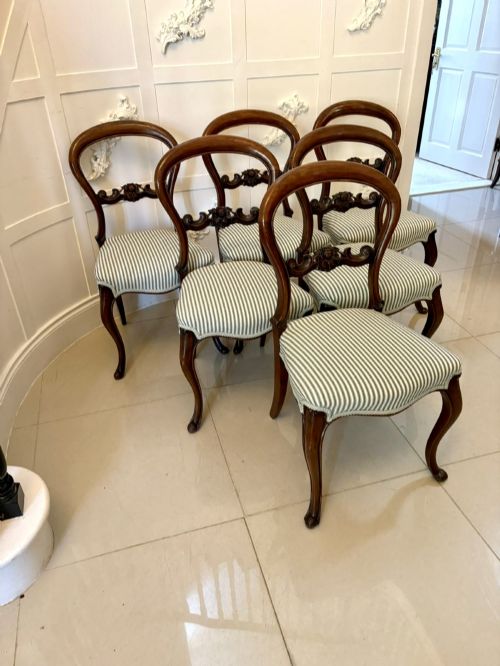
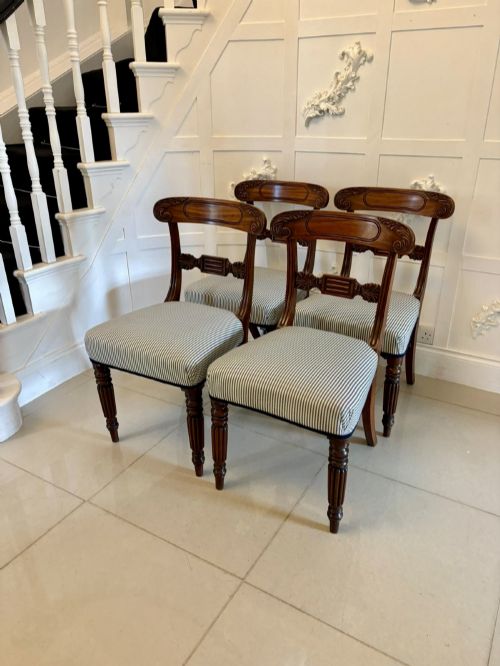
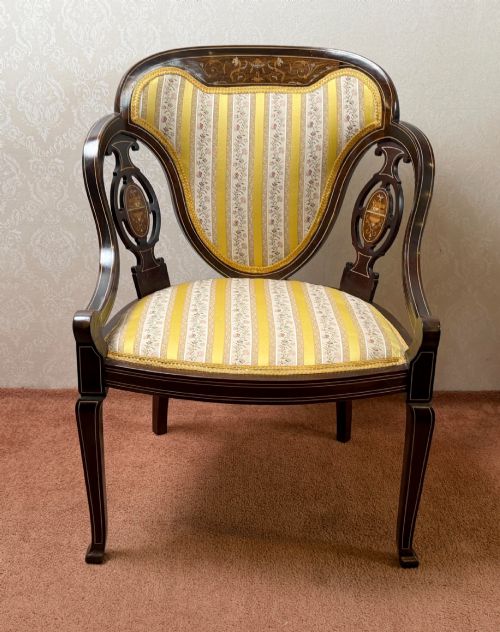
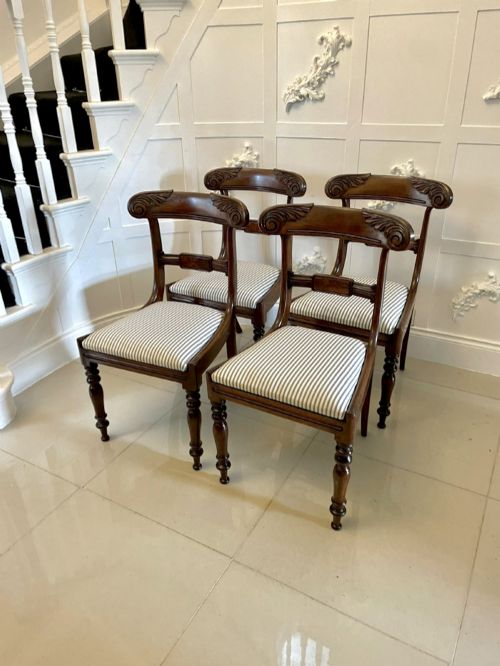
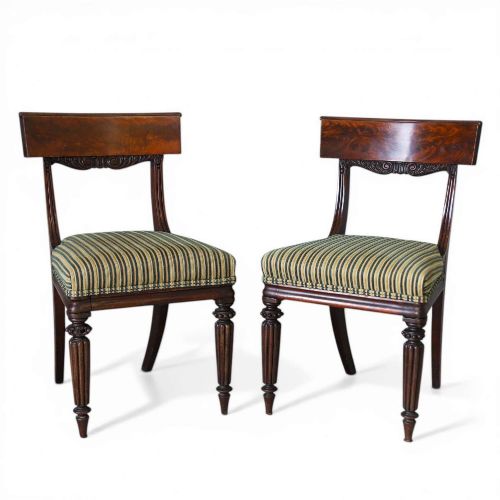
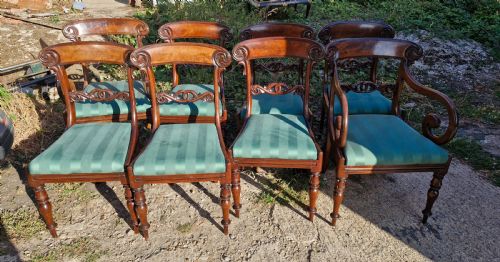
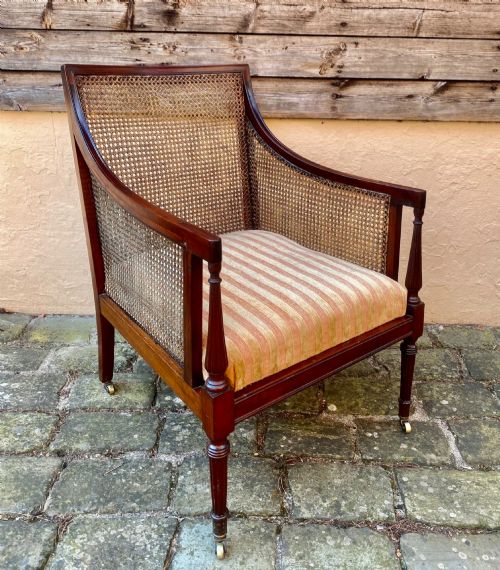
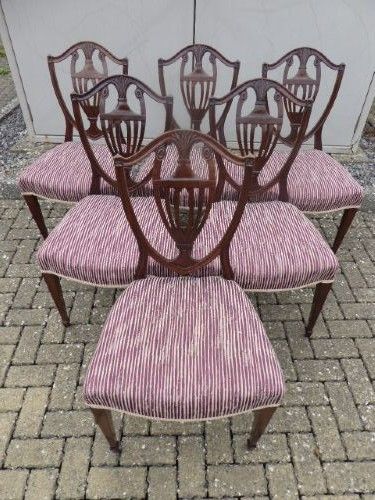
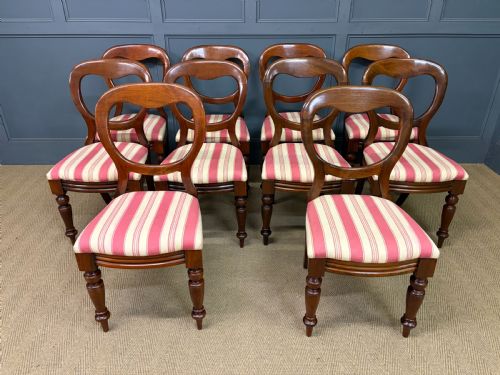

Striped Mahogany Side Chairs
Striped mahogany side chairs bring linear pattern and solid timber warmth to a room, offering sturdy seating with distinct period character.
Striped Mahogany Side Chairs
When searching for striped mahogany side chairs, buyers encounter dining chairs, salon chairs, and bedroom chairs spanning the Georgian, Regency, William IV, Victorian, and Edwardian periods. These pieces range from restrained eighteenth-century forms to ornate nineteenth-century balloon back designs and early twentieth-century revival pieces.
The most common examples on this page are dining chairs and side chairs executed in mahogany, often appearing in sets of four, six, or eight. Upholstery varies from contemporary coastal stripe fabrics to traditional velvet and silk satinwood accents.
Makers and workshops across the eighteenth and nineteenth centuries produced these seats with various decorative motifs, including string inlay, rope backs, and heavy carving. The overarching form remains an upright timber frame designed for formal rooms and parlour use.
Assessing quality in timber and upholstery
Quality in striped mahogany side chairs depends on the depth of the carving and the crispness of the timber joinery. Finer examples display meticulous attention to detail in the wood grain and structural joints.
The integration of the upholstery fabric with the timber frame separates standard production from superior craftsmanship. Balance in proportion and restrained ornamentation denote a higher grade of manufacture.
Striped Mahogany Side Chairs Retail Price Guide 2026
Typical asking prices for striped mahogany side chairs among the pieces listed under this phrase on Sellingantiques today, from the lower quarter to the upper quarter. They describe what is for sale here now, not the wider market.
Listings feature mahogany, brass, velvet, and satinwood across periods from Georgian to Edwardian.
The Striped Mahogany Side Chairs Glossary
- Mahogany
- A dense, reddish-brown tropical hardwood prized for its stability and rich grain. It serves as the primary structural timber for these chairs.
- Balloon back
- An oval-shaped chair back resembling a round balloon, popular during the Victorian era. This curved design provides ergonomic support.
- String inlay
- A narrow line of contrasting light wood inlaid into the darker mahogany surface. It defines edges and panels on Edwardian and Georgian pieces.
- Regency stripe
- A vertical striped pattern used on upholstery fabrics, historically favoured during the Regency period. It elongates the visual proportions of the seat.
- Acanthus
- A carved leaf ornament modelled on the Mediterranean plant of the same name. Cabinet makers applied this motif to knees and crest rails.
Striped Mahogany Side Chairs: Frequently Asked Questions
Are these chairs suitable for daily dining use?
Most striped mahogany side chairs were originally built for dining rooms and retain sturdy timber construction suitable for regular seating. Ensuring the joints and upholstery webbing remain secure will protect the antique structure during everyday meals.
Pairs and larger sets offer matching seating options around a table, though individual salon chairs function better as occasional seats in a hallway or bedroom.
How do I date a mahogany chair?
Dating relies on stylistic shifts such as the transition from geometric Georgian lines to curved Victorian balloon backs and Edwardian inlay work. Examining the timber finish, joinery methods, and upholstery style helps narrow the decade of manufacture.
Later revival pieces often combine historical motifs, making close inspection of the wood patina and construction marks essential for accurate dating.
Can I mix different sets of chairs?
Mixing striped mahogany side chairs works well if the timber tones and chair heights share a similar proportion. Pairing armchairs at the table heads with matching side chairs creates a balanced arrangement.
Matching wood grains and upholstery styles provides visual continuity even when sets originate from different decades within the nineteenth century.
What maintenance do mahogany frames require?
Mahogany frames need minimal care, generally limited to occasional dusting with a dry cloth and feeding the timber with a quality wax. Avoiding direct sunlight prevents the reddish-brown wood from fading over time.
Upholstery requires gentle vacuuming and prompt attention to spills to preserve fabric integrity, particularly on antique velvet or woven stripe surfaces.