
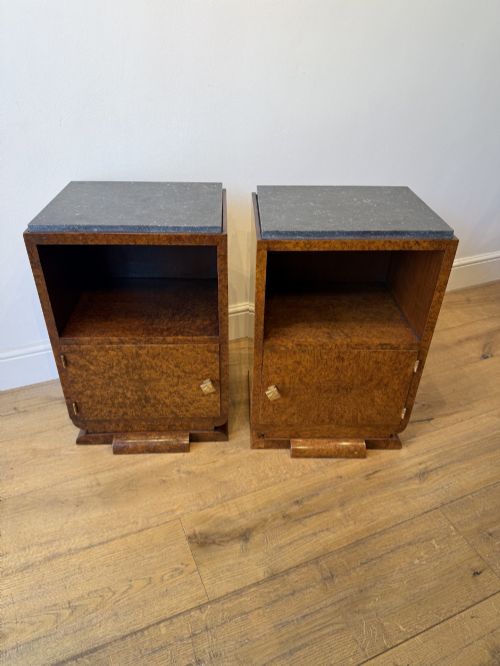

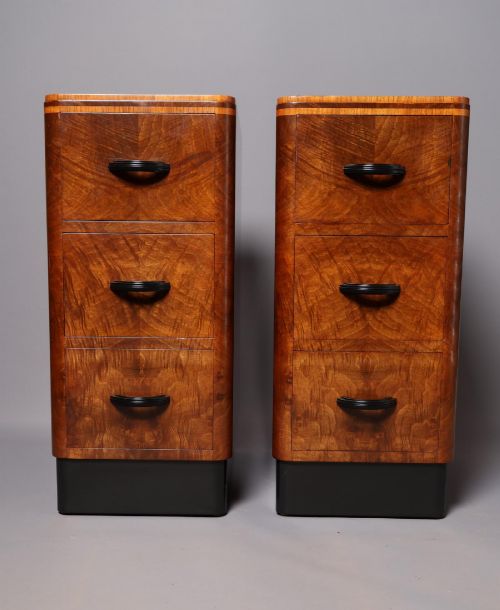


Streamlined Deco Nightstand
These streamlined deco nightstand pieces bring genuine period character to a bedroom.
Streamlined Deco Nightstand
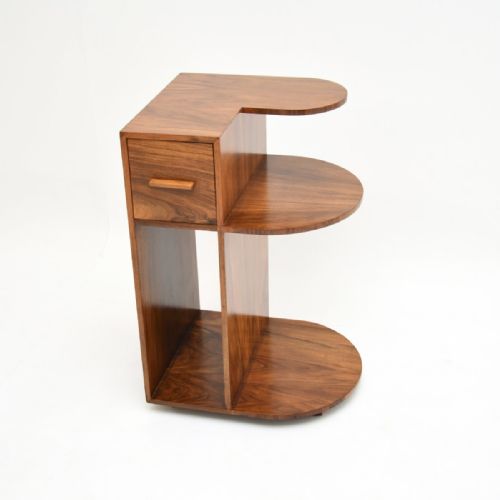
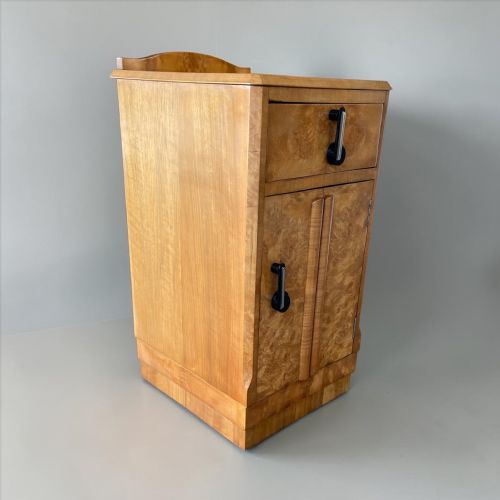
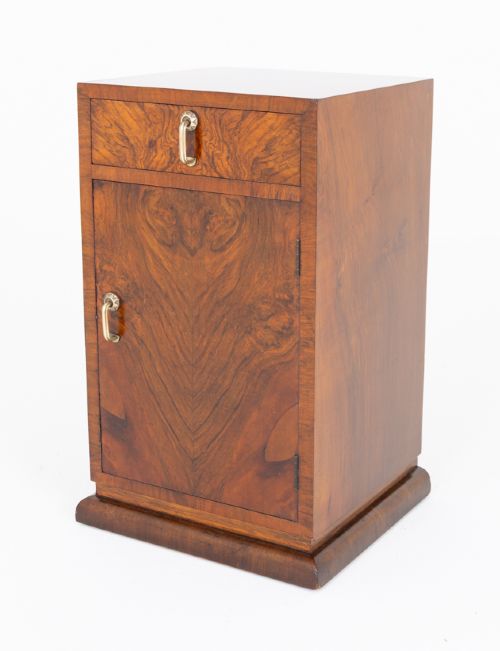
A streamlined deco nightstand is typically encountered as a bedside table or cabinet dating from the 1920s to the 1940s, embodying the sleek geometry of the Art Deco and Art Deco Modernist styles. These compact items serve as functional storage beside a bed while establishing a distinct period aesthetic.
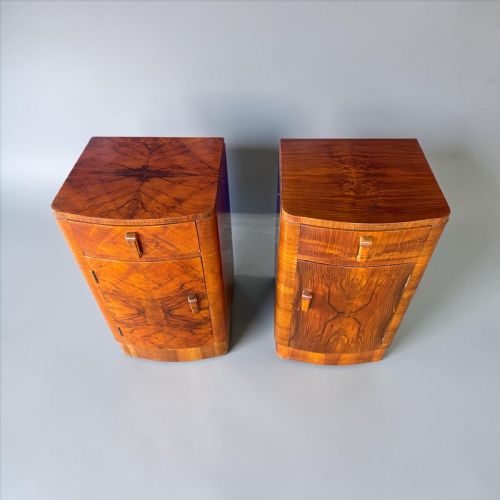
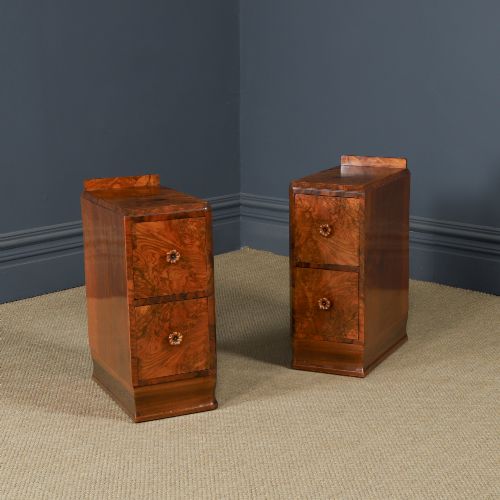
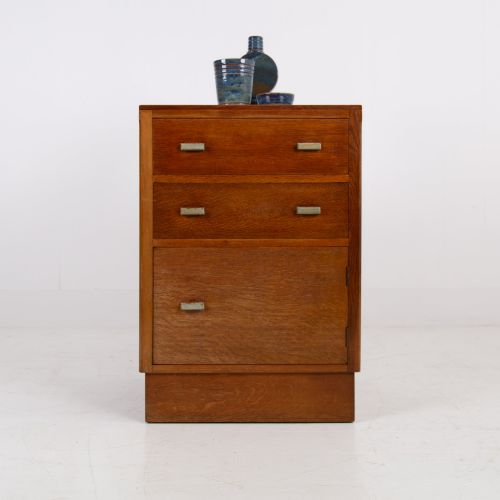
The selections available range from single occasional side tables to matched pairs of bedside chests featuring multiple drawers or enclosed cupboards. Most examples adhere to the 1930s aesthetic, constructed in forms that prioritise clean lines and practical bedside utility.
How they were made
Cabinet makers utilised solid woods paired with decorative veneers such as walnut, burr walnut, birdseye maple, satinwood, rosewood, and burr elm to create striking surface patterns. These timber layers were applied to underlying structures to showcase the natural grain of the wood.
Metal accents, including brass fittings and occasionally bakelite, were incorporated to complement the polished wooden surfaces and structural frames. Certain models also featured functional elements like casters for mobility.
Current listings feature items spanning the 1920s to the 1940s, constructed from walnut, burr walnut, satinwood, and birdseye maple.
What varies in quality
The choice of surface timber dictates much of the visual distinction, with highly figured veneers like burr walnut and birdseye maple sitting at the more decorative end of the scale compared to plain oak or mahogany. Matching grain patterns across pairs of cabinets also indicate greater care during original construction.
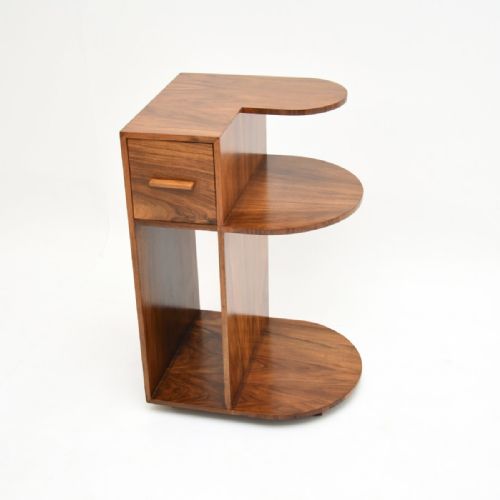
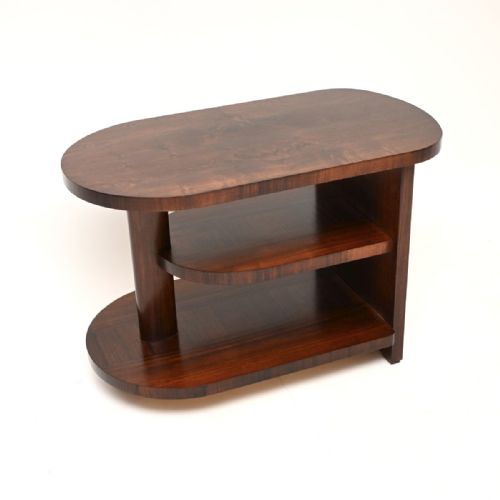
Structural complexity influences the character of each piece, distinguishing simple single-tier side tables from elaborate two-tier designs on casters or multi-drawer bedside cabinets fitted with custom hardware.
Gomme·Betty Joel
The Streamlined Deco Nightstand Glossary
- Art Deco
- A design style spanning the 1920s and 1930s characterised by streamlined geometric forms and modern materials. It replaced more ornate historical revivals with clean, functional elegance.
- Veneer
- A thin layer of decorative wood applied over a sturdier base timber to create striking visual patterns. Figured varieties like burr walnut were especially favoured for cabinet fronts.
- Casters
- Small wheel attachments fitted to the base of furniture to allow easy movement across the floor. They appear on select multi-tier occasional tables from the period.
- Bakelite
- An early form of synthetic plastic utilised for decorative details and hardware during the period. Its glossy finish suited the modern aesthetic of the 1930s.
Streamlined Deco Nightstand: Frequently Asked Questions
What periods do these nightstands date from?
The listings span the 1920s, 1930s, and 1940s, with the vast majority originating in the 1930s.
This era produced the quintessential Art Deco and Modernist characteristics seen across the bedside tables and cabinets.
Are pairs commonly available?
Many of the bedside tables and cabinets on offer come as matching pairs, which suits symmetrical bedroom layouts.
Single side tables and occasional stands also appear frequently in the selection.
What woods are most common?
Walnut and burr walnut dominate the selection, frequently accompanied by birdseye maple, satinwood, and mahogany.
More unusual timbers like burr elm and rosewood also feature in specific pieces.
How do cabinets differ from tables?
Cabinets typically provide enclosed storage space behind doors or feature built-in drawers for bedside essentials.
Tables offer open surfaces, sometimes with multiple tiers or lower shelves rather than enclosed compartments.