


Curved Walnut Nightstands
Curved walnut nightstands bring rich timber grain and sweeping geometric lines to the bedside.
Curved Walnut Nightstands
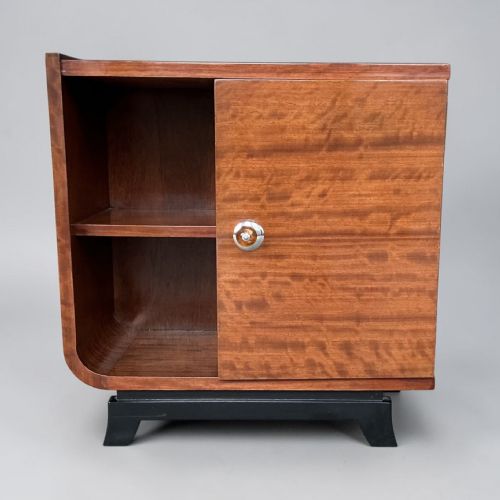
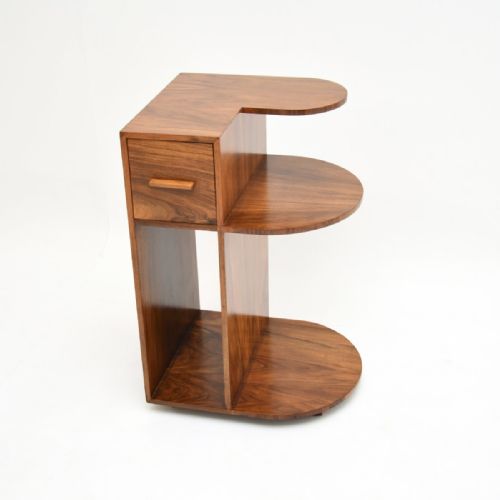
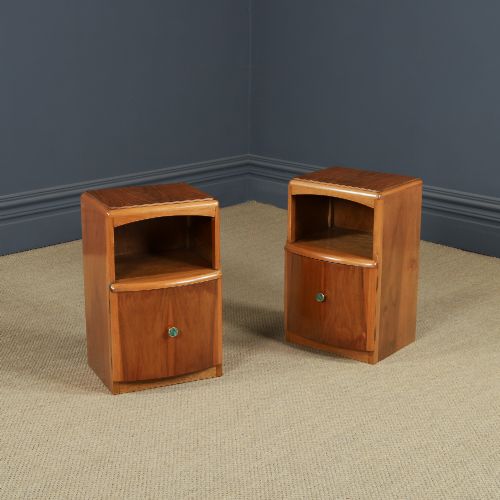
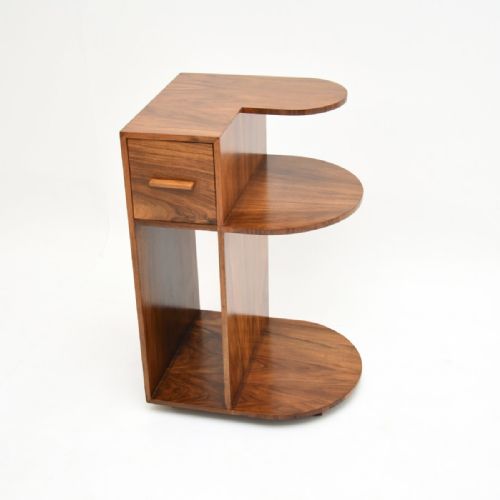
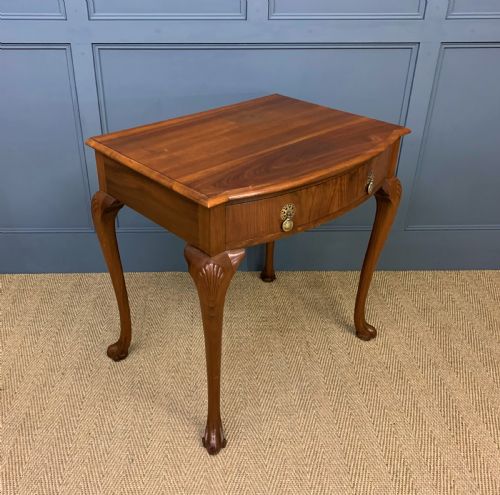
Curved walnut nightstands encompass bedside tables, side cabinets, and drum-shaped units built primarily during the Art Deco period around 1930. Buyers find pairs featuring open storage areas and enclosed cupboards alongside Italian marble-topped variants.
The selection ranges from English workshop productions to continental European designs, frequently appearing alongside matching headboards and larger bedroom suites.
How they were made
Cabinet makers utilised solid timber alongside figured walnut and burr walnut veneers to achieve striking grain patterns across curved surfaces. Ebonised wood, chrome, and bakelite elements frequently provide contrast and structural detail.
Construction techniques include steam-bending and complex laminating to form the signature rounded profiles seen on drum shapes and side cabinets.
Some nineteenth-century Italian makers decided that straight bedside tables lacked sufficient drama and promptly introduced the world to marble-topped bombe curves.
What varies in quality
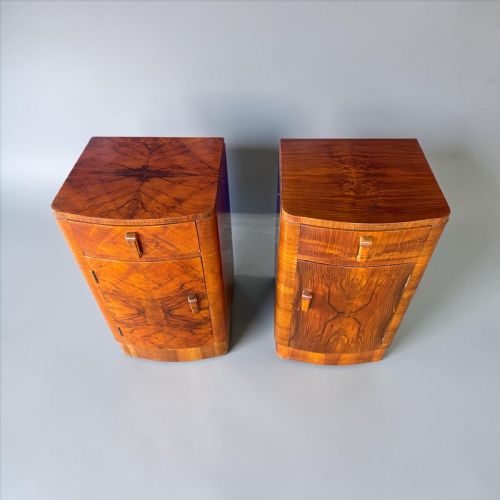
The refinement of the veneer selection largely dictates the visual merit, with highly figured and burr walnut commanding greater presence than plain timber surfaces. Matching grain patterns across symmetrical pairs indicate superior cabinet making.
The integrity of the curved wooden structures and the precision of integrated hardware, such as chrome fittings, separate standard production pieces from finer studio output.
Maurice Adams
The Curved Walnut Nightstands Glossary
- Burr walnut
- A prized veneer taken from the wart-like growth on a walnut tree, yielding swirling and intricate patterns. It adds distinct visual texture to curved surfaces.
- Veneer
- A thin slice of superior wood applied over a secondary timber base to create decorative surfaces without excessive weight. This technique allows for continuous grain flow around tight curves.
- Art Deco
- A design style dominant in the 1930s characterised by sleek geometric shapes, streamlined forms, and modern materials. It defines the majority of these bedside pieces.
- Bombe
- A swollen or bulging convex shape associated with continental furniture styles. It creates dramatic curvature on cabinet fronts and bedside units.
Curved Walnut Nightstands: Frequently Asked Questions
What periods do curved walnut nightstands come from?
These pieces predominantly date from the Art Deco era around nineteen thirty, though related side tables appear from nineteen ten and earlier Italian periods.
Buyers encounter various European origins reflecting distinct regional cabinet-making traditions.
Are these nightstands usually sold in pairs?
Many listings feature matching pairs designed to sit symmetrically on either side of a bed. Single side tables and cabinets also appear frequently.
Matching sets often include integrated headboards or larger bedroom furniture groupings.
What materials feature on these nightstands?
Construction relies heavily on walnut, walnut veneer, and burr walnut for rich surface patterning. Secondary materials include ebonised wood, chrome trim, and bakelite details.
Some continental variations incorporate marble tops above the wooden storage compartments.
How do drum-shaped nightstands differ from standard cabinets?
Drum-shaped variants offer circular storage with curved doors that follow the round profile. Standard bedside cabinets typically utilise rectangular or gently curved rectilinear footprints.
Both forms provide enclosed cupboard space alongside open storage areas.