








Stream Painting Art
Stream painting art captures water flowing through pastoral landscapes and rugged valleys, offering a quiet window into the natural world.
Stream Painting Art
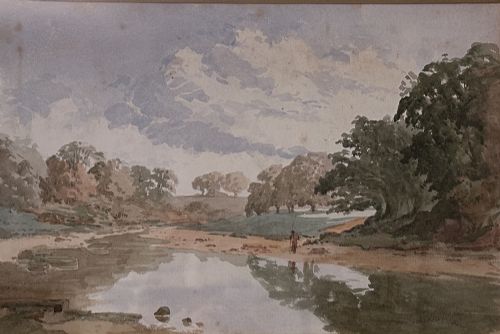
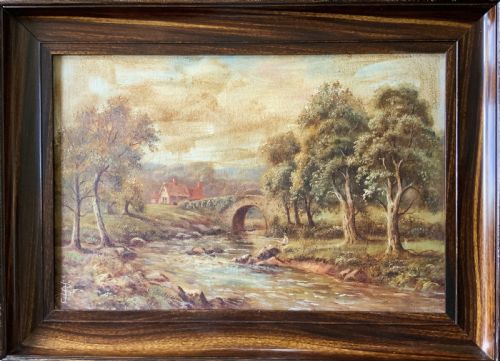
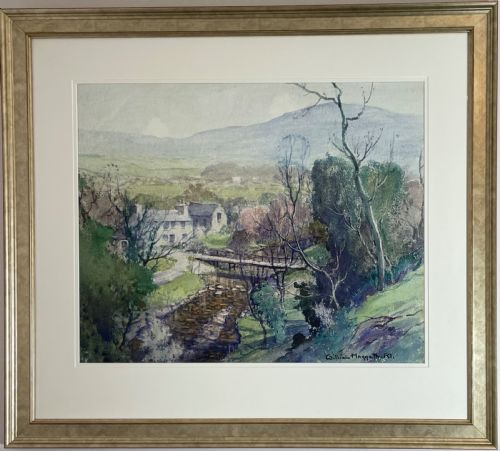
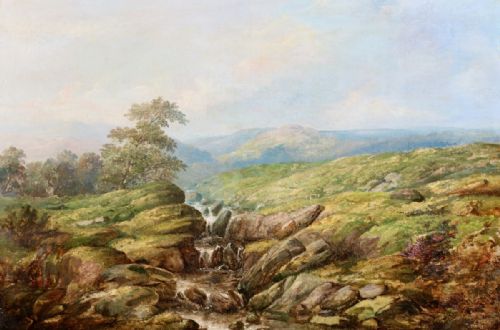
Stream painting art encompasses framed works depicting rivers, mountain streams, and rural waterways set within countryside or pastoral scenes. When searching for stream painting art, collectors encounter representations spanning the nineteenth century through the mid twentieth century. These works frequently record specific British, Scottish, and Irish locations, ranging from Devonshire and Yorkshire to the Isle of Man and the Lake District.
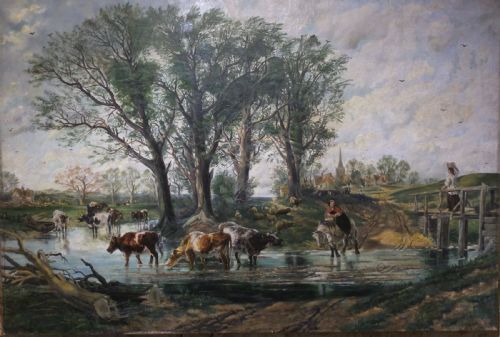
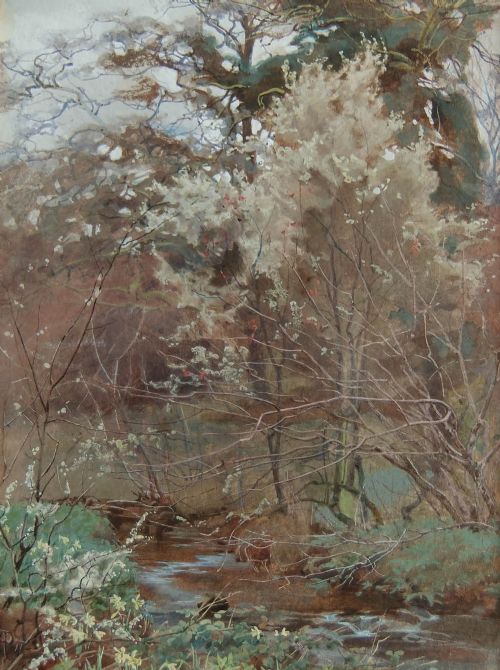
The prevailing examples on this page are oil paintings on canvas or wood panel and watercolour paintings on paper. Many compositions feature cattle or figures near the water, reflecting Victorian romanticism, British impressionism, and early twentieth century traditions. Both intimate watercolours and large landscape paintings appear across the selection.
The chronological scope reaches from the Victorian and Edwardian eras into post war twentieth century production. Painters of these periods often worked <i>en plein air</i> or developed their sketches in studios to capture changing light upon running water. Each piece documents a specific topographical view or an idealized rural idyll.
How these artworks were constructed
Artists relied primarily upon oil paint applied to canvas or wood panel, or watercolour pigment brushed onto paper. Oil mediums allowed for textured impasto and rich colour blending, particularly suited to depicting the reflection of sunlight on water or the dark tones of woodland areas at sunset. Watercolours offered transparency and fluidity, capturing the swift movement of a mountain stream or the soft atmosphere of a misty morning.
Supports were typically framed in giltwood and gesso frames that complemented the tonal qualities of the imagery. Canvases were stretched over wooden frames, whilst watercolours were mounted behind glass to protect the delicate pigment on paper. Signed works demonstrate the finished intent of the painter, often accompanied by dated inscriptions pointing to specific years of execution.
Stream Painting Art Retail Price Guide 2026
Typical asking prices for stream painting art among the pieces listed under this phrase on Sellingantiques today, from the lower quarter to the upper quarter. They describe what is for sale here now, not the wider market.
Listings feature works spanning the nineteenth century through the nineteen sixties, executed in oil and watercolour on canvas, paper, wood, and gesso.
What distinguishes the quality of these works
Quality rests upon the artist's ability to render the movement and reflection of water whilst maintaining atmospheric perspective in the surrounding landscape. Skilled brushwork distinguishes a lively study of light on a stream from a rigid or formulaic topographical record. The handling of the sky, foliage, and incidental details such as cattle or figures reveals the painter's technical control.
The preservation of the pigment and the integrity of the original canvas, paper, and wooden panel contribute significantly to a work's standing. Intact historical frames, particularly original giltwood and gesso examples, preserve the presentation intended by the maker. Works bearing clear signatures and documented exhibition histories or provenance hold particular interest for collectors.
Sydney Yates Johnson·John Grenville Fennell·Ernest Higgins Rigg·William Hoggatt·Robert Watson·David Watts·Sidney James Beer·Harry Sylvester Stannard·John Hobson Nicholson·Alfred W. Parsons·Alfred Banner·Noel Harry Leaver·Frederick Richard Lee·William Sidney Cooper·Robert Lesley Howey·Owen Bowen·George F. Wetherbee·Henry John Sylvester Stannard·Benjamin Callow·Yeend King·William Greaves·Thomas Creswick·John Pedder·Clarence Roe
The Stream Painting Art Glossary
- Oil Paint
- A slow drying medium consisting of pigments suspended in a drying oil, typically linseed oil. This medium allows artists to build rich textures and deep tones.
- Watercolour Pigment
- Finely ground colour particles mixed with a water soluble binder, applied in washes to paper. It creates luminous and translucent effects.
- Giltwood
- Wood carved and coated with a thin layer of gold leaf or metallic powder. It is commonly found on traditional picture frames from the nineteenth and early twentieth centuries.
- Gesso
- A paint mixture consisting of a binder mixed with chalk, gypsum, or pigment. It was applied to wood panels or frame mouldings to create a smooth surface for gilding or painting.
- Wood Panel
- A flat wooden board utilised as a rigid support for oil paintings before stretched canvas became standard. Panels offer a stable surface that preserves fine brushwork.
Stream Painting Art: Frequently Asked Questions
What subjects appear in stream painting art?
These artworks depict rural rivers, mountain streams, and pastoral waterways, often accompanied by cattle, fishermen, or thatched cottages. The scenes capture specific British and Irish localities alongside generalized countryside idylls.
Many compositions focus on the play of light across running water, framed by autumn foliage, woodland areas, or high moorland terrain.
How do oil and watercolour stream paintings differ?
Oil paintings utilise heavy pigment on canvas or wood panel, offering rich textures and deep tonal contrasts. Watercolours employ translucent pigments on paper, capturing fluid light and atmosphere.
Oils are typically displayed directly in glazed or open frames, whereas watercolours require glass protection to preserve the paper and pigment from environmental damage.
Which periods produced these stream paintings?
The works originate largely from the nineteenth century, the Victorian and Edwardian eras, and the early decades of the twentieth century. Traditional pastoral and romantic approaches dominate the earlier decades.
Later pieces extend into the post war period, demonstrating evolving British landscape traditions while retaining the central focus on natural waterways.
How should these framed paintings be displayed?
Display the artworks away from direct sunlight and damp environments to protect canvas, wood panels, and watercolours on paper. Stable indoor temperatures prevent warping in wooden frames and panels.
Ensure hanging hardware is secure, particularly for heavy giltwood frames or large oil paintings on canvas.