



Stormy Sea Marine Art
Stormy sea marine art captures the immense power of turbulent waters through historical oil paintings and delicate watercolours.
Stormy Sea Marine Art
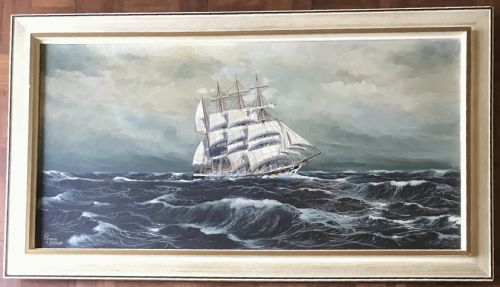
Stormy sea marine art encompasses historical paintings depicting ships in distress, heavy gales, and dramatic coastal waters. These works span from seventeenth-century Dutch scenes to later Victorian maritime pieces and early twentieth-century coastal watercolours.
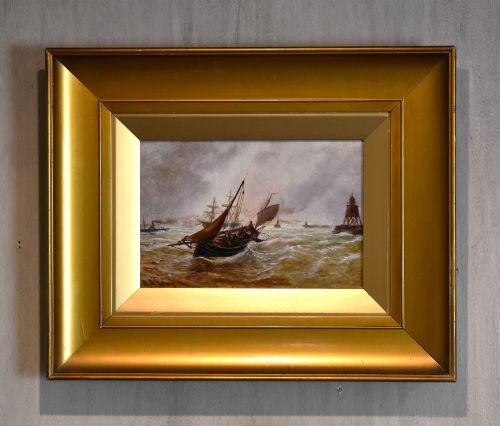
A buyer examining this selection will frequently encounter oil paintings on canvas or board alongside paper works in watercolour and charcoal. Subjects range from British merchant ships off rough coasts to solitary lighthouses against choppy seas.
How they were made
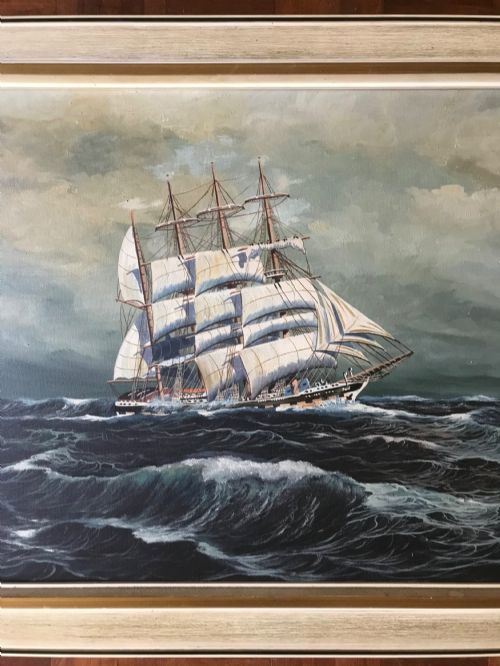
Artists captured turbulent water through layered oil paint on canvas or board, building texture in the whitecaps and deep shadows in the troughs. Watercolour pigment and charcoal on paper allowed for rapid, atmospheric studies of sudden squalls and changing light.
Many of these works retain their original giltwood or wooden frames, which protect the edges of the canvas and complement the deep tones of the maritime scene.
Stormy Sea Marine Art Retail Price Guide 2026
Typical asking prices for stormy sea marine art among the pieces listed under this phrase on Sellingantiques today, from the lower quarter to the upper quarter. They describe what is for sale here now, not the wider market.
Materials represented across these maritime works include oil paint, watercolour pigment, charcoal, canvas, cardboard, and giltwood.
What varies in quality
The distinction between ordinary and exceptional works rests upon the artist's command of movement and atmospheric tension. Stronger pieces convey the sheer weight of a gale and the precise rigging of a vessel caught in heavy weather, rather than merely rendering water as flat pigment.
Handling of light through storm clouds and the stability of the support material also set individual paintings apart. Works that preserve subtle tonal shifts in a turbulent sky hold greater visual presence than uniform washes.
John Rose Miles·Bonaventura Peeters·Bernard Benedict Hemy·Percy Brooke·William Kay Blacklock·William Boyce
The Stormy Sea Marine Art Glossary
- Oil on Canvas
- A traditional painting medium where oil paint is applied to a woven fabric stretched across a wooden frame. This surface allows for rich impasto and deep tonal layering.
- Giltwood
- Wood that has been coated with a thin layer of gold leaf or gilt. It provides a bright, reflective border to historical paintings.
- Watercolour Pigment
- Colour ground with a water-soluble binder, applied to paper to create translucent washes. It responds swiftly to light effects in marine weather.
Stormy Sea Marine Art: Frequently Asked Questions
How do I care for antique marine watercolours?
Watercolour pigments on paper are sensitive to strong sunlight and excessive moisture. Display them away from direct windows and utilise UV-filtering glass where possible.
Keep the hanging environment stable in temperature to prevent the paper from warping or the backing board from degrading over the decades.
What subjects appear in stormy sea paintings?
These works frequently show merchant vessels, fishing boats, and sailing ships battling heavy swells or approaching dangerous coastlines. Lighthouses and rocky shores also feature prominently as points of refuge or hazard.
Artists often emphasised the human drama of the sea by including wrecked hulls or crews working frantically against the wind.
How do I identify a nineteenth-century maritime painting?
Examine the materials of the support, such as nineteenth-century canvas, board, or heavy handmade paper. The rigging and hull designs of the depicted ships often correspond to naval architecture of the period.
Signatures, framing styles, and the handling of the paint surface provide further clues to the era of creation.
Can I hang oil paintings in a hallway?
Oil paintings on canvas or board are relatively robust, provided the room does not experience extreme dampness. Ensure the painting hangs securely away from direct heat sources that could dry out the wood or canvas.
Inspect the condition of the wooden frame periodically to make sure the structural support remains firm.